Natal Grass
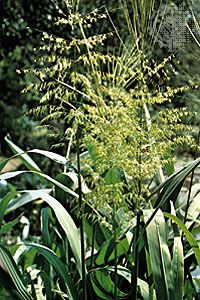
Natal grass (Melinis repens), also known as Natal redtop, is a tufted grass belonging to the family Poaceae. Native to southern Africa, it is frequently…
What is Natal grass?
Natal grass (Melinis repens), also known as Natal redtop, is a tufted grass belonging to the family Poaceae. Native to southern Africa, it is frequently cultivated as an ornamental plant and for use as forage or hay.12
Typically growing as a short-lived perennial, the plant can reach heights of up to 1 meter (3.3 feet). It features erect stems and linear leaves with distinctive reddish sheaths at the base. Its flowers are wind-pollinated and grow in spikelike clusters called panicles. The plant is particularly recognizable for its seed heads, which appear red due to glossy purple or pink hairs.1
While valued in some agricultural contexts, Natal grass is considered an invasive species in various regions outside its native range, including parts of the Americas and Australia.1
What makes a plant species invasive?
A plant species is considered invasive when it is nonnative to an area and causes significant disruption or modification to the ecosystems it colonizes3. While many introduced species fail to survive in new environments, invasive plants possess specific traits that grant them a competitive advantage over indigenous species.3
Key factors that contribute to a plant becoming invasive include:
- Competitive Advantage: Invasive plants often lack natural predators or diseases in their new environment to keep their populations in check. They may also be allelopathic, releasing chemicals into the soil that inhibit the growth of surrounding native plants.34
- Rapid Growth and Reproduction: Many invasive species exhibit aggressive growth rates and efficient methods of sexual or asexual reproduction, such as spreading via rhizomes or producing large quantities of easily dispersed seeds.4
- Adaptability: These plants often thrive in disturbed habitats, such as roadsides or farmsteads, and can tolerate a wide range of environmental conditions, including drought or varying light levels.4
- Human Facilitation: Human activities, particularly global commerce and landscaping, are the primary drivers for the introduction of these species to new habitats.34
Once established, these plants can reduce biodiversity, replace native vegetation, and cause economic harm.3
How do invasive grasses affect local ecosystems?
Invasive grasses and other nonnative species significantly disrupt local ecosystems by outcompeting indigenous flora for essential resources such as food, water, and living space. Because these invasive species often lack natural predators or diseases in their new environments, they can establish dense populations that effectively replace native vegetation.37
The ecological consequences of these invasions include:
- Reduction in Biodiversity: By monopolizing resources, invasive plants can force the localized extinction of native species that are unable to compete.37
- Habitat Degradation: Invasive species can alter the physical structure of an environment. For instance, they may create dense thickets that block sunlight, preventing native plants from recolonizing their former range.87
- Disease Vectors: Invasive organisms can serve as carriers for parasites and pathogens, further stressing and disrupting the health of the invaded ecosystem.3
- Resource Depletion: By displacing native plants, invasive species can diminish the biological resources upon which other animals and humans depend.3
We could dive deeper into how specific management techniques, such as mechanical removal or biological control, are used to mitigate these ecological impacts.
What are some other examples of invasive plants?
Several plant species have become notorious for their invasive behavior after being introduced to new environments, often through human activities like landscaping or the aquarium trade. Here are some notable examples:
- Japanese knotweed: Often cited as one of the world’s most destructive invasive plants, this tall, bamboo-like perennial spreads aggressively through an extensive network of rhizomes. It is allelopathic, meaning it releases chemicals into the soil that inhibit the growth of native vegetation, allowing it to form dense, monospecies stands that provide little support for local wildlife.5
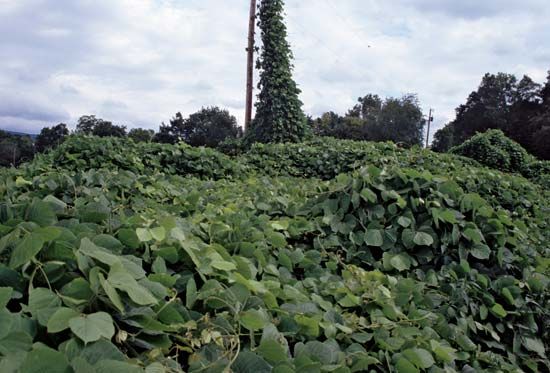
- Kudzu: Known as “the vine that ate the South,” this fast-growing perennial vine was introduced to the United States to control soil erosion. It spreads rapidly, blanketing trees and shrubs and often killing them by blocking their access to sunlight.9
- Purple loosestrife: This wetland plant has overrun thousands of square kilometers in North America. It forms dense colonies that crowd out native wetland vegetation, significantly reducing the food and habitat available for local wildlife.310
- Elodea: While popular in aquariums, species like the Canadian waterweed have naturalized in waterways across Asia, Africa, Australia, and Europe. These submerged aquatic plants reproduce easily through fragmentation and can become significant obstacles to lake navigation.11
Sources
- Natal grass — Encyclopædia Britannica
- Natal grass — Merriam-Webster
- invasive species — Encyclopædia Britannica
- plant - Dispersal and colonization — Encyclopædia Britannica
- Japanese knotweed — Encyclopædia Britannica
- invasive species - Solutions — Encyclopædia Britannica
- desertification - Grazing lands — Encyclopædia Britannica
- habitat loss — Encyclopædia Britannica
- kudzu — Encyclopædia Britannica
- loosestrife — Encyclopædia Britannica
- conservation - Removing invasive species — Encyclopædia Britannica
- Elodea — Encyclopædia Britannica
Published on · 3 min read