Kumquat
A kumquat is a small, evergreen shrub or tree belonging to the Rutaceae family, native to eastern Asia. These plants are cultivated for their small, bright…
What is a kumquat and how does it differ from other citrus fruits?
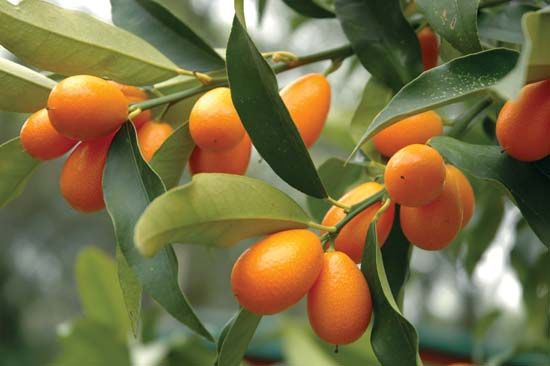
A kumquat is a small, evergreen shrub or tree belonging to the Rutaceae family, native to eastern Asia. These plants are cultivated for their small, bright orange-yellow fruits, which typically measure about 2.5 to 3 cm in diameter.1
Kumquats differ from most other citrus fruits primarily in how they are consumed. While the pulp of a kumquat is mildly acidic and juicy, its skin is sweet, pulpy, and entirely edible. This contrasts with many other citrus varieties, where the rind is typically discarded. Depending on the variety—such as the oval Nagami, the round Marumi, or the egg-shaped Meiwa—the flavor profile can vary, with some types offering a sweeter rind and pulp. Because of their unique texture and flavor, they are frequently eaten fresh, candied, or used to make preserves, jams, and jellies.12
Where do kumquats originate from and in which regions are they primarily grown?
Kumquats are native to eastern Asia, specifically originating from regions in southern China and Japan.1
While their roots are in these Asian regions, they are now cultivated throughout the subtropics globally. In the United States, they are grown not only for their fruit but also for decorative purposes, with their branches occasionally used for Christmas displays. Additionally, in the U.S., various hybrids have been developed by crossing kumquats with other citrus fruits, such as limes and mandarin oranges.1
What are the main varieties of kumquats and how do they differ?
The three primary varieties of kumquat are distinguished by their shape, origin, and flavor profile:
- Nagami (Oval) Kumquat (Fortunella margarita): This is the most common species. Native to southern China, it produces yellowish-orange, oval-shaped fruits that measure approximately 3 cm (1.2 inches) in diameter.1
- Marumi (Round) Kumquat (F. japonica): Indigenous to Japan, this variety is characterized by its round, orange-like fruits, which are slightly smaller than the Nagami, typically measuring about 2.5 cm in diameter.1
- Meiwa (Egg-shaped) Kumquat (F. crassifolia): Widely grown in China, this variety is distinct because both its pulp and its rind are sweet, unlike other varieties that feature a more acidic pulp.1
While these are the main species, growers in the United States have also developed various hybrids by crossing kumquats with other citrus fruits, such as limes and mandarin oranges.1
How are kumquats typically used in cooking and what are some popular dishes?
Kumquats are versatile fruits prized for their unique combination of a sweet, edible rind and a tart, acidic pulp. Because of this distinct flavor profile, they are frequently used in both fresh and preserved culinary applications.12
Common ways to prepare and enjoy kumquats include:
- Fresh Consumption: Because the skin is sweet and the pulp is acidic, the entire fruit can be eaten fresh, providing a balanced burst of flavor in a single bite.12
- Preserves: They are widely used to make jams and jellies, which help mellow the tartness of the pulp while highlighting the aromatic qualities of the peel.12
- Candying: In China, it is a common practice to candy the fruits, a process that transforms them into a sweet treat often used in desserts or as a decorative garnish.1
While these are the most traditional methods of preparation, their bright, citrusy profile makes them a creative addition to various recipes where a balance of sweet and sour is desired.
Sources
- Kumquat — Encyclopædia Britannica
- kumquat — Merriam-Webster
Published on · 3 min read