Kungurian Stage
The Kungurian Stage, the final stage of the Lower Permian (Cisuralian) Series, is characterized by diverse geological deposits primarily found in the Ural…
What are some notable geological formations or outcrops that represent the Kungurian Stage?
The Kungurian Stage, the final stage of the Lower Permian (Cisuralian) Series, is characterized by diverse geological deposits primarily found in the Ural region of Russia and Kazakhstan. Notable formations and outcrops include:1
- Ural Region Deposits: In the Mughalzhar Hills and the southern Ural Mountains, the stage is represented by terrigenous red beds and lagoonal sediments. These areas feature a complex mix of shallow marginal marine, evaporitic, and nonmarine strata.1
- Kama River Salt Basin: To the east, the upper Kama River region contains thick evaporite sequences, including gypsum, halite, and potash.1
- Perm Province: Marine limestones are found in the Russian province of Perm, while the western portions of the Mughalzhar Hills contain distinct reef carbonates.1
These formations reflect the final phase of the Uralian geosyncline as the Uralian orogenic belt closed the regional marine seaway.1
What are the key characteristics of the rock formations from the Kungurian Stage?
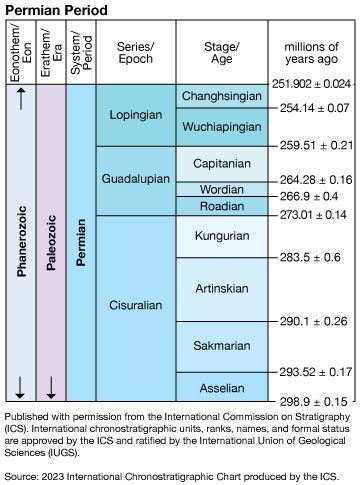
The Kungurian Stage, spanning from 279.3 to 272.3 million years ago, is characterized by a diverse array of sedimentary deposits that reflect the final closing of the Uralian marine seaway.1
Key characteristics of these rock formations include:
- Terrigenous and Lagoonal Deposits: In the Mughalzhar Hills and the southern Ural Mountains, the stage is defined by red beds and lagoonal sediments. These areas exhibit a complex lateral transition between shallow marginal marine, evaporitic, and nonmarine strata1.
- Evaporite Sequences: To the east, the upper Kama River region contains significant deposits of gypsum, halite, and potash.1
- Marine and Carbonate Rocks: The province of Perm features marine limestones, while the western Mughalzhar Hills contain reef carbonates.1
- Clastic Sediments: Other regions are marked by the presence of conglomerates and sandstones.1
These formations represent the final phase of the Uralian geosyncline as the Uralian orogenic belt overrode the marine seaway.1
How does the Kungurian Stage relate to major paleoenvironmental changes during the Permian period?
The Kungurian Stage (279.3 to 272.3 million years ago) represents a pivotal transition in the Permian Period, marking the final phase of the Uralian geosyncline as the Uralian orogenic belt closed the regional marine seaway.1
This geological event was closely linked to broader paleoenvironmental shifts occurring during the Permian:
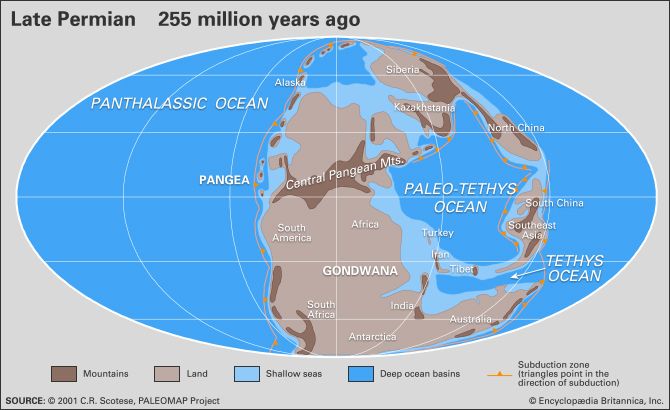
- Tectonic Assembly and Climate: The ongoing assembly of the supercontinent Pangea significantly altered global climate patterns. As low-latitude seaways closed, warm ocean currents were diverted to higher latitudes, contributing to a trend of global warming and the development of increasingly arid conditions.23
- Sedimentary Transformation: The closure of the Uralian seaway led to a shift in depositional environments. Following this tectonic activity, evaporite production—including gypsum, halite, and potash—became predominant in the region. This transition mirrored a global trend where intracratonic basins increasingly became sites for red bed and evaporite deposition as shorelines withdrew.14
- Biological Impact: The warming climate during the Early Permian, which included the Kungurian Age, initially encouraged the diversification of marine and terrestrial life. However, the long-term trend toward heat and aridity eventually triggered severe crises for Permian ecosystems, culminating in the largest mass extinction in Earth’s history by the end of the period.52
What is the significance of the Kungurian Stage in understanding the evolution of life on Earth?
The Kungurian Stage is significant primarily for its role in the geological and tectonic evolution of the Permian Period, rather than as a direct record of biological evolution. Its primary importance lies in marking the final phase of the Uralian geosyncline, where the Uralian orogenic belt closed the regional marine seaway, leading to a shift toward widespread evaporite deposition.1
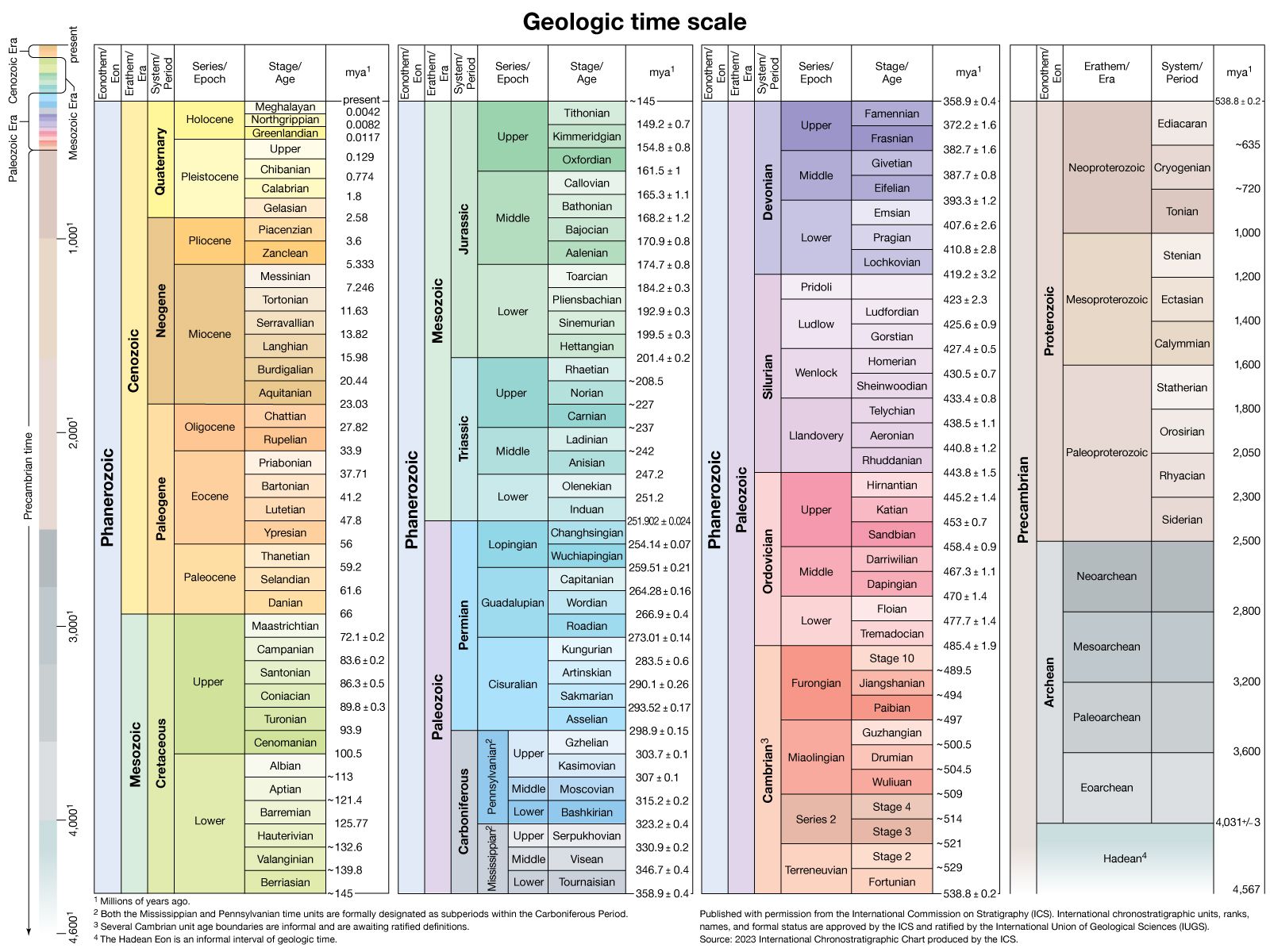
While the provided records focus on the geological and stratigraphic definition of the stage—notably the use of conodont biostratigraphy to establish a consistent zonal scheme—the stage serves as a critical boundary between the Lower Permian (Cisuralian) and the Middle Permian (Guadalupian) series. Unlike the preceding Artinskian Stage, which is well-characterized by specific fusulinid and ammonite zones, the Kungurian is defined by its transition from marine to nonmarine and evaporitic environments.19
Sources
- Kungurian Stage — Encyclopædia Britannica
- A Journey Through Time Since the Precambrian - Permian Period: 298.9 million to 252.2 million years ago — Encyclopædia Britannica
- Uralian orogenic belt — Encyclopædia Britannica
- Permian Period - Paleoclimate — Encyclopædia Britannica
- Permian Period - Basin sedimentation — Encyclopædia Britannica
- Permian Period - Major subdivisions — Encyclopædia Britannica
- Permian Period - Marine and terrestrial life — Encyclopædia Britannica
- Permian Period - Early work — Encyclopædia Britannica
- Artinskian Stage — Encyclopædia Britannica
Published on · 3 min read