Fusulinid
Fusulinids are a distinct group of extinct foraminiferans characterized by highly complex and specialized shell structures. While all foraminiferans possess…
How do the shells of fusulinids differ from other foraminifera?
Fusulinids are a distinct group of extinct foraminiferans characterized by highly complex and specialized shell structures. While all foraminiferans possess a test, or shell, that varies in size, shape, and composition, the fusulinid shell is uniquely organized around a central longitudinal axis.12
The internal architecture of a fusulinid shell is notably intricate, consisting of a series of chambers arranged along this axis. These shells often resemble grains of wheat and can reach sizes up to 5 cm in length. A defining feature of their complexity is the presence of elaborate patterns in the number and arrangement of internal walls and deposits, which are critical for their classification and the study of their evolutionary history. In contrast, while other foraminiferans also exhibit a wide range of chamber arrangements and chemical compositions, the specific longitudinal, wheat-like growth pattern and the highly developed internal wall structures are diagnostic of the fusulinid group.12
How are fusulinids used in biostratigraphy and dating rock formations?
Fusulinids are highly effective tools in biostratigraphy because they serve as excellent index fossils, also known as guide fossils. Their utility in dating rock formations and correlating strata across vast distances stems from several key characteristics:
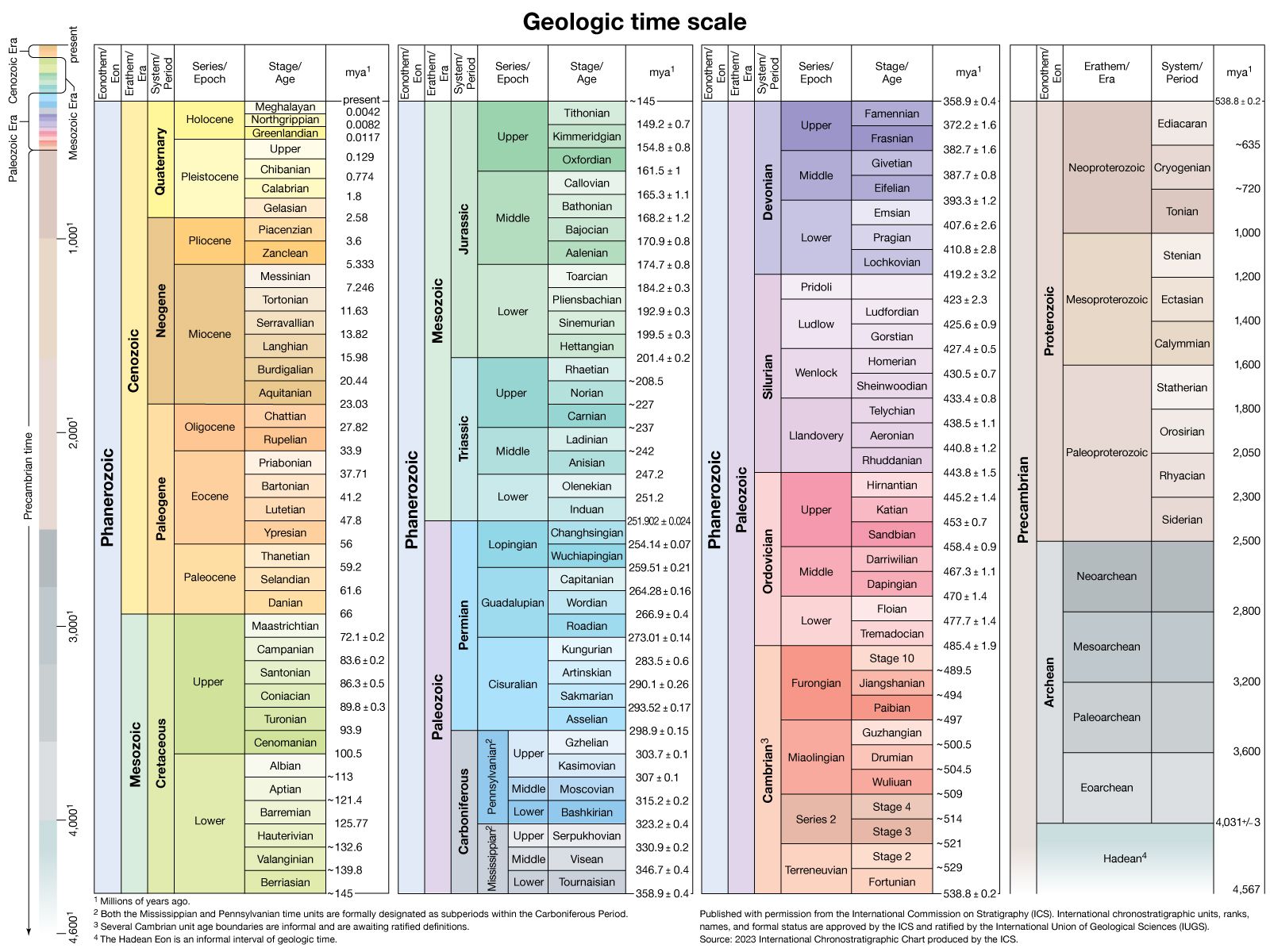
- Rapid Evolution: Fusulinids underwent significant evolutionary changes during their existence from the late Early Carboniferous Epoch through the Permian Period. This rapid diversification allows geologists to divide geologic time into precise, smaller units.1
- Wide Distribution: Because they were widely distributed in clear marine environments, specific genera—such as Fusulina and Fusulinella—can be used to correlate rock units found in widely separated geographic regions.143
- Narrow Time Range: Many species existed for a relatively short duration, meaning their presence in a rock layer provides a reliable indicator of that rock’s specific age.43
Beyond dating, petroleum geologists utilize these fossils as markers to locate economically significant deposits of oil and natural gas.1
What role did fusulinids play in the formation of certain types of limestone?
The provided search results do not contain specific information regarding the role of fusulinids in the formation of particular types of limestone. While the results confirm that fusulinids are foraminiferans with complex shells that are easily preserved as fossils and that limestones generally originate through the lithification of carbonate sediments, they do not explicitly link the accumulation of fusulinid tests to the creation of specific limestone deposits.
How did the evolution of fusulinids contribute to our understanding of species diversification?
The evolution of fusulinids has significantly enhanced our understanding of species diversification and geologic time during the late Paleozoic Era. Emerging in the late Early Carboniferous Epoch, these extinct foraminiferans developed increasingly complex internal structures, including intricate chamber arrangements and wall deposits.17
These structural complexities are vital for classification and allow paleontologists to map evolutionary relationships over time. Because fusulinids underwent rapid evolutionary changes and possessed a narrow temporal range, they serve as highly reliable index fossils. Their widespread distribution in clear marine environments enables scientists to correlate rock units across vast geographic distances, providing a high-resolution framework for studying the diversification of marine life from the Pennsylvanian subperiod through the Permian Period. By analyzing the distinct morphological shifts in their calcareous tests, researchers can precisely subdivide geologic periods, offering a clearer picture of how these organisms adapted and diversified before their extinction.137
Sources
- fusulinid — Encyclopædia Britannica
- foraminiferan — Encyclopædia Britannica
- Fusulinella — Encyclopædia Britannica
- Fusulina — Encyclopædia Britannica
- dolomitization — Encyclopædia Britannica
- sedimentary rock - Origin of limestones — Encyclopædia Britannica
- Carboniferous Period - Invertebrates — Encyclopædia Britannica
Published on · 2 min read