Kyushu
Kyushu is the southernmost and third-largest of the four main islands of Japan. Geographically, it is bordered by the East China Sea to the west and the…
What is the geographic location and size of Kyushu island in Japan?
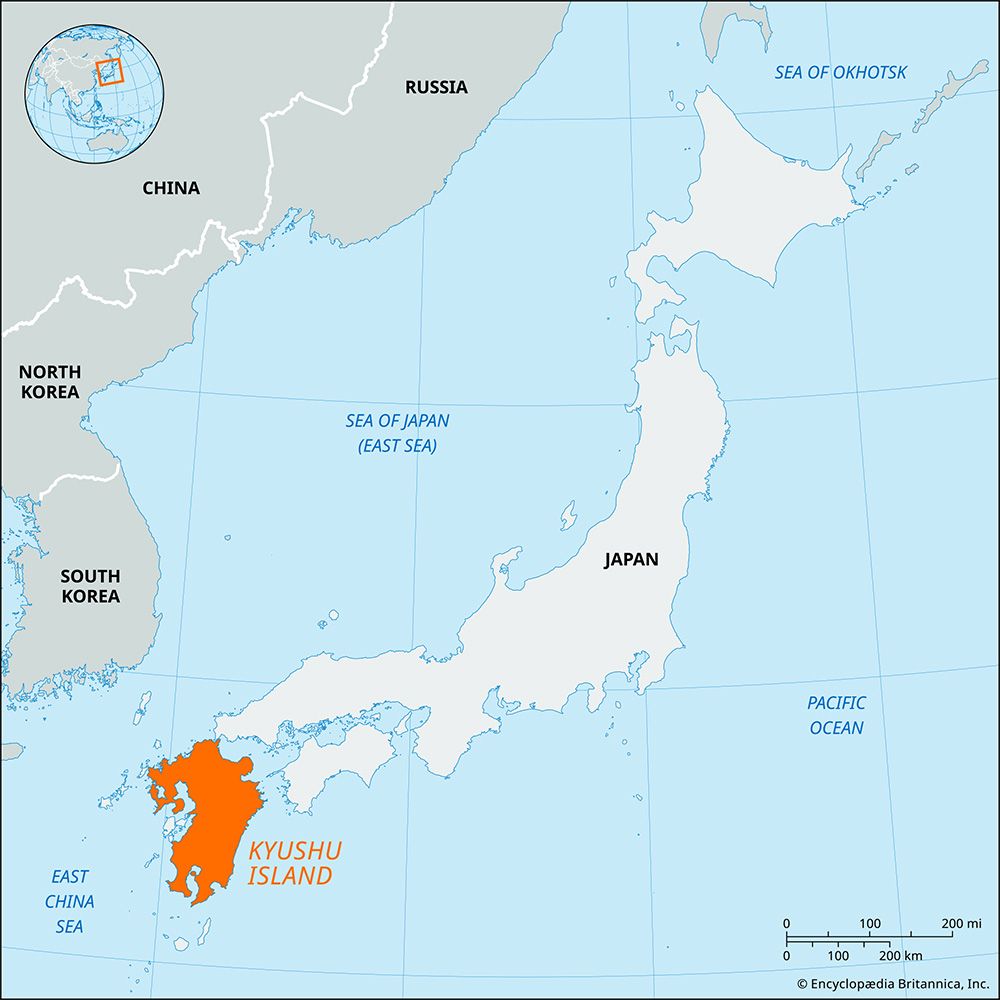
Kyushu is the southernmost and third-largest of the four main islands of Japan. Geographically, it is bordered by the East China Sea to the west and the Pacific Ocean to the east. It is separated from the island of Honshu to the north by the Shimonoseki Strait and from Korea to the northwest by the Tsushima Strait.1
Regarding its size, the island itself covers an area of 14,177 square miles (36,719 square km). When considering the broader Kyushu region—which includes the main island, nearby islands, and the Ryukyu archipelago—the total area is 17,157 square miles (44,436 square km).1
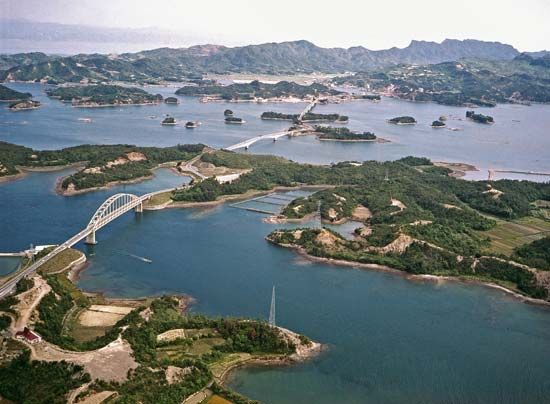
What are the major cities and important landmarks on Kyushu?
Kyushu is home to several significant urban centers and diverse natural and cultural landmarks.
Major Cities
The island’s population and industry are concentrated in key metropolitan areas:
- Kita-Kyūshū: The largest city and a major industrial hub, formed by the amalgamation of five cities including Moji and Yahata.12
- Fukuoka: The prefectural capital and a vital commercial center situated on Hakata Bay.12
- Nagasaki: A historically significant city known for its cultural heritage and international influence.1
Important Landmarks
Kyushu features a complex volcanic landscape and sites of historical importance:
- Volcanic Sites: The island is home to Mount Aso, the world’s largest active volcanic crater. The Kirishima-Yaku National Park contains the sacred Takachihonomine peak and the island of Yakushima, which is noted for its ancient cedar forests.13
- Resorts: Beppu is widely recognized as a premier hot-springs resort.1
- Cultural Heritage: The Nagasaki region is home to Hidden Christian Sites, which are designated World Heritage sites.4
How does Kyushu’s climate and natural environment differ from other Japanese islands?
Kyushu’s climate and natural environment are distinct from the rest of Japan primarily due to its southern latitude and the influence of warm ocean currents.
Climate and Temperature
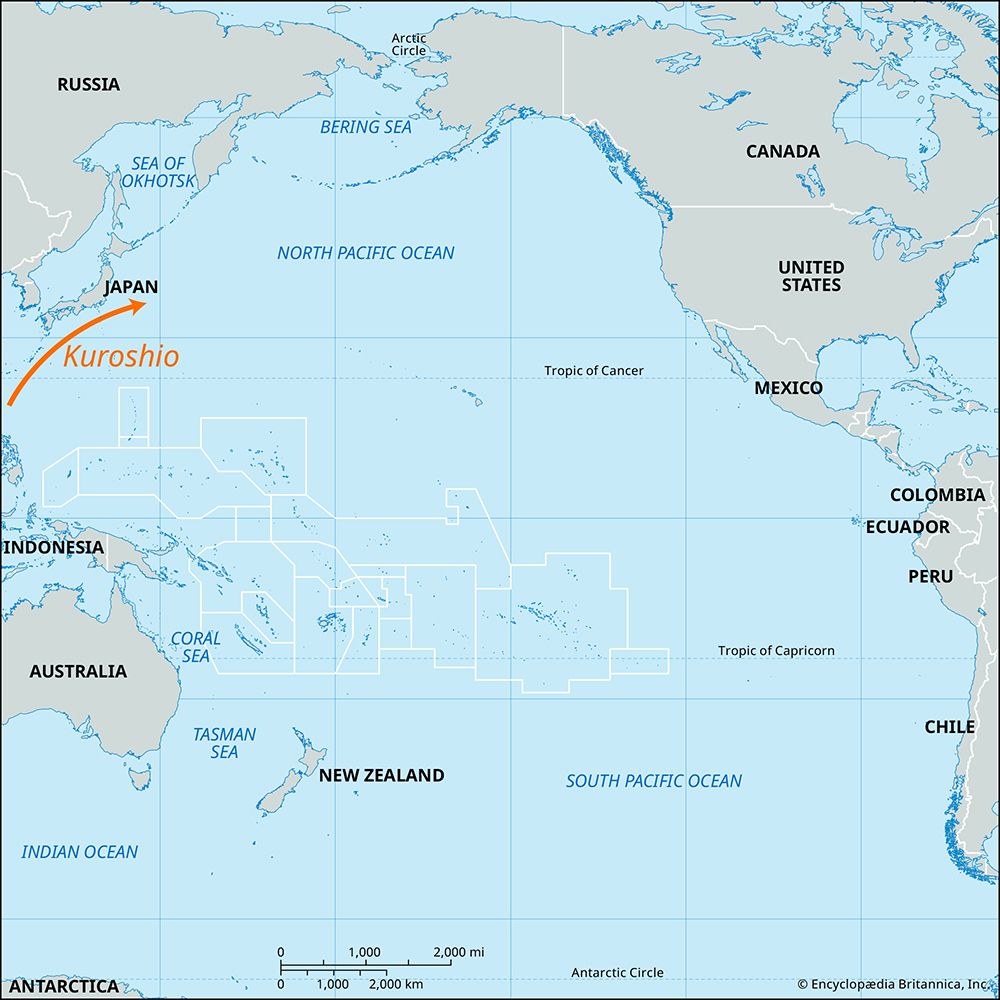
Kyushu experiences a subtropical climate, which is warmer than the more temperate conditions found in northern and central Japan. As the southernmost of the four main islands, it records the warmest temperatures in the country; for instance, Kagoshima maintains a higher mean annual temperature compared to cities like Tokyo or Asahikawa. The island is also significantly affected by the Kuroshio (Japan Current), a warm surface current that flows past its coast, providing a warming effect that influences the region’s overall climate.156
Vegetation and Landscape
The island’s environment is characterized by:
- Subtropical Vegetation: Kyushu is known for heavy rainfall and lush subtropical plant life. The region features evergreen laurel forests, and in the southwestern areas, one can find ficus and fan palms.17
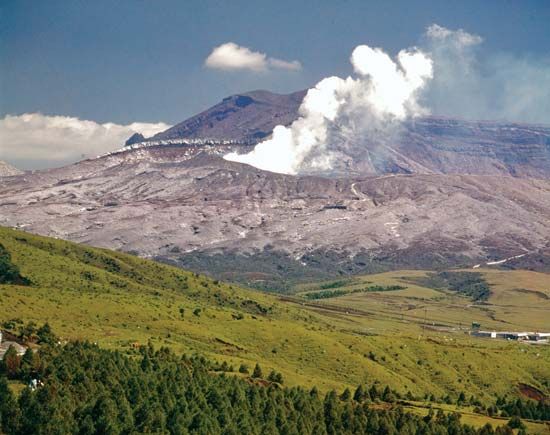
- Volcanic Features: The island is composed of a complex system of volcanic ranges. It is home to Mount Aso, the world’s largest active volcanic crater, and numerous hot springs, such as those in Beppu.1
- Diverse Ecosystems: The natural environment includes unique sites like Yakushima, an island south of Kyushu famous for its ancient Japanese cedars, some of which are over 2,000 years old.78
What is the significance of Mount Aso’s volcanic activity?
Mount Aso, located in Kumamoto prefecture on the island of Kyushu, is significant primarily for its massive geological scale and its role as a central feature of the Aso-Kuju National Park.
Its primary features and significance include:
- World-Class Caldera: Mount Aso possesses the largest active crater in the world, with a circumference of 71 miles (114 km). The caldera marks the original crater and contains several peaks, including Naka-dake, which remains one of Japan’s most active volcanoes.1011
- Human Integration: Unlike many remote volcanoes, the crater of Mount Aso is inhabited and serves as a functional landscape. It is traversed by roads and railways, and its mountain pastures are actively utilized for cattle raising and dairy farming.10
- Geothermal Resources: The volcanic activity supports numerous hot springs throughout the region, which are significant for both local tourism and the natural environment.10
Sources
- Kyushu — Encyclopædia Britannica
- Fukuoka — Encyclopædia Britannica
- Kirishima-Yaku National Park — Encyclopædia Britannica
- list of World Heritage sites - Japan — Encyclopædia Britannica
- Japan - Climate — Encyclopædia Britannica
- Japan - Flora — Encyclopædia Britannica
- Japan - The major physiographic regions — Encyclopædia Britannica
- Japan - Temperature — Encyclopædia Britannica
- Kuroshio — Encyclopædia Britannica
- Mount Aso — Encyclopædia Britannica
- world’s major volcanoes — Encyclopædia Britannica
- Aso, Mount — Merriam-Webster
Published on · 3 min read