Japanese Cedar
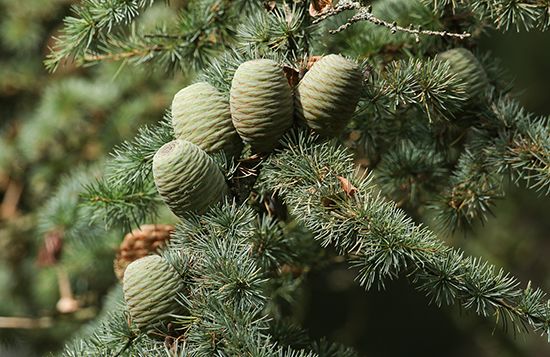
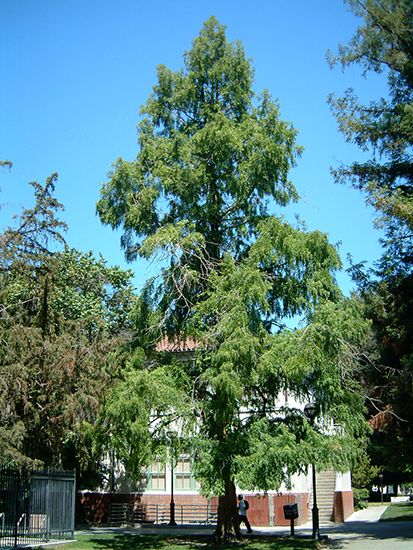
Japanese cedar (Cryptomeria japonica) is a large, coniferous evergreen tree native to eastern Asia. It is the sole species within the genus Cryptomeria…
What is Japanese cedar?
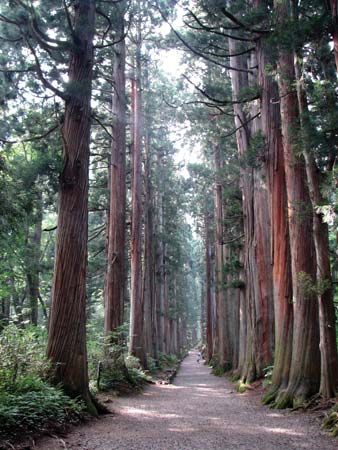
Japanese cedar (Cryptomeria japonica) is a large, coniferous evergreen tree native to eastern Asia. It is the sole species within the genus Cryptomeria, belonging to the Cupressaceae family.12
Characterized by a pyramidal shape and dense, whorled branches, the tree can reach heights of 45 meters (150 feet) or more. Its fragrant, reddish-brown wood is highly valued for construction, including the building of houses, ships, bridges, and furniture, as well as for ornamental carving. Additionally, the tree is frequently utilized for reforestation and landscaping, while its leaves are used to produce incense.12
What are the main differences between conifers and deciduous trees?
The primary differences between conifers and deciduous trees lie in their reproductive structures, foliage characteristics, and seasonal behavior.
Conifers
- Reproduction: Conifers are gymnosperms, meaning they produce seeds that are typically borne on the scales of woody cones rather than within fruit4.3
- Foliage: Most conifers possess needle-shaped or scale-like leaves, which are often coated in a thick, waxy substance to minimize water loss.435
- Seasonal Behavior: The vast majority of conifers are evergreen, meaning they retain their foliage throughout the year. Notable exceptions that shed their leaves include the larch, bald cypress, and dawn redwood.3
- Wood: Conifer wood is often referred to as “softwood” and is characterized by a simpler structure consisting primarily of tracheids.3
Deciduous Trees
- Reproduction: Deciduous trees are typically angiosperms, which produce seeds enclosed within a fruit or flower.
- Foliage: These trees are characterized by broad, flat leaves.6
- Seasonal Behavior: By definition, deciduous trees shed their leaves seasonally—typically in autumn—as a response to environmental changes, leaving the branches bare during winter.67
- Wood: The wood of these trees is commonly classified as “hardwood,” which is generally more complex in structure than that of conifers.3
How is Japanese cedar wood used in traditional Japanese architecture?
In traditional Japanese architecture, the fragrant, reddish-brown wood of the Japanese cedar (Cryptomeria japonica) is highly prized for its versatility and durability. Its primary applications include:
- Structural Components: The wood is extensively used in the construction of houses, serving as a reliable material for framing and structural elements.1
- Infrastructure: Due to its strength and resilience, it is a preferred choice for building bridges.1
- Interior and Utility: The timber is commonly crafted into furniture and various household vats.1
- Aesthetic and Decorative Use: Beyond its structural utility, the wood is frequently utilized for ornamental carving, adding intricate detail to architectural features.1
As a soft wood, it is valued for its ease of workability while maintaining the structural integrity required for traditional building techniques.2
What role do evergreen trees play in forest ecosystems?
Evergreen trees play a vital role in forest ecosystems by maintaining foliage throughout the year, which allows them to continue photosynthesis and resource acquisition across different seasons. Their presence is particularly significant in cold-temperate and Arctic regions, where they often dominate the landscape as conifers such as pines and firs.1213
Key ecological contributions include:
- Resource Partitioning: By retaining leaves, evergreens can utilize light and space differently than deciduous species, helping to structure the forest canopy and manage competition for resources.13
- Environmental Stability: Like all trees, evergreens are essential for soil stabilization and erosion control, which is especially critical in mountainous or hilly terrains.14
- Nutrient and Gas Cycling: They contribute significantly to the global carbon cycle through carbon dioxide absorption and oxygen production, while also playing a key role in nutrient recycling within the biosphere.14
- Habitat Provision: Their thick, leathery, or needlelike foliage provides unique niches for various organisms, supporting species diversity within their respective habitats.1213
Sources
- Japanese cedar — Encyclopædia Britannica
- Japanese cedar — Merriam-Webster
- Did you know? — Merriam-Webster
- conifer — Encyclopædia Britannica
- gymnosperm - Pinophyta — Encyclopædia Britannica
- Deciduous forest: Top Questions — Encyclopædia Britannica
- conifer - Distinguishing taxonomic features — Encyclopædia Britannica
- conifer - Leaves — Encyclopædia Britannica
- conifer - Distribution and abundance — Encyclopædia Britannica
- deciduous — Merriam-Webster
- conifer - Sporophyte phase — Encyclopædia Britannica
- evergreen — Encyclopædia Britannica
- tree - Adaptations — Encyclopædia Britannica
- tree - The importance of trees — Encyclopædia Britannica
Published on · 3 min read