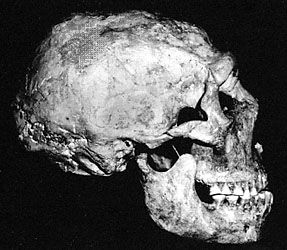
La Chapelle-aux-Saints
The La Chapelle-aux-Saints Neanderthal remains, originally described by Marcellin Boule in the early 20th century, have been subject to extensive…
What modern techniques have been used to reexamine the La Chapelle-aux-Saints Neanderthal remains?
The La Chapelle-aux-Saints Neanderthal remains, originally described by Marcellin Boule in the early 20th century, have been subject to extensive reexamination using modern scientific methods. While the provided search results detail the historical significance of the site and the general application of modern techniques to Neanderthal studies, they do not specify the particular modern techniques used exclusively on the La Chapelle-aux-Saints remains beyond the general context of archaeological and anthropological analysis.
Broadly, modern research on Neanderthal fossils has moved beyond the early morphological descriptions that once characterized them as apelike. Contemporary studies now utilize:
- Genetic Analysis: Applying DNA sequencing to ancient remains to understand evolutionary relationships and interbreeding with modern humans.1
- Isotopic Analysis: Examining stable carbon isotopes in bone collagen to reconstruct dietary habits.2
- Dental Microwear Analysis: Studying microscopic wear on teeth to infer tool use and subsistence strategies.2
How has the La Chapelle-aux-Saints site been preserved and managed for ongoing research and public education?
The La Chapelle-aux-Saints site is historically significant as the location where the first evidence of Neanderthal mortuary ritual was discovered, following the 1908 finding of an adult male skeleton buried in a pit within the cave.1
Regarding the current preservation and management of the site for ongoing research and public education, the provided search results do not contain specific information. While the site remains a cornerstone for understanding Neanderthal social structures—specifically the care provided to injured or infirm group members—the available data focuses on the anatomical findings and the historical impact of Marcellin Boule’s initial descriptions rather than contemporary site management protocols.1
How does the La Chapelle-aux-Saints Neanderthal compare to other Neanderthal specimens found in Europe?
The La Chapelle-aux-Saints specimen shares several defining anatomical traits with other Neanderthal remains found across Europe. These shared characteristics include:
- Body Proportions: A stocky build adapted for cold environments.
- Cranial Features: A large, projecting midface—particularly the nose and teeth—a rounded browridge, and a braincase that is long, low, and rounded.
- Limb Morphology: Stout bones featuring prominent attachments for arm and hand muscles.
While these physical traits align with the broader Neanderthal population, the La Chapelle-aux-Saints skeleton is particularly significant for what it reveals about Neanderthal life. Like other specimens, it shows evidence of a stressful existence marked by high injury risks and physical degeneration. However, the specific pathologies observed—including tooth loss, severe osteoarthritis, and hearing loss—demonstrate that this individual survived for years despite significant infirmity. This provides critical evidence of a social network capable of supporting injured members, as well as the earliest known instance of intentional mortuary ritual among Neanderthals.
What was the geological context of the La Chapelle-aux-Saints site, and how did it contribute to the preservation of the Neanderthal remains?
The La Chapelle-aux-Saints site, a small cave in central France, provided a unique geological context that was instrumental in the preservation of the Neanderthal remains discovered there in 1908.1
The primary factor contributing to the preservation of the skeleton was the intentional nature of the burial. Anthropologists have concluded that the individual was placed in a pit within the cave floor. This rapid, deliberate burial served two critical functions:13
- Protection from Scavengers: By interring the body in a pit, the remains were shielded from the ravages of carnivores that might otherwise have scattered or destroyed the bones.3
- Environmental Isolation: The burial created a distinct micro-environment compared to the surrounding cave floor. This is evidenced by the marked difference in preservation between the Neanderthal remains and other animal bones recovered from the same site, suggesting that the burial pit provided a level of protection from the natural taphonomic processes—such as erosion or chemical degradation—that affected other materials in the cave.3
While caves can act as natural traps for sediment and clastic material, the specific preservation of this Neanderthal is attributed to this cultural act of burial rather than purely geological deposition.13
Sources
- La Chapelle-aux-Saints — Encyclopædia Britannica
- Neanderthal - Neanderthal classification — Encyclopædia Britannica
- Neanderthal - Neanderthal culture — Encyclopædia Britannica
- fossil — Encyclopædia Britannica
- cave - Solutional sculpturings — Encyclopædia Britannica
Published on · 3 min read