La Mancha
La Mancha’s history as an intermediate zone between Christian and Moorish forces during the Middle Ages has profoundly shaped its cultural landscape and…
How has La Mancha’s history influenced its current culture and traditions?
La Mancha’s history as an intermediate zone between Christian and Moorish forces during the Middle Ages has profoundly shaped its cultural landscape and traditions.1
Historical Foundations
The region’s name, derived from the Arabic Al-Manshah (“Dry Land” or “Wilderness”), reflects its historical role as a frontier. Following the Reconquista, military orders like the Order of Santiago and the Order of Calatrava were granted vast territories, leading to a settlement pattern of large, widely spaced “agrotowns” and the development of latifundios (large estates) that still characterize the region today.12
Cultural Legacy
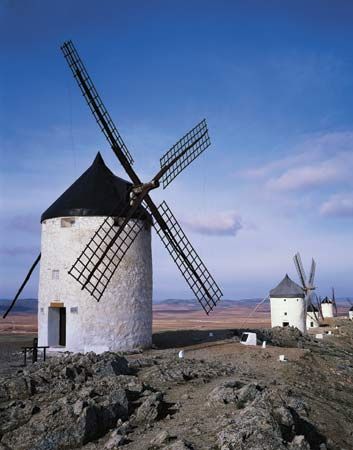
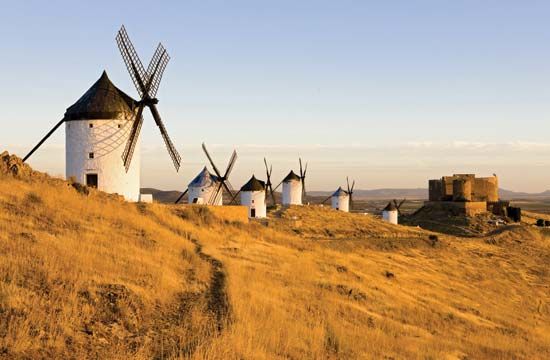
- Literary Identity: The region is globally synonymous with Miguel de Cervantes’s 17th-century novel Don Quixote. Traditions and tourism are deeply tied to this legacy, with visitors exploring 16th-century windmills and villages like El Toboso that are linked to the story’s “quixotic” episodes.13
- Culinary Traditions: The Moors introduced the saffron crocus in the 10th century, which remains a vital part of the local heritage. Additionally, the region is renowned for Manchego cheese and its extensive wine production, which has evolved from a focus on quantity to high-quality viticulture.1
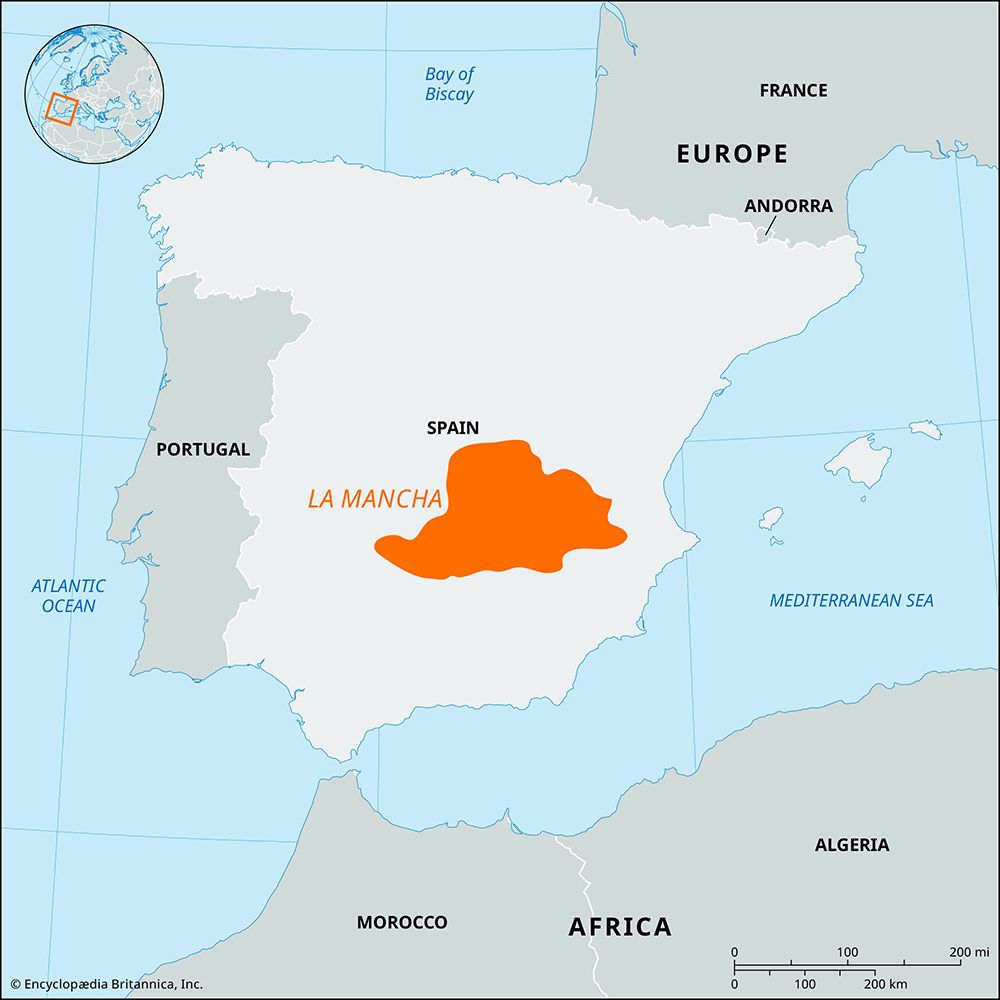
What is the geographical location and extent of La Mancha in Spain?
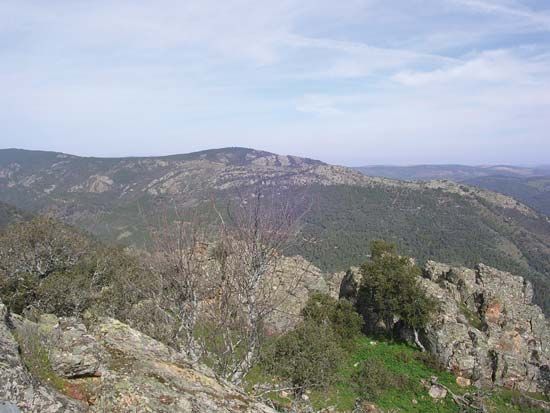
La Mancha is an arid but largely fertile elevated plateau located in central Spain, situated at an average elevation of 2,000 feet (610 metres).1
Geographically, the region is defined by the following boundaries:
- North: The La Alcarria region.1
- South: The Sierra Morena.1
- East/West: It stretches between the Toledo Mountains and the western spurs of the Cuenca hills.1
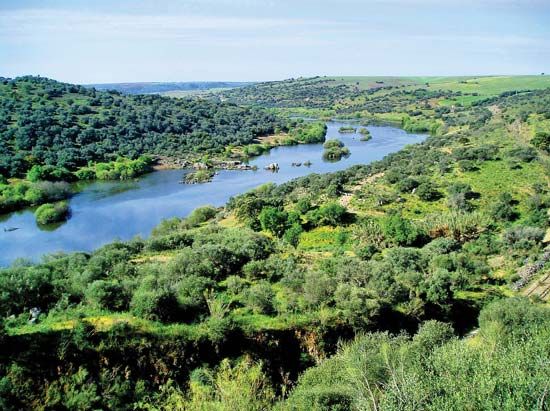
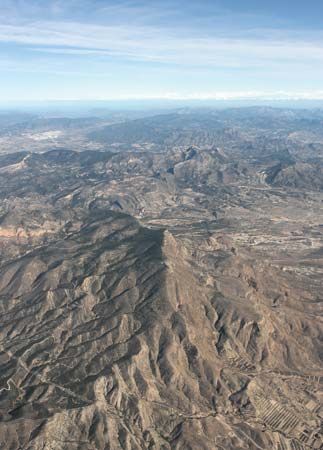
The region constitutes the southern portion of the Castile–La Mancha autonomous community and encompasses portions of the provinces of Cuenca, Toledo, and Albacete, as well as the majority of Ciudad Real. The plains of La Mancha are drained by the Guadiana River and extend southeastward into Albacete, eventually terminating at the Baetic Cordillera.15
How has wine production shaped the economy and culture of La Mancha?
Wine production is a cornerstone of the economy and cultural identity of La Mancha. As one of the largest wine-producing regions in the world, it accounts for approximately half of Spain’s total wine output.15
Economic Impact
The region is home to hundreds of wineries that thrive despite challenging environmental conditions, such as low precipitation and the need for dry farming. While the local economy has historically relied on the sheer volume of its productivity, there has been a significant shift in recent years toward prioritizing high-quality viticulture. This industry serves as a vital pillar alongside other agricultural staples, including wheat, barley, and the production of Manchego cheese.15
Cultural Significance
Wine is deeply embedded in the region’s heritage, contributing to its global reputation and tourism appeal. The success of the wine industry complements the area’s other traditional exports, such as saffron, and reinforces the agricultural character of the region’s large, historic towns. Together with its literary associations—most notably Miguel de Cervantes’s Don Quixote—the wine culture helps define the unique identity of this central Spanish plateau.1
What are the main economic activities and industries in La Mancha?
The economy of La Mancha is primarily driven by agriculture, which dominates the region’s output. Despite challenging environmental conditions, such as low precipitation and the need for dry farming, the region remains a vital agricultural hub for Spain.15
Key Agricultural Activities
- Viticulture: La Mancha is one of the world’s largest wine-producing regions, accounting for approximately half of Spain’s total wine output. While historically focused on volume, the industry has increasingly prioritized high-quality production.15
- Crops: Dry farming of wheat, barley, and oats is essential. The region also produces olives, lentils, onions, peppers, sunflowers, and sumac.15
- Specialty Products: The area is renowned for saffron cultivation and the production of Manchego cheese.1
- Livestock: Animal husbandry, particularly the raising of sheep, pigs, and goats, accounts for about one-third of the region’s agricultural output.15
Industrial and Mining Sectors
Outside of agriculture, the industrial sector is relatively underdeveloped. Notable exceptions include:
- Petrochemicals: A large petroleum refinery in Puertollano has established the city as a major petrochemical center.5
- Mining: The mines of Almadén are known for mercury production, while other areas contain deposits of iron and kaolin.5
- Manufacturing: Small-scale manufacturing is primarily centered on the processing of primary materials, such as milling flour and wine production.5
Sources
- La Mancha — Encyclopædia Britannica
- Spain - Society, economy, and culture — Encyclopædia Britannica
- 12 Novels Considered the “Greatest Book Ever Written” - Don Quixote — Encyclopædia Britannica
- Miguel de Cervantes - Importance and influence — Encyclopædia Britannica
- Castile–La Mancha — Encyclopædia Britannica
- Spain - Human landscape — Encyclopædia Britannica
- Spain - Agriculture — Encyclopædia Britannica
Published on · 3 min read