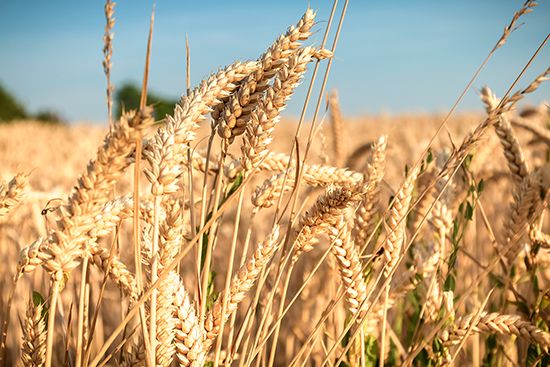
Wheat
The three primary species of wheat used in modern food production are:
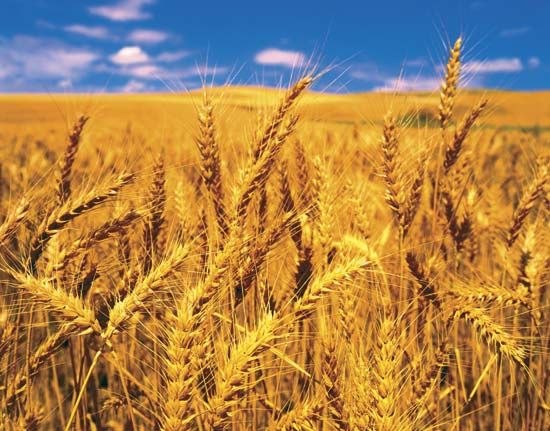
What are the main types of wheat and how do they differ?
The three primary species of wheat used in modern food production are:
- Bread wheat (Triticum aestivum): The most common variety, it is widely cultivated for flour used in bread, cakes, and biscuits.12
- Durum wheat (T. durum): Characterized by a long, narrow shape, it is primarily ground into semolina and is the preferred choice for making pasta.12
- Club wheat (T. compactum): A softer variety particularly well-suited for confectionery, crackers, and pastries.12
Wheat is also categorized by its physical properties and planting cycles. Hard wheats contain high protein levels (12–15%) and strong gluten, making them ideal for bread. Soft wheats have lower protein content (8–10%) and weaker gluten, which is better for cakes and biscuits. Additionally, crops are classified as spring wheat, planted in early spring, or winter wheat, planted in the autumn, depending on regional climate and winter severity.12
What are the primary uses of wheat in food production and industry?
Wheat is a versatile crop with extensive applications in both food production and various industrial sectors.
Food Production
The primary use of wheat is the production of flour, which serves as a fundamental ingredient in many baked goods. Different varieties are selected based on their protein content and gluten strength:
- Bread wheat is the most common type, utilized for making bread and other yeast-raised products.2
- Durum wheat is specifically processed into semolina for the production of pasta.2
- Club wheat is a softer variety preferred for cakes, cookies, crackers, and pastries.2
Additionally, milling by-products and surplus wheat are frequently used as livestock feed.2
Industrial Uses
Beyond human consumption, wheat is utilized in several industrial applications:
- Chemical and Material Production: Wheat is processed to extract starch, which is used in the manufacture of paper to increase strength, as well as in the production of adhesives, pastes, and dextrose.23
- Manufacturing: Wheat gluten is used as a core binder in metal casting, and cereal straw cellulose is utilized by the paper industry.4
- Fermentation: Wheat is a source for producing malt and industrial alcohol.24
What are some common diseases or pests that affect wheat crops, and how are they managed?
Wheat crops face significant threats from various insects, fungi, and nematodes, which can cause substantial yield and quality losses. Effective management relies on integrated pest management (IPM), an approach that combines multiple strategies to minimize reliance on chemical pesticides.6
Common Pests and Diseases
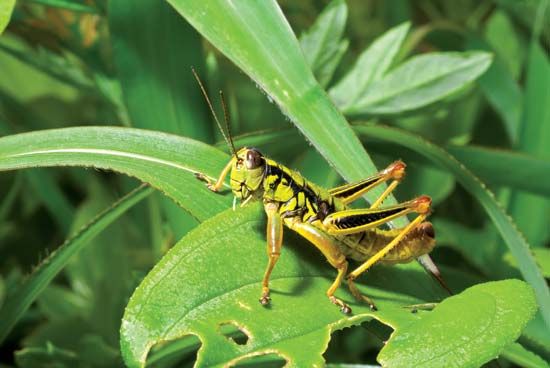
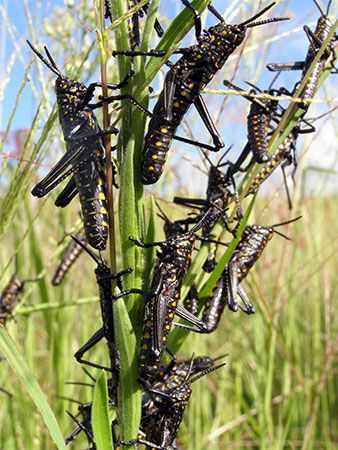
- Insects: Grasshoppers and locusts cause widespread damage, while wireworms attack roots and stems. The wheat stem sawfly causes stems to collapse, and the Hessian fly targets stems of wheat and other cereals. Wheat bugs puncture grains, introducing enzymes that destroy gluten quality.7
- Fungal Diseases: Black rust causes plants to yellow and grains to shrivel. Bunt (stinking smut) replaces kernels with spore-filled “smut balls” that emit a fishy odor. Ergot is another fungal threat that can be toxic to humans and animals.89
- Nematodes: These microscopic worms can cause severe crop destruction, often limiting the varieties that can be grown in specific regions.10
Management Strategies
- Cultural Practices: Proper seedbed preparation, early or late sowing to avoid peak pest activity, and crop rotation with non-host plants are essential. Plowing under infested stubble and cleaning farm equipment help disrupt disease cycles.7911
- Biological and Chemical Control: Farmers use fungicide-treated seeds, chemical pesticides, and nitrogenous fertilizers. IPM also encourages the use of pest-resistant crop varieties and the release of natural predators.796
- Environmental Monitoring: Governments often provide disease-forecasting services based on temperature, rainfall, and humidity to guide the timely application of control measures.10
How do different milling processes affect the final wheat product?
The milling process is fundamental in determining the characteristics, quality, and intended use of wheat flour. The primary objective of modern milling is the separation of the starchy endosperm from the bran and germ, though the extent of this separation and subsequent treatments define the final product.1213
The Gradual Reduction Process
Most refined flour is produced through a “gradual reduction” system, which uses a series of steel rolls and sieves to progressively break the wheat kernel.123
- Break Rolls: These initial rolls tear the kernel open, allowing for the separation of coarse endosperm particles known as semolina.313
- Reduction Rolls: Cleaned semolina is then ground into fine flour. This process is repeated across multiple stages to maximize the extraction of endosperm while flattening and removing branny particles.3
- Grading: By selecting specific “streams” of flour from these various stages, millers can create different grades, such as “patent flour,” which is highly refined and low in mineral content.3
Post-Milling Treatments
- Bleaching and Aging: Flour can be aged naturally via oxidation or treated with chemical agents to whiten the product and improve baking performance. Bleaching breaks down proteins and starches, resulting in a softer, finer texture ideal for cakes and pastries.14
- Whole Wheat vs. Refined: Unlike refined flour, whole wheat flour includes all parts of the kernel, resulting in a different nutritional profile and texture.1314
- Advanced Separation: Modern techniques, including air classification, allow processors to further separate flour into fractions with varying protein content, enabling the creation of specialized flours from the same wheat source.3
Sources
- Cereal processing - Wheat: varieties and characteristics — Encyclopædia Britannica
- Wheat — Encyclopædia Britannica
- flour — Encyclopædia Britannica
- Cereal processing - Industrial uses — Encyclopædia Britannica
- Starch — Encyclopædia Britannica
- Cereal farming - Insects — Encyclopædia Britannica
- Agricultural technology - Control of plant diseases and nematodes — Encyclopædia Britannica
- Cereal farming - Fungus diseases — Encyclopædia Britannica
- Bunt — Encyclopædia Britannica
- Integrated pest management — Encyclopædia Britannica
- Plant disease - Cultural practices — Encyclopædia Britannica
- Cereal processing - Wheat flour — Encyclopædia Britannica
- Cereal processing - Milling — Encyclopædia Britannica
- Why is flour bleached? — Encyclopædia Britannica
Published on · 4 min read