Laguna Madre
The Laguna Madre is a narrow, shallow lagoon situated along the coast of southern Texas, United States, and northeastern Mexico. It is sheltered from the…
Where is the Laguna Madre located, and how is it divided between the United States and Mexico?
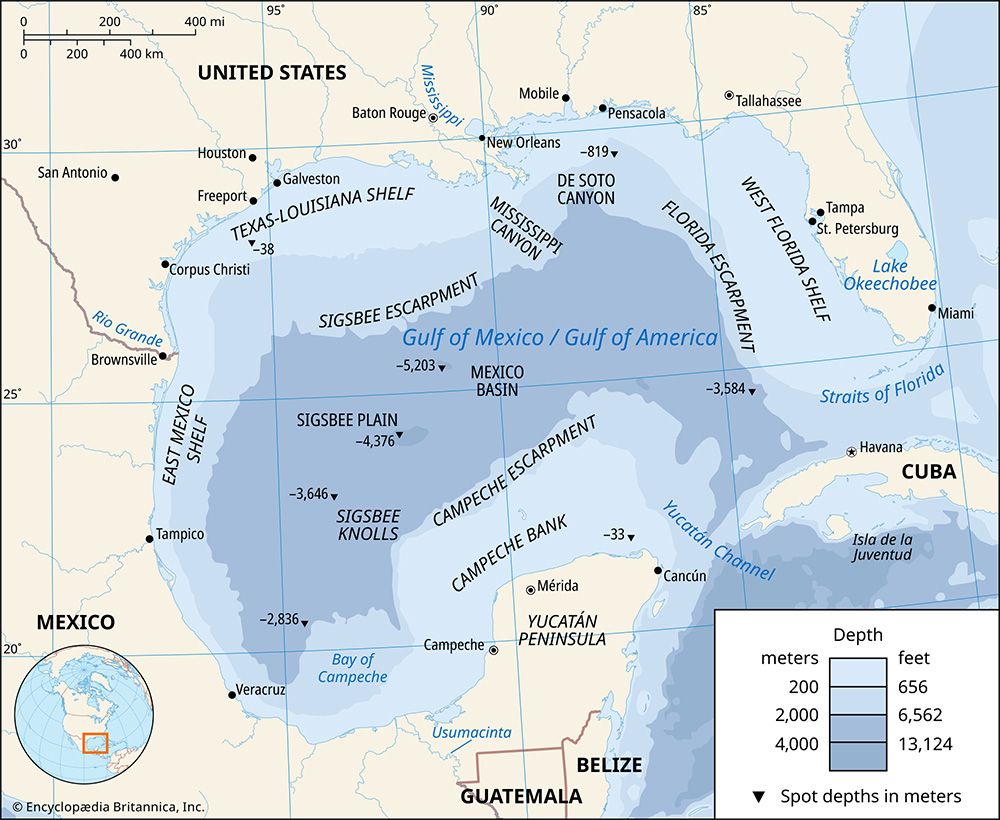
The Laguna Madre is a narrow, shallow lagoon situated along the coast of southern Texas, United States, and northeastern Mexico. It is sheltered from the Gulf of Mexico by barrier islands, most notably Padre Island.1
The lagoon is physically divided into two distinct sections by the broad delta of the Rio Grande:
- U.S. Section: This portion extends 120 miles (190 km) southward from Corpus Christi Bay. Because it lacks major stream inflows and has limited outlets to the Gulf, it is a hypersaline environment.12
- Mexican Section: This portion extends 100 miles (160 km) northward from the area above the mouth of the Soto la Marina River.1
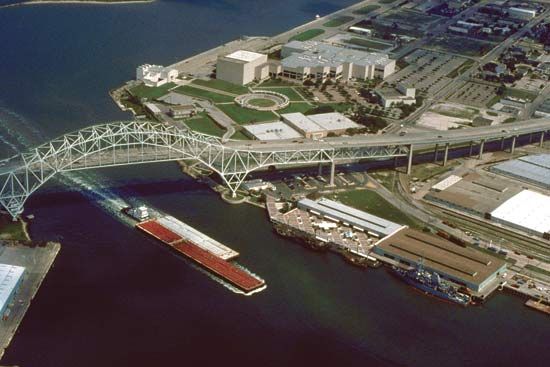
The Gulf Intracoastal Waterway traverses the lagoon, terminating at Brownsville, Texas.1
How does the hypersalinity of Laguna Madre affect its ecosystem and wildlife?
The hypersalinity of the Laguna Madre significantly shapes its unique environment and biological community. Because the lagoon lacks major stream inflows and has limited exchange with the Gulf of Mexico, high rates of evaporation cause the water to become much saltier than the open sea, sometimes reaching levels as high as 65 parts per thousand.12
This extreme environment has the following impacts:
- Adaptation: Various species of plants and animals have evolved to survive in these high-salinity conditions.2
- Ecological Stress: When salinity levels rise above a critical threshold, the environment can become lethal, occasionally resulting in the death of thousands of fish.1
- Wildlife Habitat: Despite these challenges, the lagoon remains a vital area for waterfowl, which use the region for nesting.1
In these conditions, denser saline water often settles beneath fresher water, and the environment can even lead to the formation of salt deposits. can even lead to the formation of salt deposits.2
How does the Laguna Madre compare to other hypersaline lagoons around the world?
The Laguna Madre in Texas is a prominent example of a hypersaline lagoon, a classification shared by other bodies of water in hot, arid regions where evaporation rates exceed freshwater input from land drainage.2
When comparing the Laguna Madre to other hypersaline environments, the primary differentiator is the degree of salinity:
- Laguna Madre: Maintains a salinity level of approximately 65 parts per thousand (ppt).2
- Syvash Sound: Located in the Black Sea, this lagoon exhibits significantly higher salinity, reaching 132 ppt.2
In these lagoons, the lack of significant exchange with the open sea prevents the dilution of salts, leading to a circulation pattern where dense, saline water sinks to the bottom, sometimes resulting in the formation of salt deposits. While these conditions are extreme, they are distinct from brackish lagoons—such as the Gippsland lagoons—which receive substantial runoff and maintain much lower salinity levels, typically ranging between 0.5 and 20 ppt depending on the season.2
What makes a lagoon hypersaline?
A lagoon becomes hypersaline primarily due to the environmental conditions of hot, arid regions where the rate of evaporation significantly exceeds the amount of freshwater received from land drainage.2
The process typically involves the following factors:
- Water Loss and Density: As evaporation removes fresh water, the remaining surface water becomes denser than seawater and sinks to the bottom of the lagoon.2
- Limited Exchange: If the lagoon has restricted exchange with the open sea, it cannot effectively dilute its salt content, allowing salinity levels to rise well above the average of the open ocean.2
- Circulation Patterns: This creates a circulation pattern that is the reverse of typical estuaries; seawater flows in at the surface to replace the water lost to evaporation, while dense, saline water accumulates at the bottom.2
Under these conditions, the water can reach extremely high salinity levels, such as those found in the Laguna Madre or the Syvash Sound, and may eventually lead to the formation of salt deposits.2
Sources
- Laguna Madre — Encyclopædia Britannica
- lagoon - Water temperature and salinity — Encyclopædia Britannica
- Salt marsh — Encyclopædia Britannica
- seawater - Salinity distribution — Encyclopædia Britannica
- salinity — Encyclopædia Britannica
Published on · 3 min read