Lake Chiuta
Lake Chiuta is a lake situated on the border between Mozambique and Malawi in southeastern Africa.
What is Lake Chiuta?
Lake Chiuta is a lake situated on the border between Mozambique and Malawi in southeastern Africa.1
The lake is approximately 40 miles (64 km) long and narrow, measuring between 2 and 8 miles (3–13 km) in width. Its southern shore is characterized by marshy and indefinite terrain. Geographically, the lake is part of a depression that extends north-northeast from the Mulanje Mountains and is drained northward by the Lugenda River.12
How does the Lugenda River affect the surrounding region?
The Lugenda River serves as the northward drainage outlet for Lake Chiuta, which lies on the border between Malawi and Mozambique. Geographically, the river flows into the Lugenda valley, which forms part of a larger depression extending north-northeast from the Mulanje Mountains.13
Furthermore, the Lugenda River functions as a chief tributary to the Ruvuma River, a major perennial waterway that defines the boundary between Tanzania and Mozambique for 400 miles before emptying into the Indian Ocean. While the provided information highlights the river’s role in regional drainage and as a tributary, specific details regarding its direct impact on the local human or ecological environment beyond these hydrological connections are not available in the current data.2
What are the main differences between Lake Chiuta and Lake Chilwa?
Lake Chilwa and Lake Chiuta are both located in a depression in southeastern Malawi that extends from the Mulanje Mountains toward the Lugenda valley. Despite their proximity, they exhibit distinct characteristics:
- Drainage Systems: Lake Chilwa is an endoreic (in-flowing) system, meaning it does not have a surface outlet and relies on evaporation and seepage. In contrast, Lake Chiuta is drained northward by the Lugenda River.
- Size and Depth: Lake Chilwa is significantly larger, covering approximately 1,000 square miles (2,600 square km), though it is quite shallow with a maximum depth of about 10 feet (3 meters). Lake Chiuta is much smaller and narrower, measuring about 40 miles (64 km) long and between 2 and 8 miles (3–13 km) wide.
- Environment: Half of Lake Chilwa is covered by swamp and savanna vegetation, and its waters become increasingly saline away from the shores. Lake Chiuta’s southern shore is noted for being marshy and indefinite.
What kind of wildlife lives in the wetlands of southeastern Africa?
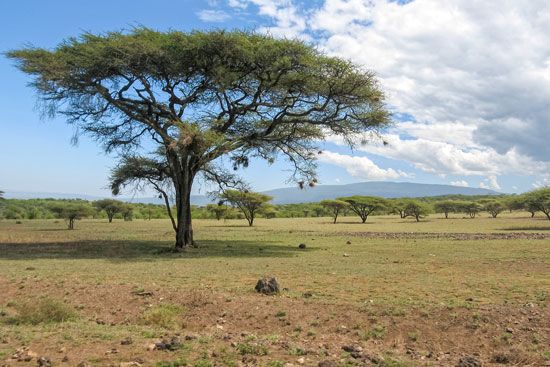
The wetlands of southeastern Africa, such as those surrounding Lake Chilwa, support a diverse array of wildlife adapted to aquatic and marshy environments. These habitats are characterized by a mix of swamp and savanna vegetation, often featuring plants like the giant sedge (Cyperus papyrus).52
Fauna of the Wetland Regions
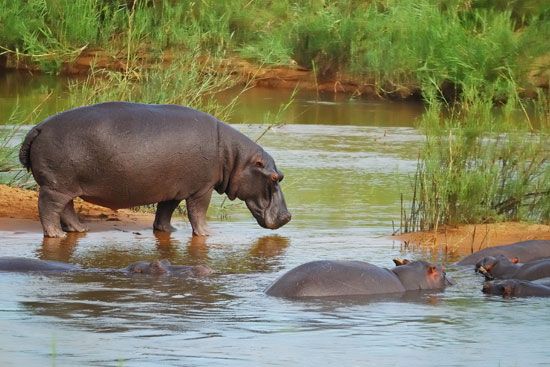
- Mammals: Large herbivores are common in these areas, including hippopotamuses, elephants, and buffalo. Specialized “marsh antelopes”—such as the waterbuck, lechwe, kob, puku, and reedbuck—are specifically adapted to these damp landscapes.567
- Reptiles: Crocodiles are widespread in many African lakes and their associated wetlands, though their presence can be limited by physical barriers like waterfalls.5
- Birds: Waterfowl are particularly prominent. These regions host a variety of fish-eating birds, including cormorants, darters, and kingfishers.5
- Fish: The lakes and their connected river systems are often rich in fish life, including mouthbreeding Tilapia, various catfish species like Clarias and Bagrus, and tiger fish (Hydrocynus).5
Conservation efforts, such as those supported by international agencies, remain vital to safeguarding these habitats and the flora and fauna they sustain.2
Sources
- Lake Chiuta — Encyclopædia Britannica
- Lake Chilwa — Encyclopædia Britannica
- Ruvuma River — Encyclopædia Britannica
- East African lakes - Physiography — Encyclopædia Britannica
- East African lakes - Plant and animal life — Encyclopædia Britannica
- Chad - Plant and animal life — Encyclopædia Britannica
- Africa - Mammals — Encyclopædia Britannica
Published on · 2 min read