Cape Diamond
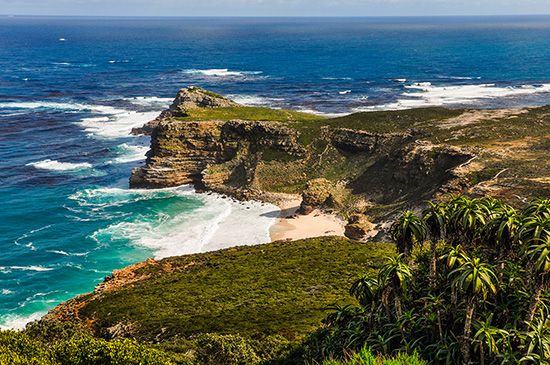
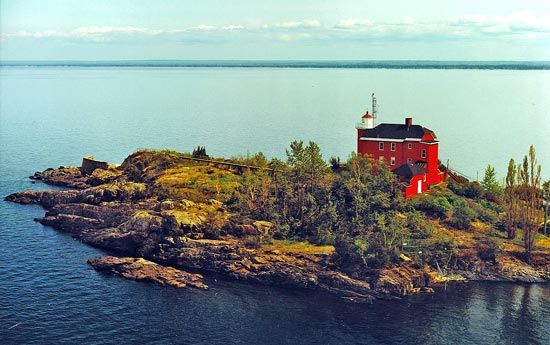
The term "Cape Diamond" refers to two distinct concepts depending on the context:

What is Cape Diamond?
The term “Cape Diamond” refers to two distinct concepts depending on the context:
Geographical Landmark
Cape Diamond is a prominent headland located in the Québec region of Canada. Situated within the city of Quebec, it stands at the confluence of the St. Charles and St. Lawrence rivers. Rising to an elevation of 333 feet (102 meters), the cape is topped by the Citadel, a historic military fortress. It was named in 1608 by the explorer Samuel de Champlain, who discovered quartz crystals on the site that he mistook for diamonds.1
Gemology
In the context of jewelry and gemology, a Cape diamond refers to a diamond that exhibits a yellowish tint. The name is derived from the Cape of Good Hope region. A variation known as a “silver Cape” describes a diamond with only a very slight yellow coloration.23
Who was Samuel de Champlain?
Samuel de Champlain (c. 1567–1635) was a pivotal French explorer and navigator, widely recognized as the “Father of New France.” He is best known for founding the city of Quebec in 1608, which became a cornerstone of French colonial efforts in the New World.45
His career was defined by significant contributions to North American geography and colonial administration:
- Exploration: Champlain mapped extensive regions, including the Ottawa River, the eastern Great Lakes, and the lake that now bears his name, Lake Champlain.45
- Diplomacy and Trade: He established critical alliances with First Nations groups, such as the Huron and Algonquin, which were instrumental in developing the fur trade between France and indigenous populations.5
- Leadership: Despite facing severe challenges—including harsh winters, scurvy, and the temporary loss of Quebec to English privateers—Champlain remained dedicated to the colony’s survival. He served as commandant of New France, overseeing its expansion along the St. Lawrence River until his death.5
What is the history of the Citadel in Quebec?
The Citadel (or Citadelle) in Quebec City is a historic, star-shaped military fortress situated atop Cape Diamond, the city’s strategic high ground overlooking the St. Lawrence River.
Construction of the current structure began in 1820 and was completed approximately 30 years later. It was built as part of a broader defensive effort, including a 2.9-mile-long stone wall constructed in the early 19th century, to protect the city against a feared invasion by the United States.1
Today, the Citadel serves as an active military base and is home to the Royal 22nd Regiment, which performs an elaborate daily changing of the guard ceremony. The site also houses the Royal 22nd Regiment Museum, offering visitors insight into the region’s military past. Along with the nearby Plains of Abraham (National Battlefields Park), the Citadel stands as a prominent reminder of Quebec’s colonial and defensive history.1
How are diamonds graded by color?
The provided search results do not contain information regarding the specific grading scales or methodologies used to categorize diamond color. The text notes that diamonds vary from colorless to black and that colorless or pale blue stones are the most valued, while most gem-quality diamonds are tinged with yellow. It also mentions that “fancy” diamonds possess distinct body colors, with red, blue, and green being the rarest. However, the specific industry standards for color grading are not detailed in the available information.7
Sorry, the Britannica knowledge base does not contain this information.
Sources
- Cape Diamond — Encyclopædia Britannica
- Cape diamond — Merriam-Webster
- silver Cape — Merriam-Webster
- Samuel de Champlain: Top Questions — Encyclopædia Britannica
- Samuel de Champlain — Encyclopædia Britannica
- Quebec - The contemporary city — Encyclopædia Britannica
- diamond — Encyclopædia Britannica
Published on · 2 min read