Lake George
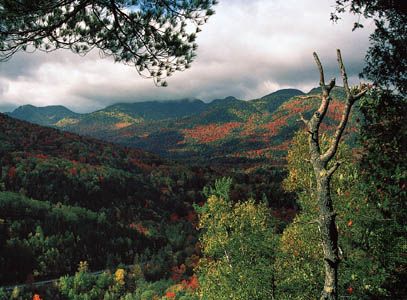
Lake George, located in the foothills of the Adirondack Mountains, has long served as a significant site for both recreation and regional industry.
How has Lake George been used for recreational and economic purposes throughout history?
Lake George, located in the foothills of the Adirondack Mountains, has long served as a significant site for both recreation and regional industry.1
Recreational Significance
The lake is widely recognized as a popular resort area, celebrated for its scenic beauty, numerous islands, and glacial origins. Its role as a destination for leisure is a cornerstone of the local economy, with the village of Lake George serving as a primary hub for tourism. The surrounding region, which is almost entirely occupied by Adirondack Park, provides extensive opportunities for outdoor engagement within one of the largest protected areas in the United States.12
Economic Context
Historically, the economy of the surrounding Warren county has been shaped by its natural resources. While tourism remains a primary industry today, the broader region historically supported significant manufacturing and processing sectors, including lumbering, limestone processing, paper milling, and textile manufacturing, particularly in nearby communities like Glens Falls.2
What is the origin of Lake George’s name?
The name of Lake George depends on which geographic location you are referencing, as both the lake in New York and the lake in Australia share the name but have different origins.
Lake George, New York
The Mohawk people originally referred to the lake as Andiatarocte, meaning “Place Where the Lake Contracts.” In 1646, the French Jesuit missionary Father Isaac Jogues named it Lac du Saint-Sacrement. It was later renamed in 1755 by General Sir William Johnson in honor of King George II of Great Britain.1
Lake George, Australia
Located in New South Wales, this lake is known by the Aboriginal name Werriwa. It was first visited by a European explorer, Joseph Wild, in 1820 and was named for King George IV.3
Where is Lake George located in New South Wales, Australia?
Lake George is situated in southeastern New South Wales, Australia. It is located approximately 25 miles (40 km) northeast of Canberra, positioned just east of the Lake George Range, which is a low ridge within the Great Dividing Range.3
The lake occupies a structural trough formed by faulting during the Miocene Epoch. It is an endorheic basin, meaning it has no external drainage, and it relies on a delicate balance of rainfall, evaporation, and streamflow. Consequently, the lake experiences significant fluctuations in size and depth, occasionally drying up completely to become pastureland.3
How does the water level of Lake George fluctuate, and what causes these changes?
The water level of Lake George in New South Wales, Australia, is characterized by extreme fluctuations, often resulting in the lake drying up completely to become pastureland, as occurred in years such as 1838–39, 1930–34, and 1982.3
These changes are driven by the lake’s status as an endorheic basin, meaning it has no external drainage to regulate its volume. Instead, the lake maintains a delicate hydrologic balance between three primary factors:3
- Rainfall: Seasonal and long-term precipitation patterns are the main drivers of water input.35
- Evaporation: High rates of evaporation, particularly during periods of drought, significantly reduce the lake’s surface area and depth.35
- Streamflow: The lake relies on inflow from its 380-square-mile basin, which is sensitive to regional climatological conditions.3
Because these factors are largely uncontrollable natural processes, the lake’s level is highly susceptible to both seasonal variations and long-term climatic trends, such as extended periods of drought.56
Sources
- Lake George — Encyclopædia Britannica
- Warren — Encyclopædia Britannica
- Lake George — Encyclopædia Britannica
- list of lakes - Australia — Encyclopædia Britannica
- lake - Water level fluctuations — Encyclopædia Britannica
- lake - The water budget — Encyclopædia Britannica
Published on · 3 min read