Lake Constance
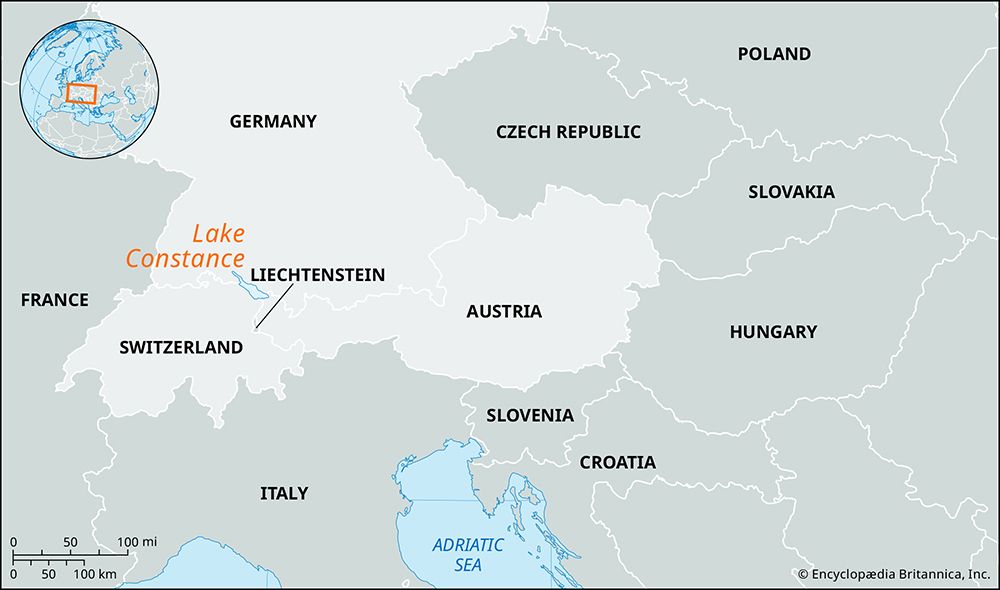
Lake Constance, also known as the Bodensee, is a large lake situated in Western Europe on the borders of Germany, Austria, and Switzerland. Occupying an…
What are the geographical features and location of Lake Constance?
Lake Constance, also known as the Bodensee, is a large lake situated in Western Europe on the borders of Germany, Austria, and Switzerland. Occupying an ancient glacier basin at an elevation of 1,299 feet (396 m), it spans approximately 209 square miles (541 square km).12
The lake is roughly 40 to 46 miles long and up to 8 miles wide, with a maximum depth of 827 feet (252 m). Its geography is defined by several distinct sections:12
- Ober Lake: The main body of the lake located southeast of Konstanz.1
- Unter Lake and Überlinger Lake: In the west, the Bodan mountain ridge divides the water into these two northern and southern segments.1
The Rhine River flows through the lake, entering near Bregenz and exiting via the Unter Lake. The region is known for its mild climate, fertile slopes, and notable islands such as Mainau and Reichenau.1
What is the origin of the name ‘Lake Constance’ and are there any other names for this body of water?
The name “Lake Constance” is derived from the city of Konstanz, which is located on its southwestern shore.12
The lake is also widely known by its German name, Bodensee. This name is believed to originate from the Carolingian imperial palatinate of Bodman, which was situated at the northwestern end of the Überlinger Lake. While “Lake Constance” is the common English designation, “Bodensee” remains the primary name used in German-speaking regions.13
How deep is Lake Constance and how does its depth compare to other European lakes?
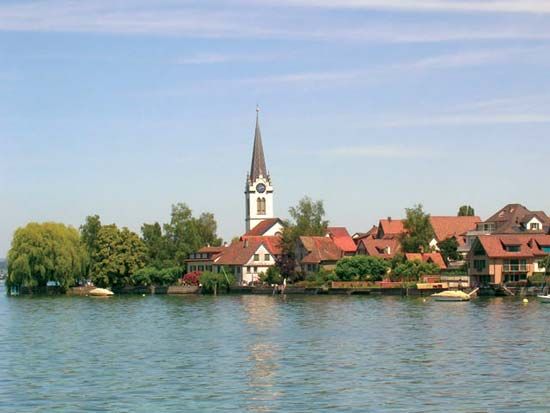
Lake Constance has an average depth of 295 feet (90 m) and reaches a maximum depth of 827 feet (252 m).1
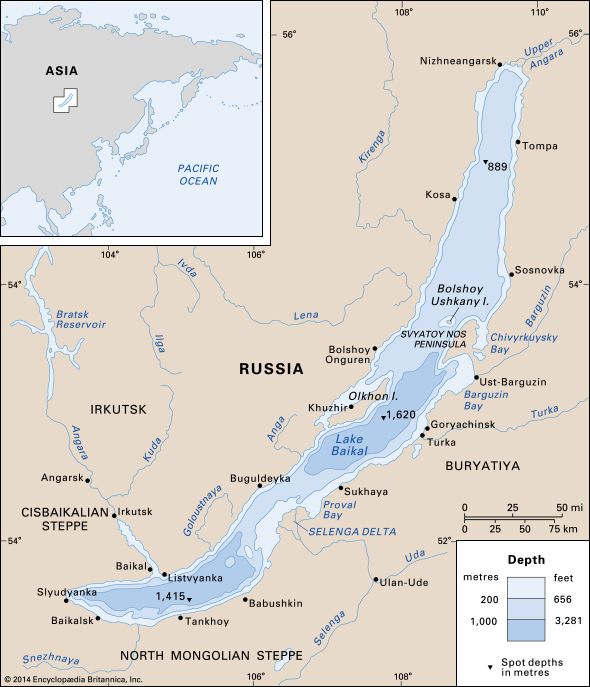
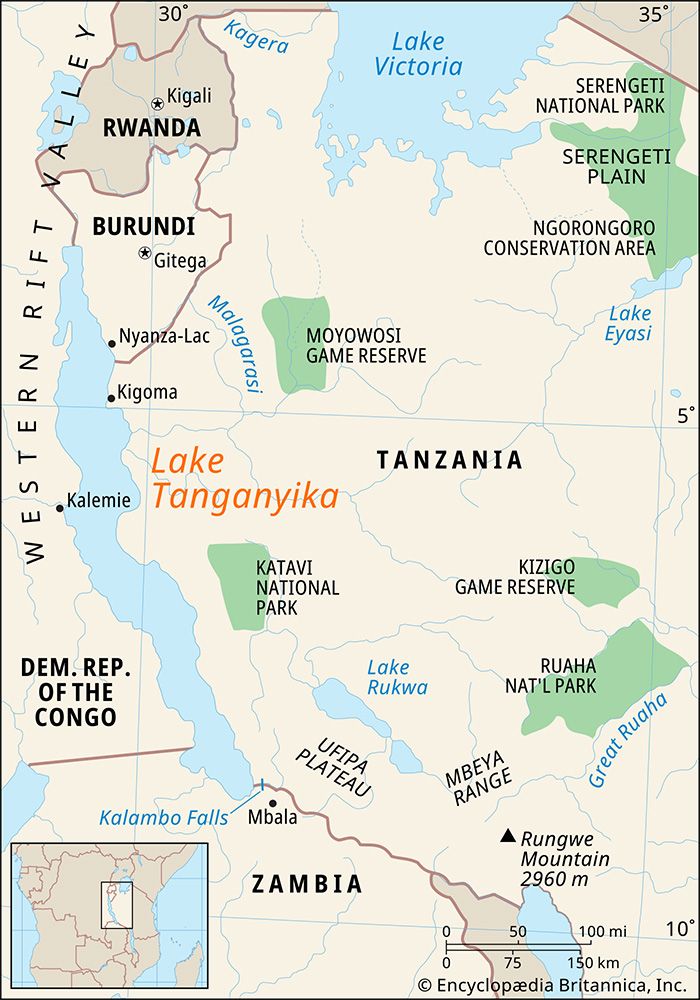
When compared to the world’s deepest lakes, Lake Constance is significantly shallower than major global examples like Lake Baikal (5,315 feet) or Lake Tanganyika (4,710 feet). Within the context of Alpine lakes—a group of 11 significant European lakes formed by glacial excavation—Lake Constance is considered a deep body of water, consistent with the general characteristics of lakes originating in mountain valleys. While it is a prominent feature of the Alpine region, it does not rank among the deepest lakes on Earth.56
Are there any notable islands within Lake Constance?
Yes, there are several notable islands within Lake Constance, each with its own historical and cultural significance:
- Reichenau: Located in the Untersee (the western arm of the lake), this island is famous for its historic Benedictine monastery founded in 724. It served as a major artistic and literary center during the 9th–11th centuries and was designated a UNESCO World Heritage site in 2000 for its significant monastic architecture.78
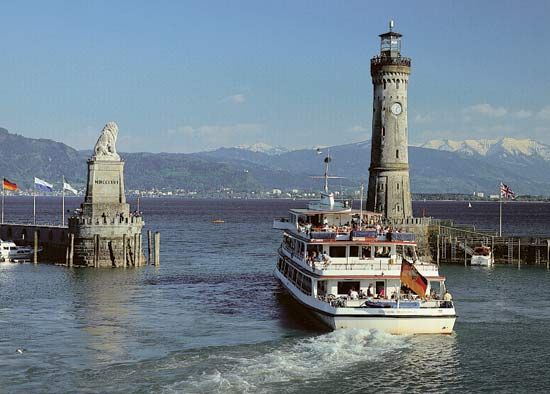
- Lindau: This island is home to a historic city of the same name. Connected to the mainland by two bridges, it features a well-preserved medieval and Baroque appearance, including a famous 19th-century Bavarian lion statue at its harbor entrance.18
- Mainau: Situated in the Überlinger Lake north of Konstanz, this island is well-known for its beautiful gardens and mild climate, which are supported by the lake’s ability to store and reflect heat.8
Sources
- Lake Constance — Encyclopædia Britannica
- Constance, Lake — Merriam-Webster
- Bodensee — Merriam-Webster
- Constance — Merriam-Webster
- 9 of the World’s Deepest Lakes — Encyclopædia Britannica
- Alpine lakes — Encyclopædia Britannica
- Reichenau — Encyclopædia Britannica
- Lindau — Encyclopædia Britannica
Published on · 2 min read