Lake Baikal
Lake Baikal, located in Siberia, is distinguished by its extreme age and depth, which set it apart from all other lakes on Earth:
What makes Lake Baikal unique in terms of its age and depth?
Lake Baikal, located in Siberia, is distinguished by its extreme age and depth, which set it apart from all other lakes on Earth:
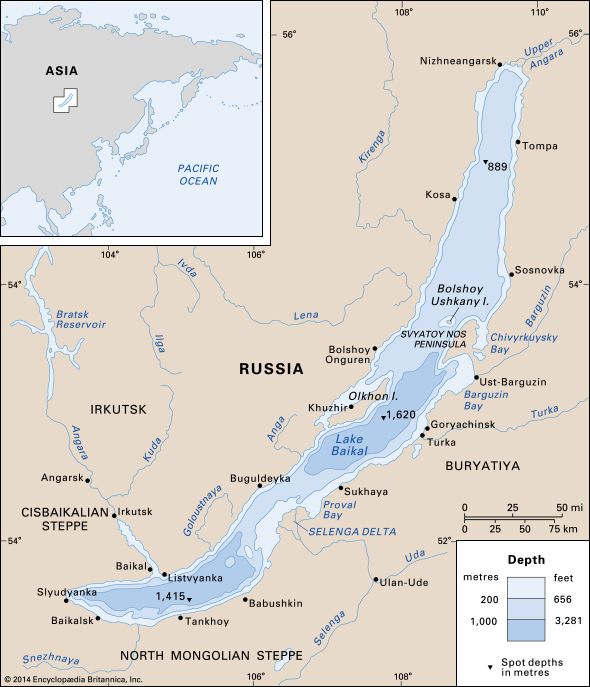
- Age: It is the oldest existing freshwater lake in the world, with an estimated age of 20 million to 25 million years.12
- Depth: It is the deepest continental body of water on the planet, reaching a maximum depth of 5,315 feet (1,620 meters).12
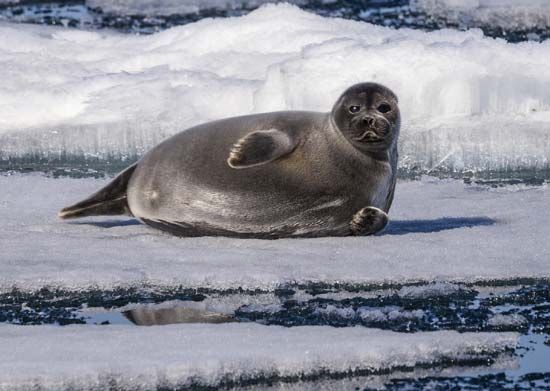
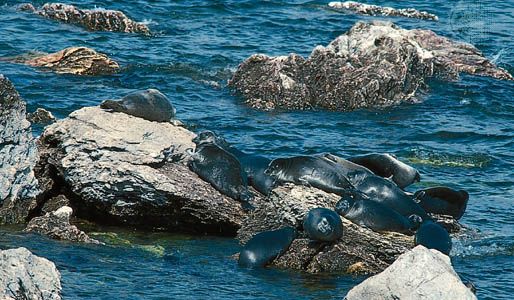
Beyond these records, the lake is also the world’s largest freshwater lake by volume, containing approximately 20% of the Earth’s unfrozen surface fresh water. Its unique environment supports a high degree of biodiversity, including many endemic species such as the Baikal seal, the only seal species that lives exclusively in a freshwater habitat.123
How does Lake Baikal’s ecosystem support its diverse range of endemic species?
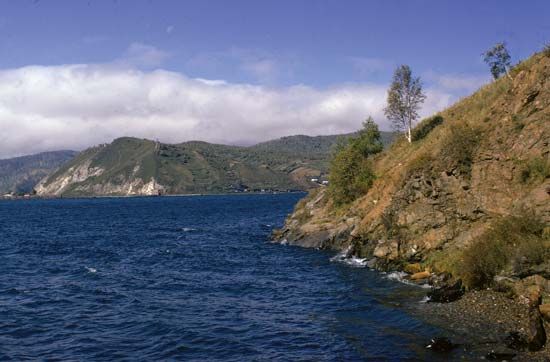
Lake Baikal’s ecosystem supports a remarkable array of biodiversity, characterized by a high degree of endemism—meaning many of its 1,500 to 1,800 animal species are found nowhere else on Earth. This unique biological richness is sustained by several key factors:3
- Diverse Habitats: The lake’s extreme depth (5,315 feet) and vast volume create varied environmental niches, from sunlit surface waters to deep, cold zones, allowing for a wide range of specialized species.3
- Specialized Food Webs: The ecosystem relies on complex interactions between invertebrates, mollusks, and various fish species, such as the 25 species of gobies and the unique golomyanka (oilfish), which gives birth to live young. These species form the foundation for larger predators like the Baikal seal, the world’s only exclusively freshwater seal.325
- Environmental Stability: Despite the harsh Siberian climate, the lake’s massive volume provides a relatively stable thermal environment compared to the surrounding land, which helps maintain consistent conditions for its endemic inhabitants.3
- Conservation Efforts: The establishment of protected areas, such as the Barguzinsky Nature Reserve and the Baikalsky Nature Reserve, helps safeguard the lake’s delicate ecological balance against threats like pollution and habitat disruption.36
What role does Lake Baikal play in Russia’s freshwater resources and economy?
Lake Baikal serves as a critical component of Russia’s natural resources and economy, functioning as both a massive freshwater reservoir and an industrial hub.
Freshwater Resources
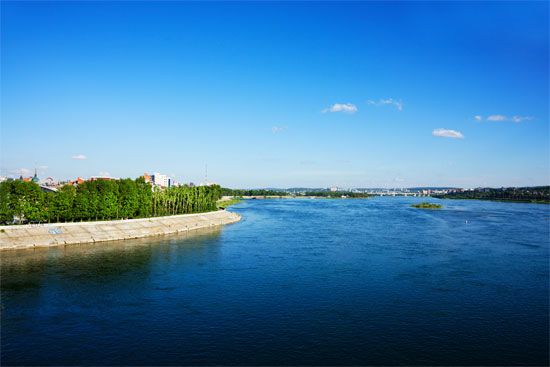
Lake Baikal is the world’s largest freshwater lake by volume, holding approximately one-fifth of the Earth’s unfrozen surface fresh water. It acts as a primary water source for the region, with more than 330 rivers and streams flowing into it. The Angara River serves as the lake’s only outflow, providing a vital hydrological link that supports extensive hydroelectric power generation through a series of dams and power stations at Irkutsk, Bratsk, and Ust-Ilimsk.27
Economic Significance
The lake and its surrounding area support several key industries:
- Industry: Regional economic activities include mining (mica and marble), shipbuilding, timber production, and the manufacture of cellulose and paper.2
- Fisheries: The lake supports a commercial fishing industry, with the omul salmon being a primary catch, alongside lake whitefish, grayling, and sturgeon.2
- Tourism and Health: The area is utilized for its natural beauty and mineral springs, with locations like Goryachinsk attracting visitors for the curative properties of its waters.2
Can you describe some of the unique wildlife found only in Lake Baikal?
Lake Baikal is home to a rich variety of wildlife, with a significant portion of its 1,500 to 1,800 animal species being endemic, meaning they are found nowhere else on Earth.3
Unique Endemic Species
- Baikal seal: Also known as the nerpa (Phoca sibirica), this is the world’s only exclusively freshwater seal. It is uniquely adapted to the lake’s environment, even using its claws to cut breathing holes in the ice during the winter.23
- Golomyanka: This specialized fish, belonging to the family Comephoridae, is unique to the lake. Unlike many other fish, it gives birth to live young.3
- Fish Diversity: The lake hosts approximately 50 species of fish across seven families. The most numerous are the 25 species of gobies. Additionally, the Baikal sturgeon (A. baerii) is found in the lake and surrounding regions of Siberia, China, and Kazakhstan.38
- Other Notable Species: The lake’s ecosystem also supports the omul salmon, grayling, and lake whitefish, which are important to the region’s ecology and fisheries.3
Sources
- 9 of the World’s Deepest Lakes — Encyclopædia Britannica
- Lake Baikal — Encyclopædia Britannica
- Baikal seal: Top Questions — Encyclopædia Britannica
- Baikal, Lake — Merriam-Webster
- Baikal seal — Encyclopædia Britannica
- Baikalsky Nature Reserve — Encyclopædia Britannica
- Angara River — Encyclopædia Britannica
- sturgeon — Encyclopædia Britannica
- chondrostean - Distribution — Encyclopædia Britannica
Published on · 4 min read