Adirondack Mountains
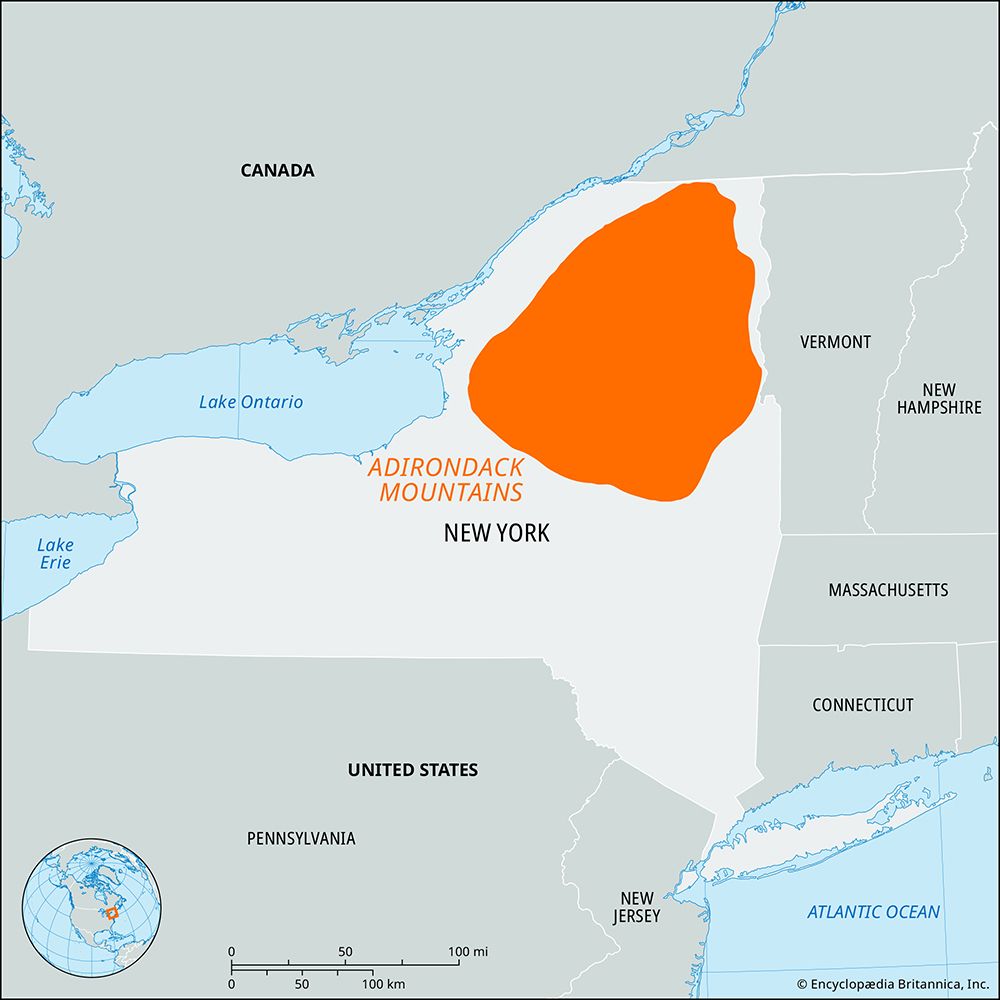
The Adirondack Mountains, located in northeastern New York, possess a unique geological history that distinguishes them from the surrounding Appalachian…
What is the geological history of the Adirondack Mountains?
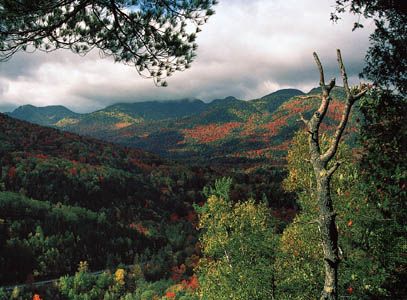
The Adirondack Mountains, located in northeastern New York, possess a unique geological history that distinguishes them from the surrounding Appalachian Mountain system. While often associated with the Appalachians, the Adirondacks are geologically related to the Canadian Shield.1
Formed approximately one billion years ago, the region’s foundation is tied to the Grenville orogeny—a period of intense mountain building caused by continental collisions during the assembly of the supercontinent Rodinia. This tectonic activity resulted in significant crustal thickening and the formation of deep-seated rocks.2
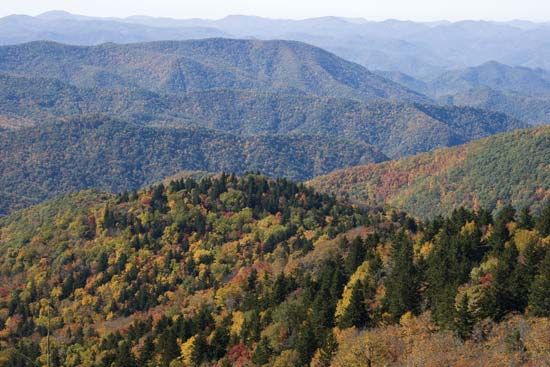
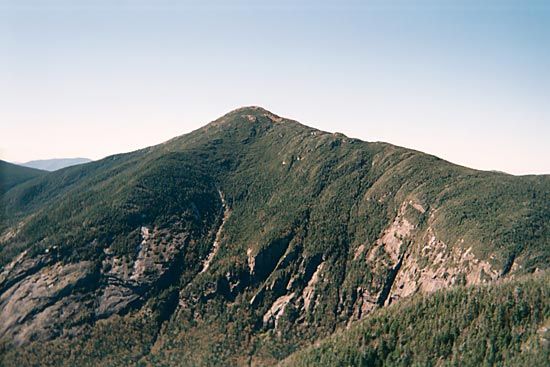
Over the subsequent hundreds of millions of years, the mountains underwent extensive erosion. Their current domelike, circular appearance was further shaped by the Pleistocene Epoch glaciations. As these glaciers retreated, they deposited glacial till and carved the region’s characteristic landscape, including its numerous lakes, ponds, waterfalls, and deep gorges.1
How do the Adirondack Mountains compare to other mountain ranges in the northeastern United States?
While the Adirondack Mountains are frequently grouped with the Appalachian Mountain system, they are geologically distinct from their neighbors in the northeastern United States. Unlike the Appalachians, which feature different structural characteristics, the Adirondacks are geologically related to the Canadian Shield, a massive ancient plateau.1
The Adirondacks are defined by a unique circular, domelike appearance that covers more than 9,100 square miles. Their formation dates back approximately one billion years, significantly predating the primary orogenic events that shaped much of the surrounding Appalachian landscape. While the region shares the northeastern geography with the Appalachian Plateau—which extends from the Adirondacks southward through states like Pennsylvania and Tennessee—the Adirondacks remain a separate geological entity.13
Furthermore, the Adirondacks are characterized by their specific glacial history, which left behind a landscape of over 2,300 lakes and ponds, as well as extensive glacial till deposits, distinguishing their topography from other ranges in the region.1
What types of wildlife can be found in the Adirondack Mountains?
The Adirondack Mountains are home to a variety of wildlife, supported by the region’s extensive forests and numerous water bodies.
The largest species of wildlife found in the region are:
Other mammals commonly found throughout the broader region include:
- Beavers4
- Snowshoe hares* Snowshoe hares4
- Woodchucks4
- Raccoons4
- Gray squirrels4
- Muskrats4
- Eastern cottontails4
- Deer mice4
Additionally, the area hosts a wide array of bird species, including various owls, woodpeckers, and ruffed grouse, as well as migratory birds that frequent the state’s diverse habitats.4
What is the highest peak in the Adirondack Mountains, and how tall is it?
The highest peak in the Adirondack Mountains is Mount Marcy. It reaches an elevation of 5,344 feet (1,629 metres) above sea level and also serves as the highest point in the state of New York.51
Sources
- Adirondack Mountains — Encyclopædia Britannica
- North America - 1.3 billion to 950 million years ago — Encyclopædia Britannica
- Appalachian Plateau — Encyclopædia Britannica
- New York - Plant and animal life — Encyclopædia Britannica
- Mount Marcy — Encyclopædia Britannica
Published on · 2 min read