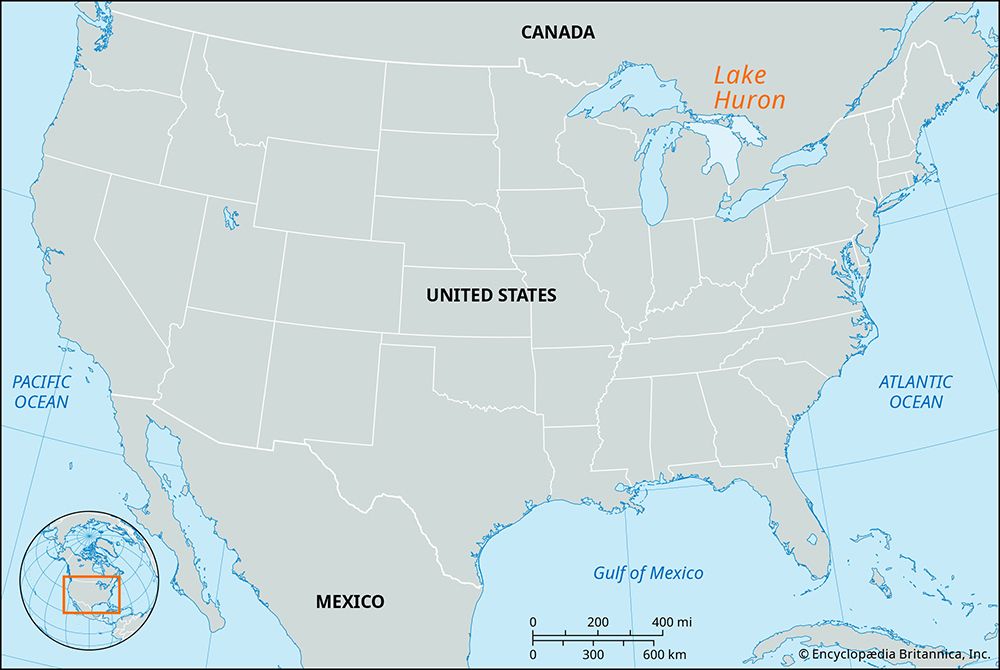
Lake Huron
Lake Huron significantly influences its surrounding regions through both climatic moderation and economic utility.
How does Lake Huron impact the climate and economy of the surrounding regions?
Lake Huron significantly influences its surrounding regions through both climatic moderation and economic utility.
Climate Impact
Like the other Great Lakes, Lake Huron acts as a thermal regulator for the local environment. By absorbing heat during warmer months and releasing it into the atmosphere during colder periods, the lake creates a moderating effect that results in cooler summers and warmer winters for nearby areas than would otherwise occur. Additionally, the lake influences regional precipitation patterns; wintertime winds passing over the water can lead to increased snowfall along eastern shores, contributing to the formation of regional “snowbelts”.1
Economic Impact
The economy of the Lake Huron region is diverse and historically rooted in natural resources:
- Industry and Trade: As a vital component of the St. Lawrence Seaway, the lake supports heavy commercial shipping of iron ore, grain, and limestone.23
- Resource Extraction: Lumbering and fishing have long been significant economic activities, with large-scale limestone loading operations located in Michigan.2
- Tourism and Recreation: The lake’s scenic shores are lined with numerous resorts and summer cottages, making it a major destination for outdoor recreation, including swimming, fishing, and boating.24
What are some of the major islands within Lake Huron and their importance?
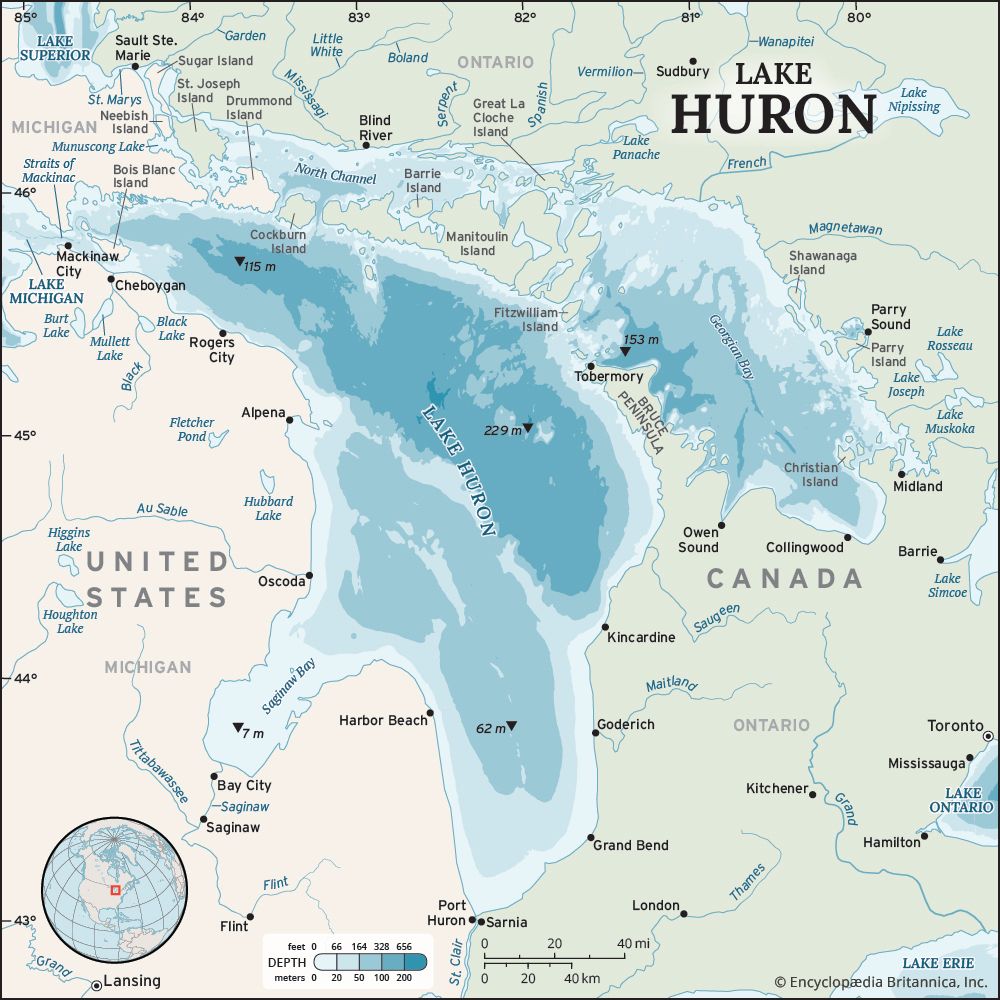
Lake Huron contains a vast number of islands, particularly in its northeastern reaches, which serve as vital ecological, historical, and economic hubs.
Major Island Groups
- Manitoulin Islands: This archipelago is a prominent feature of the Niagara Escarpment. Manitoulin Island itself is the world’s largest freshwater island. The group is significant for its role in Indigenous history and land-claim settlements, as well as its modern contributions to fishing, lumbering, and agriculture. Other notable islands in this group include Drummond, St. Joseph, and Cockburn.6
- Mackinac Island: Located near the Straits of Mackinac, this island is historically significant for its strategic military position, having hosted both British and American forts. Today, it is a renowned summer resort that preserves an 18th- and 19th-century atmosphere by banning automobiles.71
Importance of the Islands
- Ecological Significance: Many of the smaller islands throughout the lake serve as essential nesting grounds for birds, including gulls and terns.8
- Economic and Cultural Value: The islands are major destinations for tourism, sports, and recreation. They also house historical sites, such as the restored Fort Mackinac and various museums, which provide insight into the region’s colonial and fur-trading past.67
What Native American tribes have historically lived around Lake Huron, and how did they use the lake?
Several Indigenous nations have historically inhabited the regions surrounding Lake Huron, primarily belonging to the Algonquian and Iroquoian linguistic groups.
Major Indigenous Groups
- The Wendat (Huron): The Wendat confederacy lived in dense settlements in the region known as Huronia, located between the lake and the St. Lawrence River. They were a powerful agricultural society that served as a central “gatekeeper” of trade between the French and various Subarctic peoples.19
- The Ojibwe (Chippewa): Traditionally residing near the St. Marys River and the Upper Peninsula of Michigan, the Ojibwe were a major Algonquian-speaking group. Following the dispersal of the Wendat in the mid-17th century, various Ojibwe bands moved into the depopulated regions around the lake.10111
- The Three Fires Alliance: This loose confederacy included the Ottawa, Ojibwe, and Potawatomi nations, all of whom were active in the Michigan region during the 17th century.12
Use of the Lake
Indigenous peoples utilized Lake Huron and its surrounding waterways for several essential purposes:
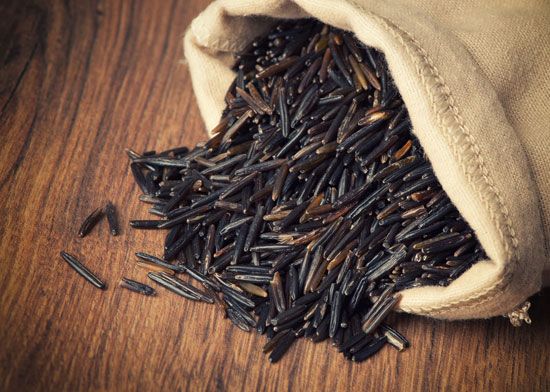
- Subsistence: Fishing was a critical activity, particularly the spring whitefish run, which provided a vital food source after winter. Groups also harvested wild rice in lakeside environments and cultivated crops like corn, beans, and squash.1112109
- Trade and Travel: The lake was part of an extensive network of rivers and portages. The Wendat, in particular, used these routes to maintain trade relationships with the Cree and Innu peoples, exchanging agricultural products for meat and fish.1
- Strategic Rendezvous: Locations like the St. Marys River rapids served as natural gathering sites for trading, camping, and social interaction among different bands.11
How do seasonal changes affect Lake Huron’s water levels and surrounding ecosystems?
Seasonal changes significantly influence the hydrology and ecology of Lake Huron, primarily through shifts in temperature and precipitation patterns.
Water Level Fluctuations
Lake Huron’s water levels generally fluctuate by one to two feet annually, typically reaching their highest points in mid-summer and their lowest in late winter. These variations are driven by meteorological factors:14
- Precipitation and Runoff: High water levels often follow seasons of heavy precipitation. The storage of winter snowpack can delay peak water levels until the spring thaw.8
- Evaporation: Lower levels generally coincide with seasons of high evaporation.8
- Hydrologic Balance: Because Lake Huron is part of a large drainage system, it takes significant time—approximately 3.5 years—for 60 percent of the full effect of a supply change to be reflected in the outflow from the downstream Lake Ontario.8
Ecosystem Impacts
The lake’s seasonal cycle profoundly shapes its biological communities:
- Thermal Modification: The lake absorbs heat during warmer months and releases it during colder months, creating a climate-moderating effect that results in cooler summers and warmer winters for the surrounding region.14
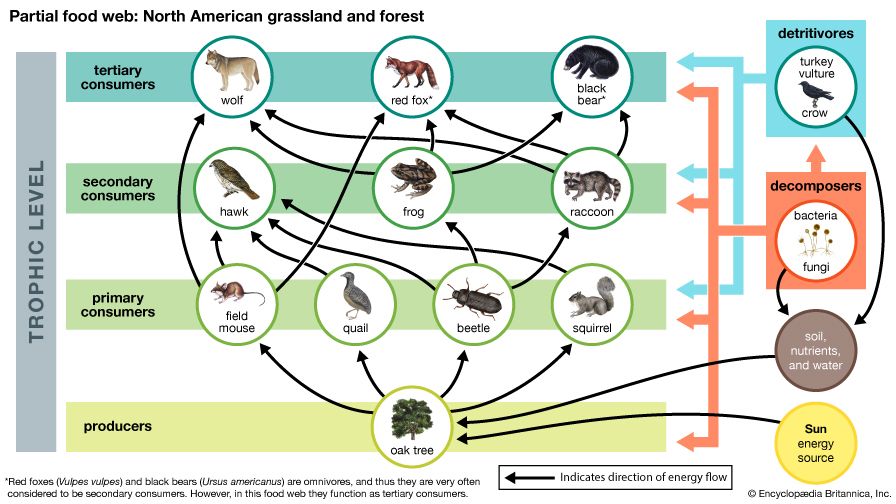
- Plankton and Productivity: Microscopic organisms like plankton are most abundant during the spring, forming the base of the food web that supports native fish species.3
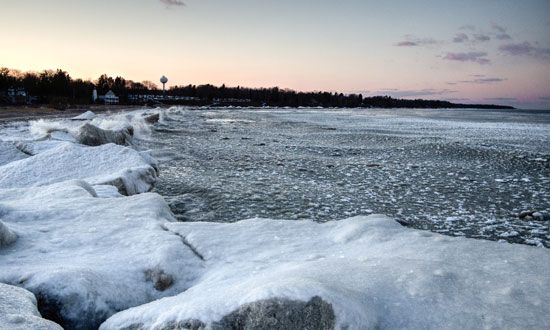
- Ice Cover: During winter, large areas of the lake surface freeze, though open patches often remain in the center. This ice cover influences energy exchange and heat transfer, which in turn affects the timing of spring biological activity.1415
Sources
- Lake Huron — Encyclopædia Britannica
- Great Lakes - Industry and transportation — Encyclopædia Britannica
- Great Lakes - Hydrology and climate — Encyclopædia Britannica
- Great Lakes - Human impact on the lakes — Encyclopædia Britannica
- Michigan - Sports and recreation — Encyclopædia Britannica
- Manitoulin Islands — Encyclopædia Britannica
- Mackinac Island — Encyclopædia Britannica
- Great Lakes - Plant and animal life — Encyclopædia Britannica
- Ojibwe — Encyclopædia Britannica
- Native American - The Iroquoians of Huronia — Encyclopædia Britannica
- Wendat — Encyclopædia Britannica
- Saint Marys River — Encyclopædia Britannica
- Michigan - The earliest inhabitants — Encyclopædia Britannica
- lake - Water level fluctuations — Encyclopædia Britannica
- ice in lakes and rivers - The seasonal cycle — Encyclopædia Britannica
Published on · 4 min read