Wild Rice
The cultivation of wild rice (Zizania) has evolved from traditional, sustainable harvesting methods to large-scale commercial production.
How has the cultivation of wild rice changed over time?
The cultivation of wild rice (Zizania) has evolved from traditional, sustainable harvesting methods to large-scale commercial production.
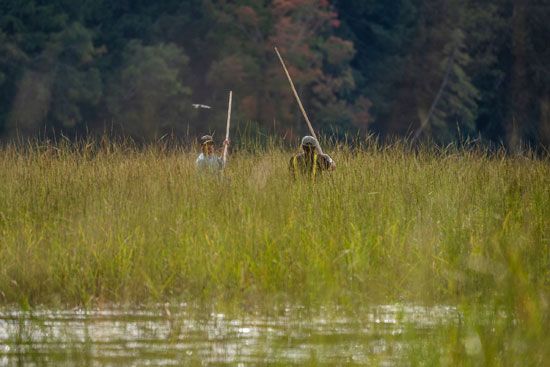
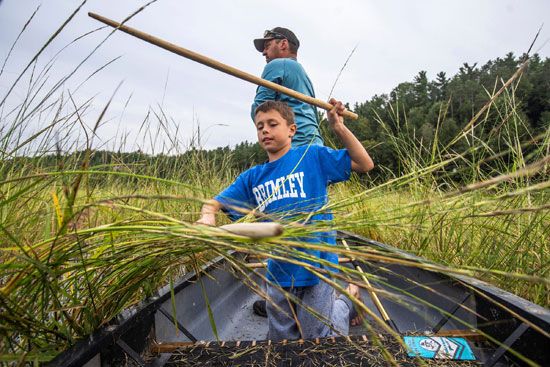
Historically, Indigenous peoples, such as the Ojibwa, have relied on wild rice (manoomin) as a vital food and ceremonial resource. This traditional practice involves a sustainable harvest from canoes using wooden knockers to gently shake ripened grains into the boat, ensuring enough remains to support waterfowl and future plant populations.1
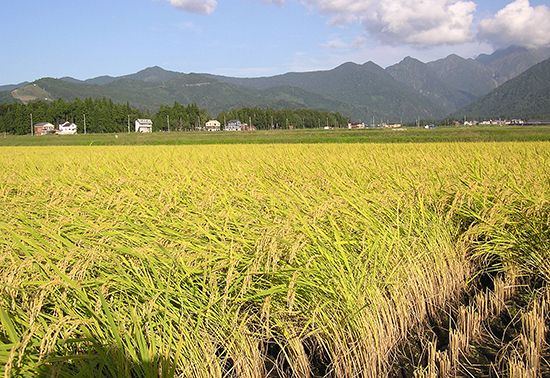
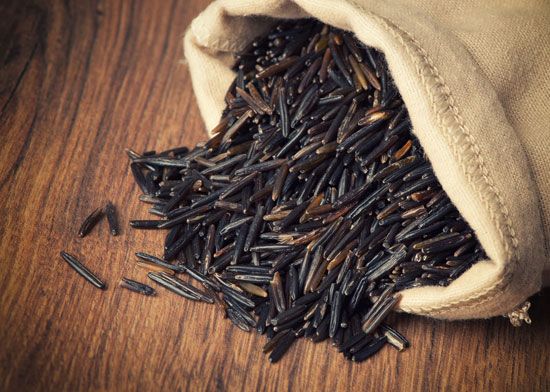
In contrast, modern commercial cultivation—primarily in Minnesota, Wisconsin, California, and Canada—utilizes constructed paddies. To facilitate this transition to industrial-scale farming, these varieties have been selectively bred to ripen simultaneously. This genetic adaptation allows farmers to harvest the crop efficiently using mechanical combines, a significant departure from the manual, labor-intensive methods of the past. While some groups maintain that wild rice should remain a wild-harvested resource rather than a commercial crop, the shift toward mechanized agriculture has defined its modern production.1
What are the different species of wild rice plants?
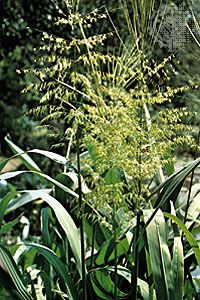
The genus Zizania, commonly known as wild rice, consists of four distinct species of coarse grasses within the Poaceae family. Despite the name, these plants are not related to true rice.
The four species are:
- Annual wild rice (Zizania aquatica): A North American species that is cultivated on a large scale in constructed paddies. It is historically significant to the Ojibwa people, who refer to it as manoomin.1
- Northern wild rice (Z. palustris): Also a North American species, this is the other primary variety grown commercially in regions such as Minnesota, Wisconsin, California, and Canada. Like Z. aquatica, it has been selectively bred for simultaneous ripening to allow for mechanical harvesting.1
- Texas wild rice (Z. texana): This species is endemic to a very small area in Texas and is currently classified as an endangered species. It is not used for cultivation.1
- Manchurian wild rice (Z. latifolia): The only Asian species in the genus. It is cultivated in eastern Asia primarily as a vegetable rather than as a grain crop.1
Where does wild rice naturally grow, and what are its preferred habitats?
Wild rice (Zizania) naturally thrives in specific aquatic environments, primarily in shallow freshwater marshes. These plants are typically found growing along the shores of streams and lakes, where they establish themselves in nutrient-rich, slow-moving or still water.1
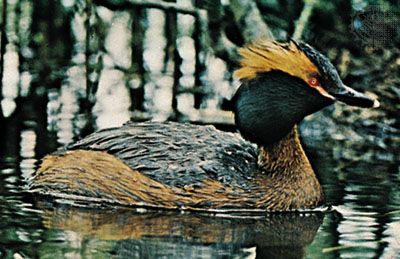
The genus is native to diverse regions, with three species originating in North America and one in Asia. In their natural habitats, these stands of tall, coarse grasses—which can reach heights of 1 to 3 meters (3.3 to 10 feet)—serve a critical ecological role. They provide essential food and shelter for waterfowl and various other bird species, creating a symbiotic relationship within the wetland ecosystem. While some varieties have been adapted for large-scale production in constructed paddies, the wild-growing populations remain vital to the biodiversity of their respective freshwater environments.1
Are there any medicinal uses for wild rice or its byproducts?
The Ojibwa people have historically utilized manoomin (annual wild rice, Zizania aquatica) for food, ceremonial purposes, and medicine. While the plant is widely recognized today as a delicacy and a significant food source, its traditional role within Indigenous cultures extends beyond nutrition to include these medicinal applications.1
It is important to note that the provided information does not detail specific medical conditions treated by the plant or the chemical properties of its byproducts. The historical use of wild rice in this context is deeply rooted in the cultural traditions of the Ojibwa, who emphasize the importance of wild harvesting to maintain the plant’s integrity and spiritual significance.1
Sources
- wild rice — Encyclopædia Britannica
- Origins of agriculture - Southeast Asia — Encyclopædia Britannica
- Cereal processing - Cultivation — Encyclopædia Britannica
Published on · 3 min read