Lake Inari
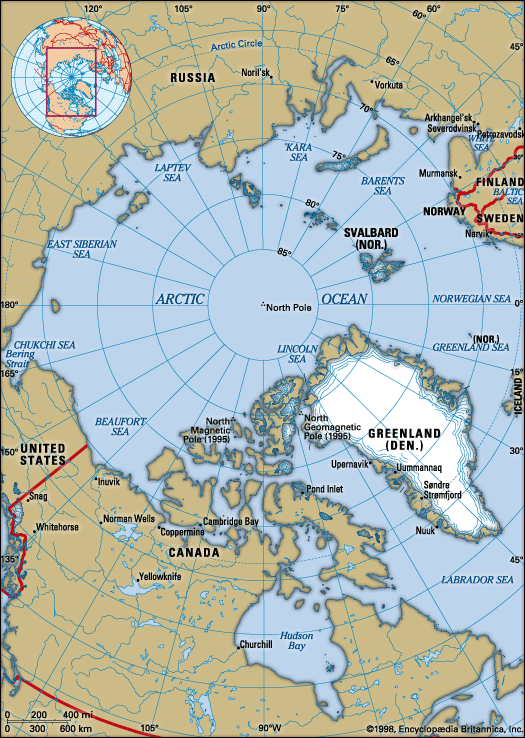
Lake Inari is the largest lake in northern Finland, situated near the Russian border. It covers an area of 425 square miles (1,102 square km) and reaches…
What is Lake Inari?
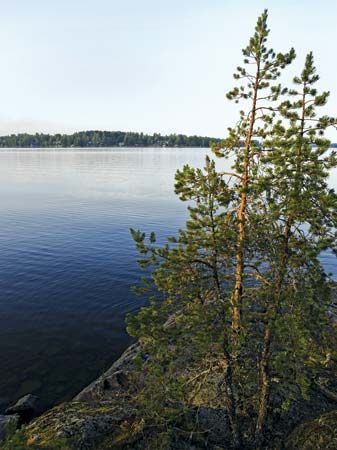
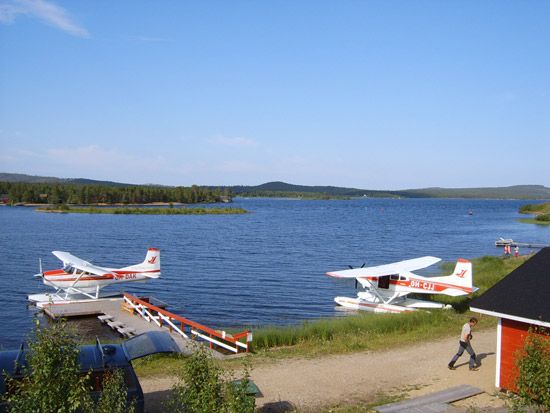
Lake Inari is the largest lake in northern Finland, situated near the Russian border. It covers an area of 425 square miles (1,102 square km) and reaches depths of approximately 200 feet (61 meters).1
The lake is fed by the Ivalo River and drains eastward via the Paats River into the Arctic Ocean. The town of Inari, a significant Sami trading center, is located on its southwestern shore. Due to its excellent opportunities for fishing and boating, the lake is a popular destination for tourists.1
Who are the Sami people?
The Sami are an indigenous people who inhabit a region they call Sápmi, which encompasses Lapland and adjacent areas across northern Norway, Sweden, Finland, and the Kola Peninsula of Russia. They are descendants of nomadic peoples who have lived in northern Scandinavia for thousands of years.23
Historically, the Sami economy was based on reindeer herding, though today many participate in modern professional and industrial sectors. They speak Sami languages, which belong to the Uralic family. While there are 11 distinct Sami languages, many are endangered, and most speakers are bilingual in their respective national languages.243
For much of their history, the Sami faced pressure from southern neighbors and attempts at forced assimilation by Scandinavian governments. In recent decades, the Sami have become more assertive in protecting their traditional culture, language, and land rights through political and cultural organizations.24
What is the climate like in Finnish Lapland?
The climate in Finnish Lapland, which lies largely north of the Arctic Circle, is characterized by extremely severe and prolonged winters and short summers.56
Seasonal Extremes
- Winter: This is the longest season, featuring intense cold with temperatures that can drop as low as −22 °F (−30 °C). In these northern latitudes, the polar night lasts for more than 50 days.5
- Summer: The summer season is brief, lasting from May to July. During this time, the region experiences the midnight sun for approximately two months, and temperatures can reach as high as 80 °F (27 °C).5
Precipitation and Conditions
Annual precipitation in northern Finland is slightly less than the 25 inches (600 mm) recorded in the south, with about one-third of this total falling as snow or sleet. Due to the harsh winter conditions, all Finnish waters are subject to some degree of surface freezing during the colder months.5
How do rivers like the Ivalo and Paats affect the lake’s ecosystem?
The Ivalo and Paats rivers play distinct roles in the hydrology of Lake Inari. The Ivalo River acts as a primary inflow, feeding the lake from the southwest, while the Paats River serves as the outlet, draining the lake eastward toward the Arctic Ocean.1
Regarding the ecosystem, rivers significantly influence a lake’s physical environment through the transport of clastic sediments. As river water enters a lake, its velocity decreases rapidly, causing suspended materials to settle. Larger particles, such as pebbles and coarse sands, typically deposit near the river mouth, while finer silts and clays are carried further offshore. This process of sedimentation is fundamental to shaping the lakebed and sorting materials throughout the basin.9
While the provided information confirms that these rivers facilitate the movement of water and sediment, the specific biological impacts on Lake Inari’s unique ecosystem are not detailed in the available data.
We could dive deeper into the geological processes of sedimentation or explore the broader geography of the Lake Inari region.
Sources
- Lake Inari — Encyclopædia Britannica
- Sami — Encyclopædia Britannica
- Uralic languages - The Sami (Lapp) languages — Encyclopædia Britannica
- Sami: Top Questions — Encyclopædia Britannica
- Finland - Climate — Encyclopædia Britannica
- Lapland — Encyclopædia Britannica
- Baltic Sea - Climate — Encyclopædia Britannica
- Finland - Land — Encyclopædia Britannica
- lake - Clastic sediments — Encyclopædia Britannica
Published on · 3 min read