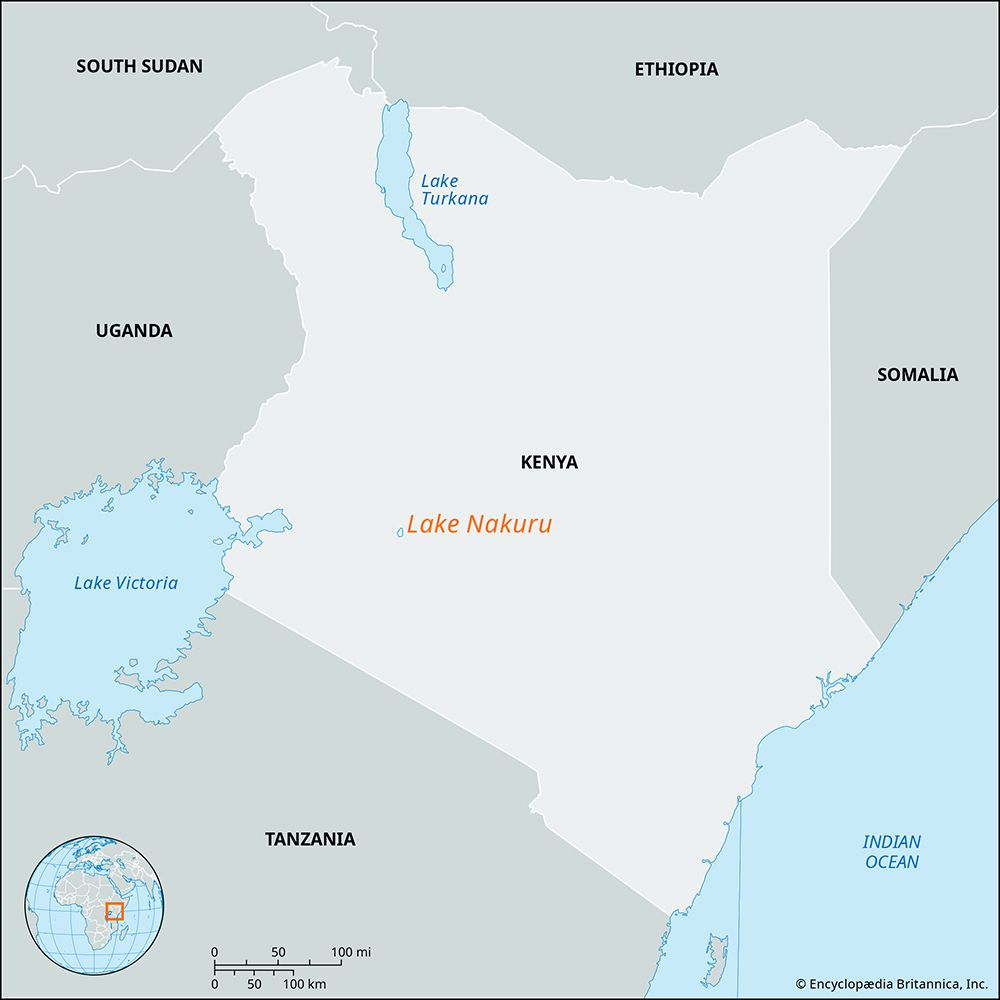
Lake Magadi
Lake Magadi is a lake located in the Great Rift Valley of southern Kenya. Measuring approximately 20 miles (32 km) long and 2 miles (3 km) wide, it occupies…
What is Lake Magadi?
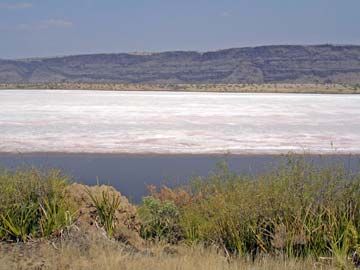
Lake Magadi is a lake located in the Great Rift Valley of southern Kenya. Measuring approximately 20 miles (32 km) long and 2 miles (3 km) wide, it occupies the lowest point of a vast depression.1
The lake is characterized by a bed consisting almost entirely of solid or semisolid soda. Hot and cold streams, heavily impregnated with soda, flow into the basin, while springs of soda water emerge through the caked crust, giving the water a vivid pink appearance. Due to its extreme salinity, the lake supports a very limited fish population. Economically, the site is significant for the extraction of salt and gypsum, which are transported via a railway line connected to Mombasa.12
How does the Great Rift Valley influence the formation of these lakes?
The Great Rift Valley plays a fundamental role in the formation and characteristics of East African lakes through tectonic and volcanic processes.
Tectonic Formation
Rift valleys are created when blocks of the Earth’s crust drop between diverging lithospheric plates. This process creates deep, elongated depressions that serve as basins for water accumulation. In the East African Rift System, these valleys often lie 1,000 meters or more below the surrounding plateaus, providing the necessary topography for large-scale water collection.3
Volcanic and Hydrological Influence
Volcanic activity, which is common in the eastern branch of the rift, significantly influences these lakes by:
- Blocking Drainage: Eruptions can obstruct natural drainage paths, creating or altering lake basins and shorelines.4
- Chemical Composition: In the case of Lake Magadi, the rift’s geology allows alkaline, soda-rich waters of deep-seated origin to emerge, resulting in its unique soda-crusted bed.41
- Sedimentation: The depth of many rift lakes is determined by thick layers of sediment that have accumulated over time.4
Additionally, the rift’s relief influences local climates, with funnel-shaped topography at lake heads often increasing precipitation, which directly impacts lake levels and salinity.4
Why is Lake Magadi’s water pink?
Lake Magadi appears pink due to the presence of soda-rich water that emerges from springs throughout the lake’s basin. These springs gush up through the lake’s caked crust of solid or semisolid soda, effectively dyeing the water a vivid pink color.1
What makes soda lakes different from freshwater lakes?
Soda lakes, also known as alkali lakes, differ significantly from typical freshwater lakes in their chemical composition, pH levels, and environmental characteristics.
Chemical Composition and Alkalinity
While most freshwater lakes maintain a neutral pH between 6 and 8, soda lakes are defined by their high alkalinity levels, often resulting in a pH well above 9. These lakes contain large concentrations of dissolved sodium and potassium carbonates, as well as sodium chloride. In contrast, freshwater systems rely on a carbon dioxide buffering system that keeps their pH relatively stable and near-neutral.567
Formation and Environment
- Evaporation: Soda lakes are commonly found in arid regions where high evaporation rates concentrate salts. When the water evaporates, it leaves behind alkaline evaporites, such as sodium carbonate and sodium bicarbonate.78
- Sedimentation: These lakes often feature unique chemical precipitates, including various carbonates, sulfates, and borates.6
- Biological Impact: The extreme chemical environment of a soda lake, such as Lake Nakuru or Mono Lake, creates a specialized habitat. While some forms of life can adapt to these high-alkalinity conditions, they are distinct from the diverse biological communities found in freshwater ecosystems.6
Sources
- Lake Magadi — Encyclopædia Britannica
- East African lakes - Plant and animal life — Encyclopædia Britannica
- tectonic basins and rift valleys - Rift valleys — Encyclopædia Britannica
- East African lakes - Geology, climate, and hydrology — Encyclopædia Britannica
- lake - Carbon dioxide — Encyclopædia Britannica
- Soda Lake — Encyclopædia Britannica
- lake - Sulfates , nitrates, and phosphates — Encyclopædia Britannica
- lake - Chemical precipitates — Encyclopædia Britannica
- alkali lake — Merriam-Webster
Published on · 3 min read