Mount Everest
Climate change has significantly impacted Mount Everest and its surrounding Himalayan environment, primarily through the warming of the region and the…
How has climate change impacted Mount Everest and its surrounding ecosystem?
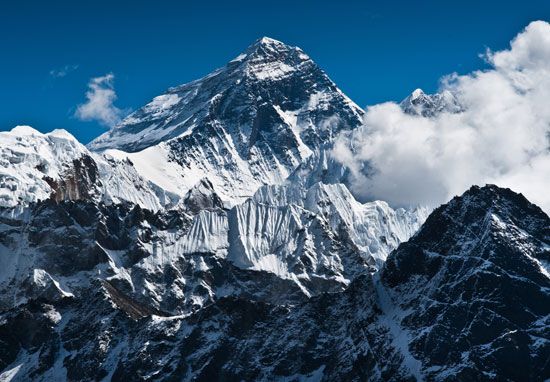
Climate change has significantly impacted Mount Everest and its surrounding Himalayan environment, primarily through the warming of the region and the resulting degradation of glacial systems. Observations, such as those highlighted by the Eco Everest Expeditions, have documented that the Khumbu Icefall is melting, a clear indicator of the broader warming trend affecting high-altitude environments.1
The retreat of glaciers in the wider Himalayan region, including areas like Ladakh, has been accelerated by atmospheric warming. This glacial recession poses severe risks to the local ecology, including:2
- Water Scarcity: The depletion of glaciers reduces the quantity and quality of groundwater reserves, exacerbating water shortages in already arid high-altitude zones.2
- Increased Hazard Risk: Glacial retreat alters local geography, often forming new lakes that increase the risk of catastrophic flooding, landslides, and mudslides.2
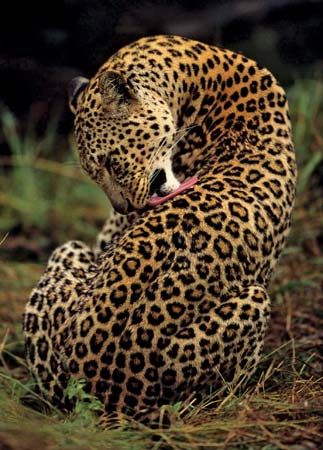
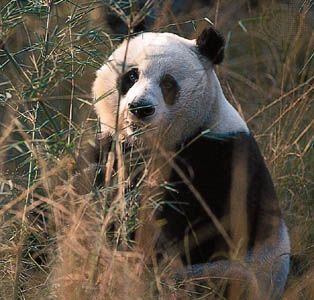
- Habitat Pressure: While human factors like overgrazing and resource consumption have historically damaged the habitats of species such as snow leopards and lesser pandas, climate-driven environmental shifts further threaten these fragile ecosystems.1
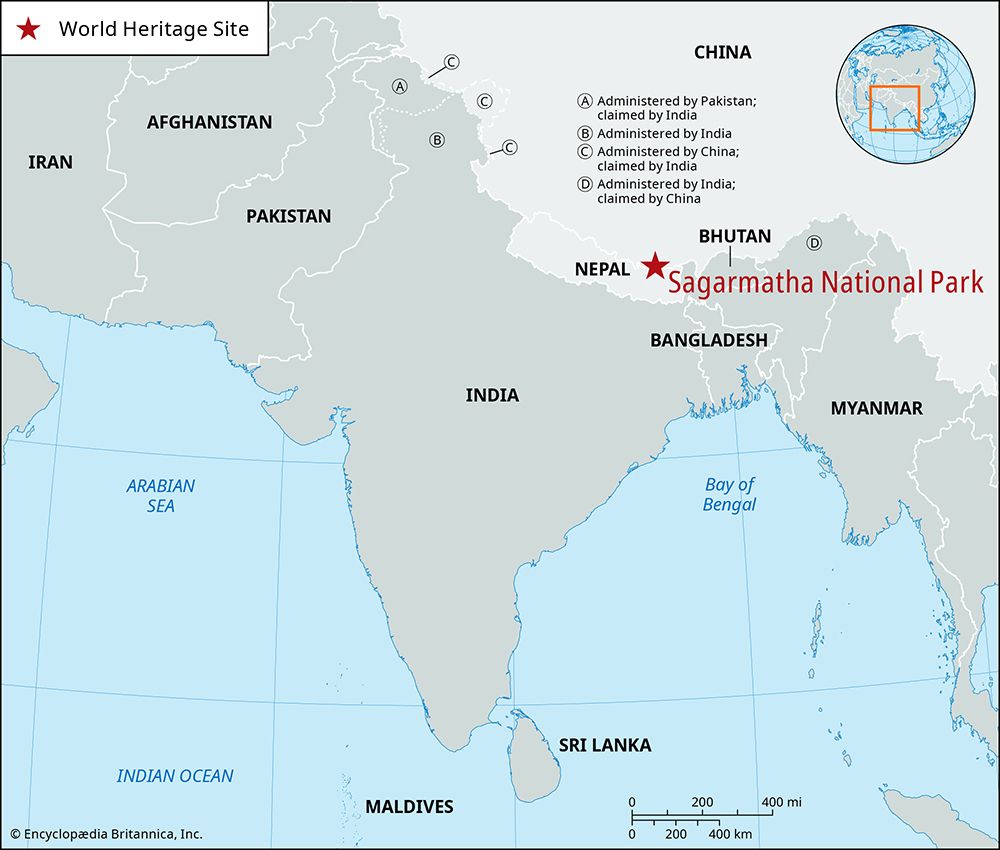
What kind of weather conditions are typically encountered on Mount Everest?
The climate of Mount Everest is consistently hostile, characterized by extreme cold, powerful winds, and unpredictable storms. Because the summit reaches the lower limit of the jet stream, it can be buffeted by sustained winds exceeding 100 miles (160 km) per hour.1
Temperature conditions are severe:
- Summer: The warmest average daytime temperature on the summit (in July) is approximately −2 °F (−19 °C).1
- Winter: During January, the coldest month, average temperatures are −33 °F (−36 °C), though they can drop as low as −76 °F (−60 °C).1
Precipitation primarily falls as snow during the summer monsoon season, which lasts from late May to mid-September. Due to these harsh conditions, there are only two brief windows—typically in April–May and a short period in September—when the weather is considered hospitable enough for climbing. Outside of these times, winter storms persist from October through March, making ascent nearly impossible.13
How does the extreme altitude affect climbers attempting to reach the summit?
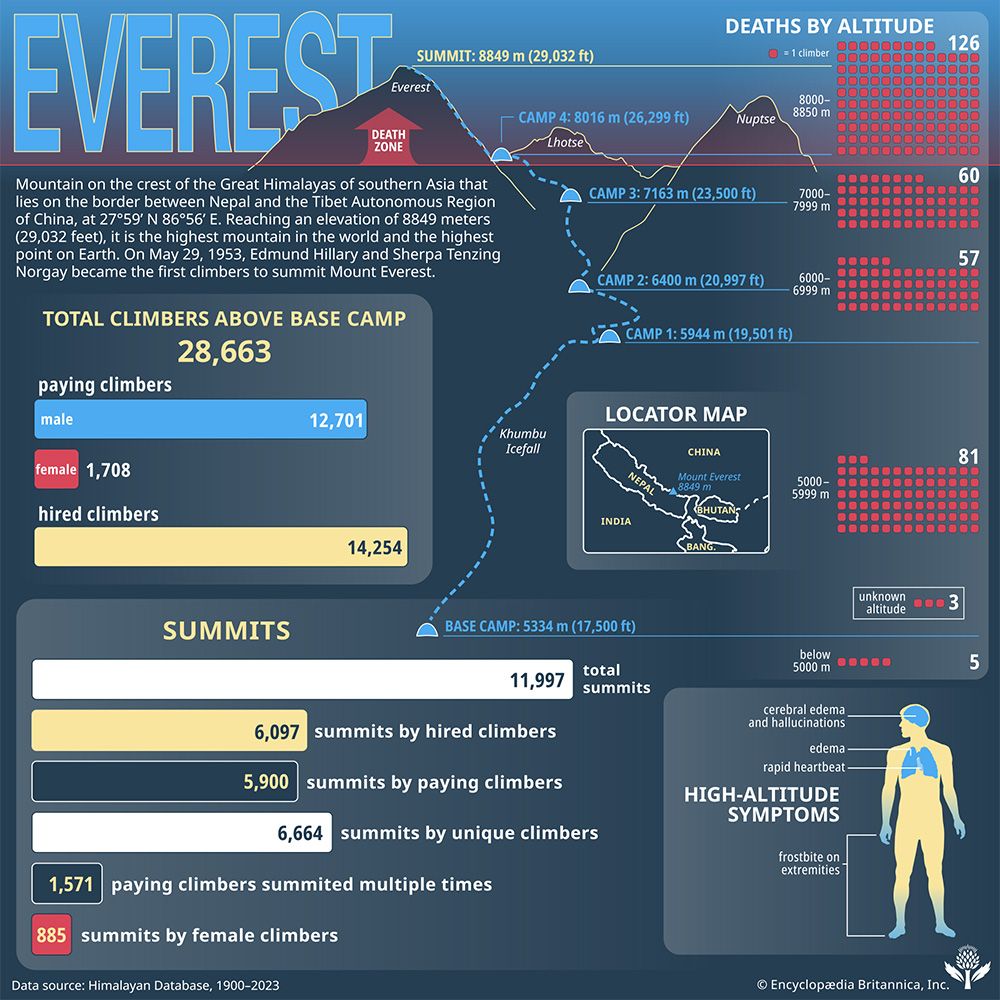
The extreme altitude of Mount Everest presents severe physiological challenges to climbers, particularly in the “death zone” above 25,000 feet (7,600 meters), where oxygen levels are critically low.3
Physiological Effects of Hypoxia
At these elevations, the body suffers from hypoxia, or oxygen deprivation in the tissues. Common symptoms include:3
- Respiratory and Cardiac Stress: Rapid breathing and pulse rates as the body struggles to obtain sufficient oxygen.38
- Cognitive and Physical Impairment: Climbers often experience confusion, poor decision-making, fatigue, and decreased muscular coordination.38
- Metabolic Issues: A loss of appetite, inability to digest food properly, and poor sleep quality.38
Severe Medical Conditions
Two life-threatening conditions can occur due to the body’s response to low oxygen:
- High-altitude cerebral edema (HACE): The brain swells due to increased blood flow, which can lead to coma and death.3
- High-altitude pulmonary edema (HAPE): Fluid leaks into the lungs, essentially causing the climber to drown.38
Mitigation and Acclimatization
To survive, climbers use the “climb high, sleep low” strategy, establishing camps at increasing elevations while returning to lower camps to rest. This process allows for acclimatization, where the body gradually adapts to lower atmospheric pressure. While supplemental oxygen can alleviate hypoxia, it carries the risk of dependency; if a climber runs out of oxygen while still at high altitude, the consequences can be fatal.983
What are the major climbing routes to the summit of Mount Everest?
The two most common routes to the summit of Mount Everest are the southern route and the northern route, both of which serve as the primary paths for modern commercial expeditions.1011
Primary Climbing Routes
- Southern Route: This is the most frequently used path, beginning at the Base Camp on the Khumbu Glacier. It ascends through the Khumbu Icefall and continues via the South Col to the summit. This was the route taken during the historic 1953 expedition by Edmund Hillary and Tenzing Norgay.10
- Northern Route: Accessed from the Tibetan side, this route was the focus of many early British attempts. It is now a standard path for climbers, with the first successful ascent via this approach credited to a Chinese expedition in 1960.10
Other Notable Routes
While the majority of activity is concentrated on the two “normal” routes, other, more challenging paths exist:
- East Face: Known as Everest’s largest face, it is rarely climbed. An American team completed the first ascent of this route in 1983.1012
- Northeast Ridge: This route has seen significant exploration, including a complete ascent in 1995.1211
- North Face: This side has been the site of various technical ascents, including routes through the Great Couloir and the Japanese and Hornbein couloirs.12
Sources
- Mount Everest - Drainage and climate — Encyclopædia Britannica
- Mount Everest - Environmental issues — Encyclopædia Britannica
- Mount Everest - The human challenge — Encyclopædia Britannica
- Himalayas - Climate of the Himalayas — Encyclopædia Britannica
- Mountain ecosystem - Environment — Encyclopædia Britannica
- Ladakh - Weather and climate change — Encyclopædia Britannica
- Mount Everest - Geology and relief — Encyclopædia Britannica
- human respiratory system - High altitudes — Encyclopædia Britannica
- altitude sickness — Encyclopædia Britannica
- Mount Everest - Routes and techniques — Encyclopædia Britannica
- Mount Everest - Further exploration from Tibet — Encyclopædia Britannica
- Mount Everest - Extraordinary feats — Encyclopædia Britannica
Published on · 4 min read