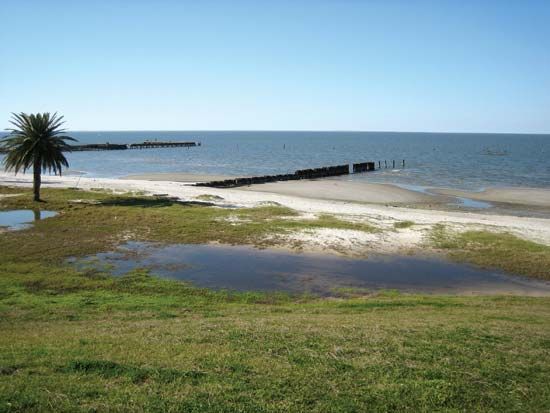
Lake Nipigon
Lake Nipigon is a large lake located in the Thunder Bay district of west-central Ontario, Canada. Situated approximately 80 miles northeast of Thunder Bay…
What is Lake Nipigon?
Lake Nipigon is a large lake located in the Thunder Bay district of west-central Ontario, Canada. Situated approximately 80 miles northeast of Thunder Bay, the lake covers an area of 1,872 square miles (4,848 square km) and sits at an elevation of 1,050 feet (320 m).12
The name Nipigon is derived from an Indigenous term meaning “deep, clear water.” The lake is characterized by its rugged shoreline, which features numerous bays, promontories, and islands. With a maximum depth of 540 feet (165 m), it drains southward into Lake Superior via the Nipigon River. This river drops 250 feet over a 30-mile course, supporting hydroelectric developments that provide power to the surrounding mining and lakehead regions.1
How does the Nipigon River connect to Lake Superior?
The Nipigon River serves as the primary outlet for Lake Nipigon, draining the lake southward into Lake Superior.
Over the course of its 30-mile (48-kilometer) journey, the river descends 250 feet (76 meters) before reaching Nipigon Bay. This significant drop in elevation is utilized by hydroelectric developments, which generate essential power for the surrounding mining operations and the broader lakehead region.1
What kind of wildlife lives in and around Lake Nipigon?
Sorry, the Britannica knowledge base does not contain this information.
How do hydroelectric dams impact the local environment?
Hydroelectric dams significantly alter the natural environment, often leading to complex ecological and social consequences. While they provide essential hydroelectric power, their construction and operation frequently result in the following impacts:
- Disruption of Aquatic Life: Dams act as physical barriers that block or impede the migration of spawning fish. While technologies like fish passes—such as fish ladders and locks—are used to mitigate these effects, they have not always been successful in preventing population declines or potential extinctions of native species.45
- Landscape and Habitat Alteration: Large-scale dams often inundate vast areas, destroying pristine landscapes, flora, and fauna. The creation of reservoirs can submerge cultural heritage sites and natural treasures, leading to significant loss of biodiversity and scenic value.4
- Displacement of Communities: The formation of reservoirs frequently requires the relocation of thousands of people. Inadequate planning for resettlement can lead to long-term social and economic hardship for displaced populations.46
- Changes to Ecosystem Cycles: Dams disrupt natural river processes, such as seasonal flooding that historically deposited nutrient-rich silt. This loss of natural fertilization forces agricultural communities to rely on chemical fertilizers, which can lead to runoff, algal growth, and the proliferation of disease-carrying insects.6
- Flood Risks: While dams are designed to manage water, operational decisions or extreme weather events can necessitate controlled spillages that cause downstream flooding, displacing residents and damaging infrastructure.6
Sources
- Lake Nipigon — Encyclopædia Britannica
- Nipigon, Lake — Merriam-Webster
- Lake Algonquin — Encyclopædia Britannica
- dam - Rise of environmental and economic concerns — Encyclopædia Britannica
- dam - Fish passes — Encyclopædia Britannica
- Akosombo Dam — Encyclopædia Britannica
Published on · 2 min read