Lake Petén Itzá
Lake Petén Itzá, located in northern Guatemala, holds significant historical importance as the final stronghold of the Itzá Maya. While much of the…
What is the historical significance of Lake Petén Itzá in relation to the Maya civilization?
Lake Petén Itzá, located in northern Guatemala, holds significant historical importance as the final stronghold of the Itzá Maya. While much of the surrounding Petén region served as a heartland for Maya civilization during the Classic period, the Itzá people maintained their independence at the lake long after other major centers had declined. They successfully resisted Spanish conquest until 1697, making the area a critical site for the final chapter of independent Maya political history.1
Beyond its role as a late-period refuge, the broader Petén region is recognized as the area where Maya civilization had its deepest roots, featuring major ceremonial centers such as Tikal, Uaxactún, and Naranjo. The lake remains a focal point for understanding the continuity and eventual transformation of Maya society in the face of colonial expansion.21
What unique flora and fauna can be found in and around Lake Petén Itzá?
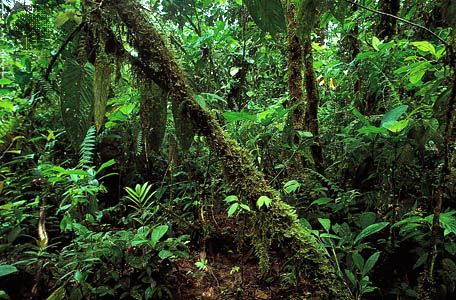
The area surrounding Lake Petén Itzá is characterized by dense tropical rainforest interspersed with patches of savanna grasslands. While the provided search results do not identify species unique exclusively to the lake itself, the broader Petén region is known for a rich variety of wildlife, though many species have become increasingly rare due to environmental pressures.415
Flora
The forests of the Petén region are economically and ecologically significant, yielding valuable resources such as:
- Mahogany
- Tropical cedar
- Rubber
- Chicle5
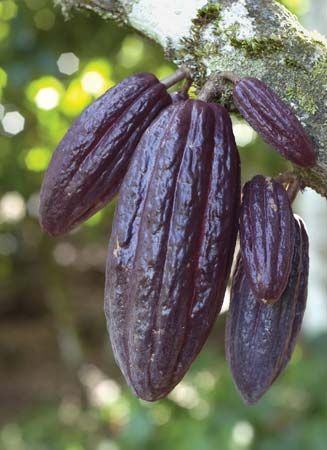
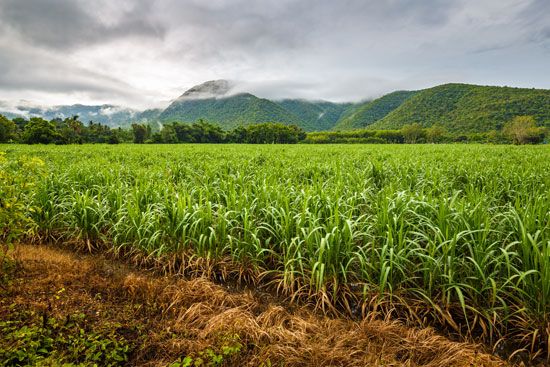
In the immediate vicinity of Flores and the lake shores, local cultivation includes cacao, sugarcane, various grains, and tropical fruits.15
Fauna
The lowland forests support a diverse range of animal life, including:
- Mammals: Deer, monkeys, peccaries, tapirs, ocelots, and jaguars.4
- Reptiles: Numerous snake species, crocodiles, and iguanas.4
- Birds: The region is home to exuberant birdlife, most notably the radiantly plumaged quetzal.4
Are there any notable islands within Lake Petén Itzá, and what is their significance?
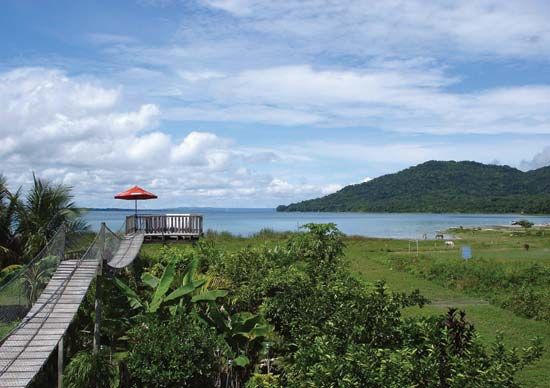
Lake Petén Itzá contains several islands, the most notable of which is the site of the city of Flores. Located in the southwestern portion of the lake, this island holds immense historical significance as the former capital of the Itzá Maya.
The island served as a final bastion of resistance against the Spanish, who were unable to conquer the Itzá people until 1697. Today, Flores functions as a vital modern trade center for the surrounding region and serves as the primary departure point for travelers visiting Tikal and other nearby archaeological sites. While access was historically difficult, the island is now connected to the mainland by a causeway, facilitating both road traffic and regional commerce.16
How was Lake Petén Itzá formed, and what are its geological characteristics?
Lake Petén Itzá is situated within a depression of the low limestone plateau that characterizes the Petén region of northern Guatemala.15
Geologically, the lake is defined by the following characteristics:
- Formation and Drainage: The lake occupies a basin in a limestone platform. A primary geological feature of this region is its subsurface drainage; because the area is composed of limestone, much of the heavy rainfall is drained underground rather than through surface rivers, which explains why the lake has no visible outlet.157
- Topography: The lake sits at an elevation of 262 feet (80 metres) above sea level. It is a significant body of water, measuring approximately 22 miles (35 km) from east to west and 10 miles (16 km) from north to south, with a maximum depth of 165 feet (50 metres).1
- Regional Context: The surrounding landscape is a knobby, hilly surface typical of the low-lying Petén plateau, which juts northward into the Yucatán Peninsula.57
Sources
- Lake Petén Itzá — Encyclopædia Britannica
- Pre-Columbian civilizations - Major sites — Encyclopædia Britannica
- Pre-Columbian civilizations - The Maya highlands and Pacific coast — Encyclopædia Britannica
- Guatemala - Plant and animal life — Encyclopædia Britannica
- Petén — Encyclopædia Britannica
- Flores — Encyclopædia Britannica
- Guatemala - Relief — Encyclopædia Britannica
Published on · 3 min read