Neusiedler Lake
Neusiedler Lake and its surrounding environment are protected through an international sanctuary and a dedicated biological station. These conservation…
What conservation efforts are in place to protect Neusiedler Lake and its surrounding area?
Neusiedler Lake and its surrounding environment are protected through an international sanctuary and a dedicated biological station. These conservation efforts are essential for safeguarding the lake’s extensive reed beds, which serve as a critical habitat for numerous species of rare and migratory birds.1
By maintaining these protected areas, authorities ensure the preservation of the region’s unique biodiversity while balancing the lake’s role as a vital recreation area and a source of raw materials for the local cellulose industry. The commitment to these conservation measures reflects the ethical necessity of protecting fragile ecosystems from the pressures of industrial use and human activity.1
Where is Neusiedler Lake located, and what countries share its shores?
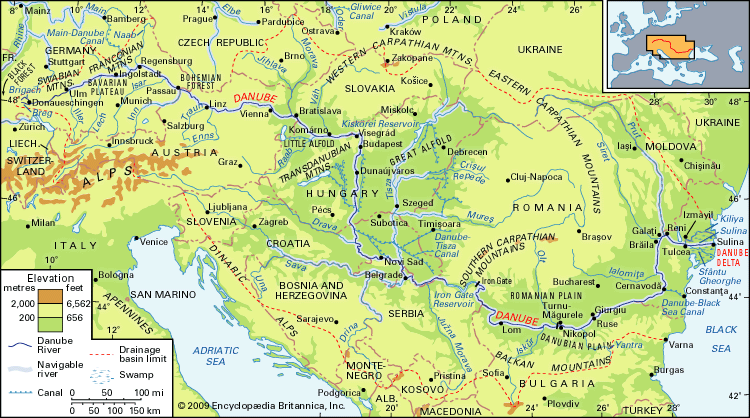
Neusiedler Lake is located in eastern Austria, specifically within the federal state of Burgenland, and extends into northwestern Hungary.12
The lake is a shallow, slightly saline body of water that serves as a prominent feature of the Pannonian Basin. Because it straddles the border, its shores are shared by both Austria and Hungary.123
What are the unique geographical features of Neusiedler Lake?
Neusiedler Lake, known in Hungary as Lake Fertő, possesses several distinct geographical characteristics:
- Formation and Elevation: Formed millions of years ago, likely through tectonic subsidence, the lake sits at 377 feet (115 meters) above sea level, marking the lowest point in Austria.1
- Hydrology: It is a shallow, slightly saline lake with no natural outflow. It is fed by a small stream and likely by underground sources. Its depth is typically only 4–6 feet, and its size fluctuates significantly based on climatic variations.1
- Dimensions: The lake spans approximately 22 miles (36 km) in length and 4–9 miles (6–14 km) in width, covering an area of about 135 square miles (350 square km).1
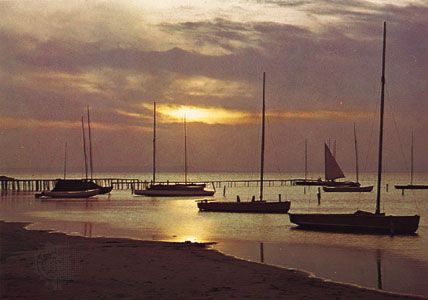
- Landscape: A defining feature is the heavy growth of reeds along its shores, which provides a vital habitat for rare and migratory birds.1
- Connectivity: While it lacks a natural outlet, a canal constructed in the late 19th century connects the lake to the Rabnitz River, a tributary of the Danube.1
What role does Neusiedler Lake play in the local and regional economy?
Neusiedler Lake serves as a significant economic asset for the surrounding region, contributing to both industrial and recreational sectors:
- Industrial Raw Materials: The lake’s extensive reed beds are harvested to provide raw materials for the cellulose industry and for various forms of reed production.12
- Agriculture: The fertile land surrounding the lake supports specialized agricultural activities. In the northern region, particularly near the lake shores at Weiden, farmers cultivate vines, fruits, vegetables, and even experimental crops like rice.2
- Tourism and Recreation: The lake functions as a vital recreation area for residents of nearby Vienna. Key lakeside towns, such as Neusiedl, Podersdorf, and the renowned wine centre of Rust, support local tourism and the regional economy.1
- Conservation: The lake’s unique ecosystem, which supports rare and migratory bird species, is managed through an international sanctuary and a biological station, balancing environmental protection with regional land use.1
Sources
- Neusiedler Lake — Encyclopædia Britannica
- Burgenland — Encyclopædia Britannica
- Austria - Drainage — Encyclopædia Britannica
- Hungary - Drainage and soils — Encyclopædia Britannica
Published on · 2 min read