Lake Zürich
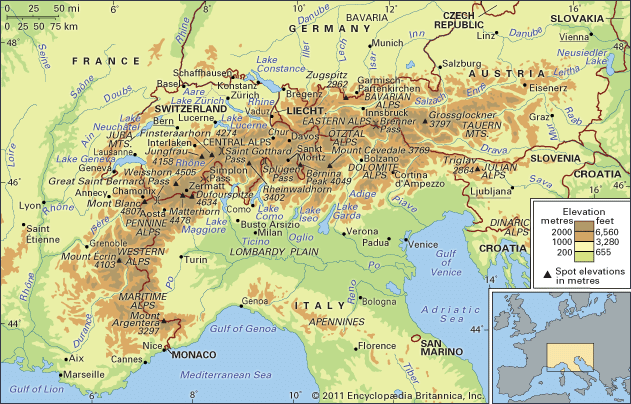
Lake Zürich is a Swiss lake located in northeastern Switzerland, extending southeast from the city of Zürich. It sits at an altitude of 1,332 feet (406 m)…
What is the geographical location and size of Lake Zürich?
Lake Zürich is a Swiss lake located in northeastern Switzerland, extending southeast from the city of Zürich. It sits at an altitude of 1,332 feet (406 m) and occupies a basin formed by the Linth River, which flows into the lake and emerges as the Limmat.12
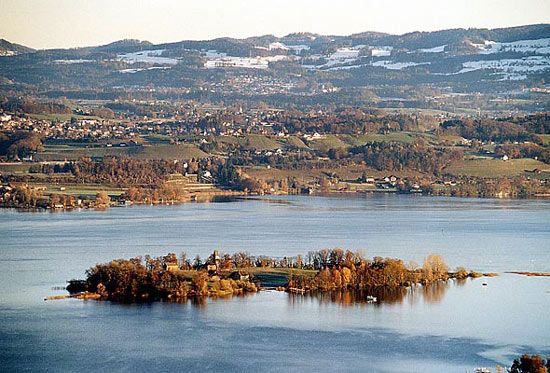
The lake covers an area of approximately 34 square miles (88 square km). Its physical dimensions include an extreme length of 18 miles (29 km), a maximum breadth of 2 1/2 miles, and a maximum depth of 469 feet. While the majority of the lake lies within the canton of Zürich, portions also extend into the cantons of Schwyz (8 square miles) and Sankt Gallen (4 square miles). The surrounding landscape features gentle slopes with vineyards and orchards, offering views of the Alps to the south.1
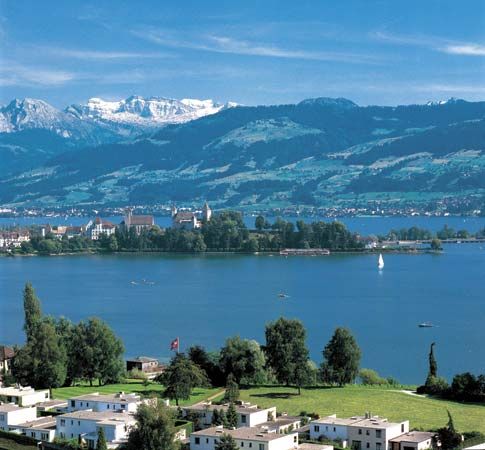
How was Lake Zürich formed, and what is its geological history?
Lake Zürich was formed through the geological action of glaciers during the last ice age. The lake basin was excavated by the Linth and Rhein glaciers as they flowed northwestward toward the site of the modern city of Zürich.1
The formation of the lake was finalized by a terminal moraine—a ridge of debris deposited by the retreating glacier—which acted as a natural dam, trapping the water in the basin. Additionally, a second moraine located between Pfäffikon and Rapperswil divides the lake into two distinct sections: the navigable lower portion, known as the Untersee, and the shallower upper portion, the Obersee. While this moraine has been breached, it historically served as a land bridge for pilgrims traveling to the monastery of Einsiedeln and is now spanned by a masonry causeway that supports both rail and road traffic.1
What are the main cities and towns situated along the shores of Lake Zürich?
Zürich is the only large city situated on Lake Zürich, serving as a primary urban center at the lake’s northwestern end where the Limmat River emerges.21
Beyond the city of Zürich, several other significant towns are located along the lake’s shores, many of which are recognized for their industrial activity:
- Western Shore: This area features several notable industrial towns, including Thalwil, Horgen, and Wädenswil.4
- Upper Lake Area: Near the division between the Untersee (lower lake) and Obersee (upper lake), the towns of Pfäffikon and Rapperswil are situated on opposite sides of the lake, connected by a historic masonry causeway that supports both rail and road traffic.2
These settlements benefit from the region’s historical development as a manufacturing hub and its modern role as a center for tourism and transportation.41
What is the significance of Lake Zürich in Swiss culture and history?
Lake Zürich holds significant historical and cultural importance as the geographical and economic anchor of the region. Its role in Swiss history is deeply intertwined with the development of the city of Zürich, which grew from a Roman customs post into a major European trade and financial hub.1
Key aspects of its significance include:
- Early Settlement: The lake’s shores have been inhabited since prehistoric times, when early peoples built hut dwellings on pile foundations.1
- Territorial Expansion: The city of Zürich strategically expanded its influence by acquiring territory along the lake, including the entire lower portion of the lake in 1362, which helped solidify the canton’s power within the Swiss Confederation.5
- Historical Infrastructure: The moraine between Pfäffikon and Rapperswil served as a vital pilgrimage route to the monastery of Einsiedeln. The masonry causeway built there in 1878 remains a critical transport link today.6
- Cultural Landscape: The lake is central to the identity of the city, with public parks lining its shores and the Limmat River serving as a primary artery for the city’s historic Altstadt.2
Sources
- Lake Zürich — Encyclopædia Britannica
- Zürich — Encyclopædia Britannica
- Linth River — Encyclopædia Britannica
- Switzerland - Urban settlements — Encyclopædia Britannica
- Zürich - History — Encyclopædia Britannica
- Zürich - The contemporary city — Encyclopædia Britannica
Published on · 3 min read