Anatosaurus
Anatosaurus and Edmontosaurus are both classified as hadrosaurs, or duck-billed dinosaurs, which were abundant, bipedal herbivores during the Late Cretaceous…
How does Anatosaurus relate to other duck-billed dinosaurs, such as Edmontosaurus?
Anatosaurus and Edmontosaurus are both classified as hadrosaurs, or duck-billed dinosaurs, which were abundant, bipedal herbivores during the Late Cretaceous Period.12
These dinosaurs belong to the hadrosaurine lineage, a group of hadrosaurs characterized by the absence of the elaborate, hollow bony crests found in lambeosaurine hadrosaurs. Both Anatosaurus and Edmontosaurus share the defining features of their family: a broad, flat, duck-like beak that lacked teeth, paired with cheeks containing rows of grinding teeth used to process land vegetation.12
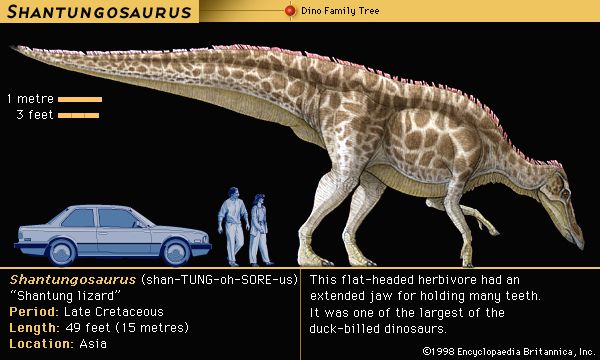
While Anatosaurus is often noted for its heavily built frame and significant size—reaching lengths of 9 to 12 metres—it is closely related to other hadrosaurines like Edmontosaurus and Shantungosaurus, which occupied similar ecological niches across the Northern Hemisphere. These animals were highly successful browsers that likely traveled in herds and possessed hooflike claws on their middle fingers, reflecting their adaptation to a terrestrial lifestyle.12
How has the classification of Anatosaurus changed over time in paleontology?
The provided search results do not contain specific information regarding the historical changes in the scientific classification of the genus Anatosaurus. While the results confirm that Anatosaurus is a member of the hadrosaurine lineage of duck-billed dinosaurs and note its relationship to other genera like Edmontosaurus, they do not detail the taxonomic revisions or debates that have occurred within paleontology regarding its status over time.14
How large was Anatosaurus compared to other dinosaurs of its time?
Anatosaurus was a large, heavily built hadrosaur that reached lengths of 9 to 12 metres (30 to 40 feet) during the Late Cretaceous Period.1
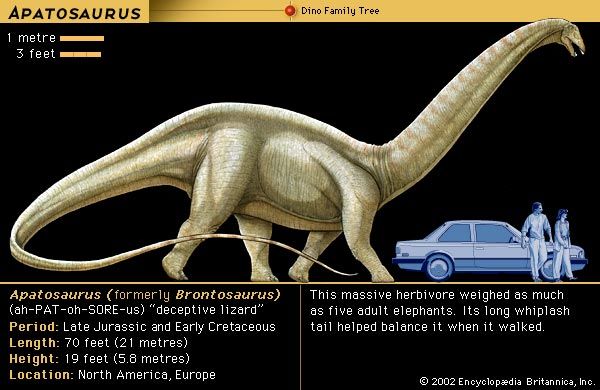
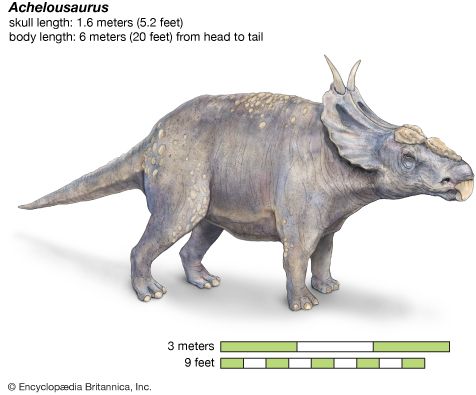
Compared to other herbivores of its time, Anatosaurus occupied a significant size class. While it was smaller than the massive sauropods—such as Diplodocus and Apatosaurus, which were among the largest animals to ever walk the Earth—it was comparable in stature to other large-bodied plant eaters of the Late Cretaceous, including various ceratopsians like Triceratops.15
As a tall ornithopod, Anatosaurus was physically adapted for browsing on high branches and treetops, a feeding strategy that distinguished it from lower-built herbivores like ankylosaurs and stegosaurs that primarily consumed low-lying shrubbery. Its size and specialized dental batteries allowed it to efficiently process the tough, cellulose-heavy vegetation prevalent in its environment.51
What evidence do we have about the social behavior of Anatosaurus?
Evidence regarding the social behavior of Anatosaurus suggests that these duck-billed dinosaurs lived in a manner similar to modern browsing mammals. Paleontologists believe that Anatosaurus likely traveled in herds, a conclusion supported by their physical adaptations, such as flat, hooflike claw bones, which are consistent with the habits of gregarious, land-dwelling herbivores.1
This interpretation is reinforced by broader fossil evidence within the hadrosaur lineage. Assemblages containing thousands of individual duck-billed dinosaurs have been discovered, and dinosaur trackways frequently record the movement of large groups, indicating that herding was a common behavior among ornithopods. Furthermore, the discovery of nesting sites suggests that these dinosaurs utilized specific areas for reproduction over long periods, and evidence from related species indicates that they provided care for their young, which were often hatched in an immature state.64
Sources
- Anatosaurus — Encyclopædia Britannica
- hadrosaur — Merriam-Webster
- Apatosaurus — Encyclopædia Britannica
- ornithopod — Encyclopædia Britannica
- dinosaur - The plant eaters — Encyclopædia Britannica
- dinosaur - Herding behaviour — Encyclopædia Britannica
Published on · 2 min read