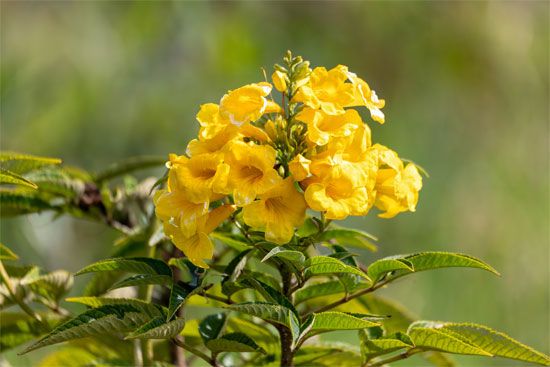
Acanthaceae
The Acanthaceae family, commonly known as the acanthus family, is classified within the plant kingdom as part of the Lamiales order, which is often referred…
How are Acanthaceae plants classified within the larger plant kingdom?
The Acanthaceae family, commonly known as the acanthus family, is classified within the plant kingdom as part of the Lamiales order, which is often referred to as the mint order.123
Under the Angiosperm Phylogeny Group IV (APG IV) system, the Lamiales order is situated within the asterids lineage of flowering plants, specifically categorized under the lamiids group. This classification reflects a modern, molecular-based approach to understanding plant phylogeny, grouping Acanthaceae with other families such as Lamiaceae, Bignoniaceae, and Oleaceae based on their evolutionary relationships.24
Acanthaceae itself is a large and diverse family comprising approximately 220 genera and 4,300 species, primarily distributed in tropical and subtropical regions.13
How have Acanthaceae plants evolved over time, and what is their evolutionary history?
The provided search results do not contain specific information regarding the evolutionary history or the timeline of the development of the Acanthaceae family over time. While the records detail the family’s current classification within the Lamiales order and describe its modern morphological characteristics—such as its specialized seed-dispersal mechanism involving the retinaculum—the specific fossil record or evolutionary trajectory of this group is not addressed in the available data.
General information on plant evolution indicates that the fossil record provides evidence for structural changes and increasing diversity in vascular plants over millions of years, but this does not provide a timeline for the emergence of the Acanthaceae family specifically.1
How have Acanthaceae plants been used by humans, either for medicinal or ornamental purposes?
The Acanthaceae family is primarily valued for its horticultural significance, with many species cultivated as popular ornamentals due to their showy, often bilaterally symmetrical flowers and colorful bracts.33
Commonly grown ornamental plants within this family include:
- Bear’s-breech (Acanthus mollis): Often cultivated for its striking foliage and architectural flower spikes.1
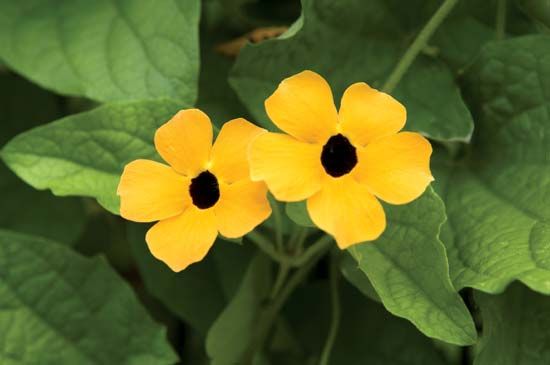
- Clockvine (Thunbergia): A genus of climbing plants, including the black-eyed Susan vine, frequently used in gardens.13
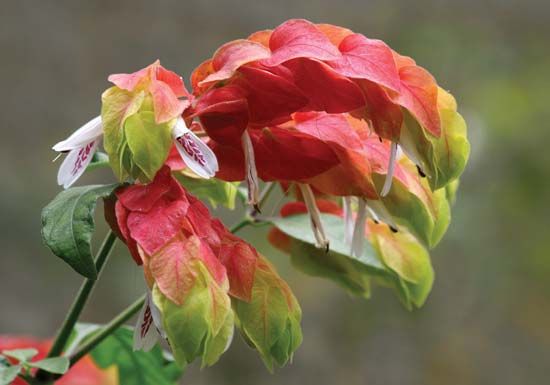
- Shrimp plant (Justicia brandegeana): Named for its unique, shrimp-like flower bracts.1
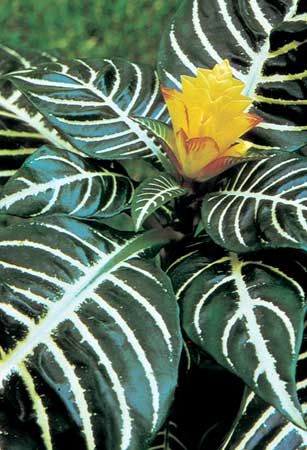
- Caricature-plant (Graptophyllum pictum): Valued for its variegated or patterned leaves.1
While the provided information highlights the family’s extensive use in gardening and landscaping, it does not detail specific medicinal applications for these plants. Beyond their ornamental appeal, certain members like the black mangrove (Avicennia) play a vital ecological role in stabilizing coastal mudflats.13
What are some notable or commonly known species within the Acanthaceae family?
The Acanthaceae family is a diverse group of approximately 4,000 to 4,300 species, primarily recognized for their horticultural value and unique morphological traits.31
Notable Ornamental Species
Many members of this family are widely cultivated for their showy, bilaterally symmetrical flowers and colorful bracts:31
- Bear’s-breech (Acanthus mollis): Prized for its architectural flower spikes and striking foliage.3
- Clockvine (Thunbergia): A genus of climbing plants that includes the popular black-eyed Susan vine.31
- Shrimp plant (Justicia brandegeana): Known for its distinctive, shrimp-like flower bracts.3
- Caricature-plant (Graptophyllum pictum): Cultivated for its patterned or variegated leaves.3
Large and Ecologically Significant Genera
The family contains several large genera that contribute significantly to its global diversity:3
- Justicia: The largest genus in the family, containing approximately 600 species.31
- Ruellia: Comprises about 355 species.31
- Strobilanthes: Includes roughly 350 species.3
- Barleria: Contains approximately 300 species.31
- Avicennia: Known as the black mangrove, this genus is ecologically vital for stabilizing tropical coastal mudflats.31
Sources
- Lamiales - Acanthaceae — Encyclopædia Britannica
- Lamiales — Encyclopædia Britannica
- Acanthaceae — Encyclopædia Britannica
- angiosperm - Annotated classification — Encyclopædia Britannica
- Archaefructus — Encyclopædia Britannica
- plant - Evolution and paleobotany — Encyclopædia Britannica
- thunbergia — Merriam-Webster
Published on · 3 min read