Lantana
Lantana is a genus comprising more than 150 species of shrubs within the verbena family (Verbenaceae). Native to tropical Africa and America, these plants…
What is Lantana?
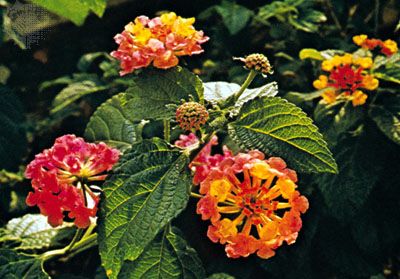
Lantana is a genus comprising more than 150 species of shrubs within the verbena family (Verbenaceae). Native to tropical Africa and America, these plants are characterized by their aromatic, rough, oval leaves and their ability to bloom almost continuously with vibrant, multi-colored flower heads.1
While often cultivated as popular garden plants, some species, such as the common lantana (L. camara), can act as aggressive weeds in their native tropical regions. Gardeners should be aware that these plants produce clusters of poisonous black berries following their flowering period. Other notable varieties include the trailing lantana (L. montevidensis), which is recognized for its drooping branches and rose-lavender blossoms.1
Why is Lantana considered an invasive species in some regions?
Lantana is considered an invasive species in various regions because it acts as an aggressive, shrubby climbing weed that can rapidly colonize vast areas of land.12
When introduced to environments outside of its native range, such as in Hawaii, it often spreads unchecked across thousands of acres of pastureland. This unchecked growth is problematic because it renders the land useless for grazing, effectively displacing native vegetation and agricultural utility. Because it was introduced to these new habitats without its natural predators, the plant is able to thrive and dominate the landscape, necessitating human intervention through biological control methods, such as the importation of specific insects, to manage its spread.2
What are the risks associated with the berries of the Lantana plant?
The berries produced by the Lantana plant are toxic and pose a significant health risk if ingested. Following the plant’s flowering period, it develops clusters of black berries that contain poisonous compounds.1
Because these berries are harmful, it is essential to exercise caution, particularly in gardens where children or pets may be present. Ingestion of these berries can lead to serious health complications, and they should be treated as a safety hazard.1
How do different pollinators interact with Lantana flowers?
The provided search results do not contain specific information regarding how different pollinators interact with Lantana flowers. While the results provide extensive details on general pollination mechanisms—such as the role of bees, butterflies, and nectar as attractants—they do not explicitly describe the interaction between these agents and the Lantana genus.
Sources
- Lantana — Encyclopædia Britannica
- weed - Biological control — Encyclopædia Britannica
- pollination - Evolution of insect pollination — Encyclopædia Britannica
- Botanical Sex: 9 Alluring Adaptations — Encyclopædia Britannica
- orchid - Pollination — Encyclopædia Britannica
- pollination - Bees — Encyclopædia Britannica
Published on · 2 min read