Mallee
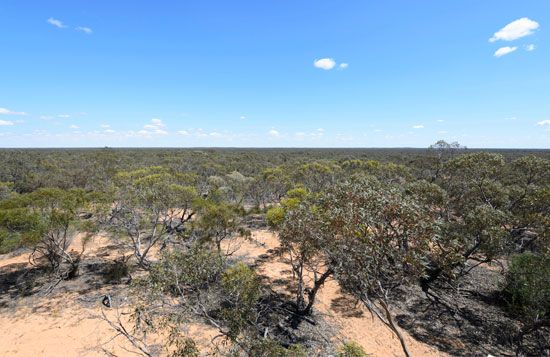
Mallee refers to both a distinct type of scrubland vegetation and a specific geographic region in Australia.
What is Mallee?
Mallee refers to both a distinct type of scrubland vegetation and a specific geographic region in Australia.
Mallee Vegetation
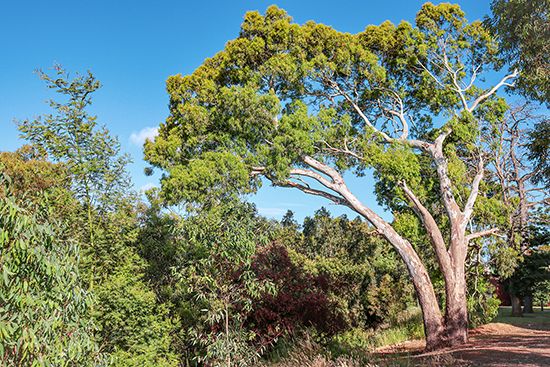
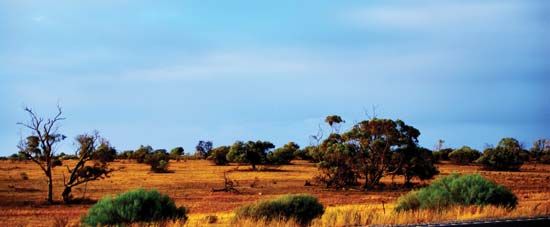
As a plant community, mallee is found in southern Australia and is characterized by woody shrubs and small trees primarily from the genus Eucalyptus. These plants are often multistemmed, growing from an underground structure called a lignotuber, which allows them to resprout rapidly after a wildfire. The vegetation is sclerophyllous, featuring thick, leathery leaves that help conserve water in a Mediterranean climate.1
Mallee Region
The term also identifies a semiarid region in northwestern Victoria, covering approximately 16,000 square miles. While the area supports some agriculture—including wheat farming and vineyards—through irrigation, it faces challenges such as soil degradation and increased salinity.2
What is a lignotuber and how does it help plants survive wildfires?
A lignotuber is a swollen, woody organ located at or below the soil surface that serves as a vital survival mechanism for many plants in fire-prone environments.3
These structures act as a reservoir for the plant, housing dormant buds and essential energy reserves. When a wildfire sweeps through an area, it often destroys the above-ground portions of the plant, such as the leaves and branches. Because the lignotuber is protected by the soil or its own dense, woody tissue, it remains unharmed by the intense heat of the flames.3
Following a fire, the plant utilizes the energy stored within the lignotuber to rapidly produce new shoots, leaves, and branches. This ability to resprout allows species—such as certain Banksia and Eucalyptus varieties—to recover and regenerate even after their primary structure has been decimated by a blaze.3
How does the Mediterranean climate influence plant growth in the Mallee?
The Mediterranean climate, characterized by mild, wet winters and hot, dry summers, is a primary driver of plant growth and adaptation in the Mallee. This climatic pattern dictates the seasonal cycle of the vegetation:15
- Growth and Flowering: Most growth in Mallee scrublands occurs during the short, rainy winter season. As temperatures rise at the end of this wet period, plants typically experience a burst of flowering and the development of new leaves.15
- Drought Stress and Dormancy: During the late summer, high temperatures and a lack of rainfall create significant drought stress. To survive these conditions, Mallee shrubs often enter a state of dormancy, minimizing water loss.5
- Sclerophyllous Adaptations: The dominant species, particularly Eucalyptus, are sclerophyllous, meaning they possess thick, leathery leaves. This structural adaptation is essential for preventing moisture loss during the intense heat of the dry season.16
These environmental pressures have shaped the Mallee into a resilient scrubland biome where plants are uniquely equipped to thrive despite periodic moisture shortages.15
What are some other examples of scrubland biomes around the world?
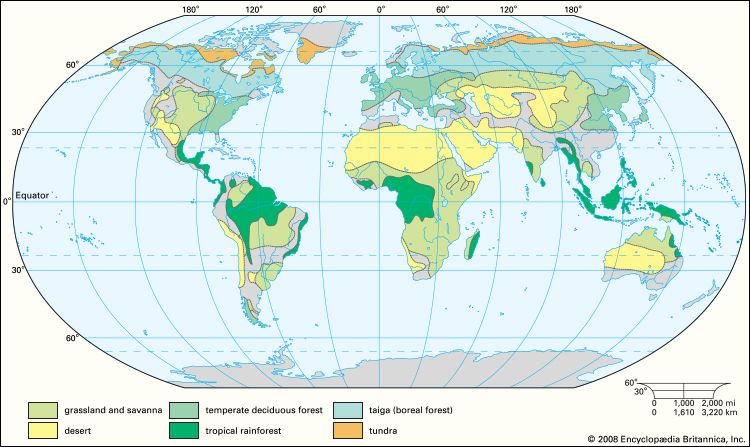
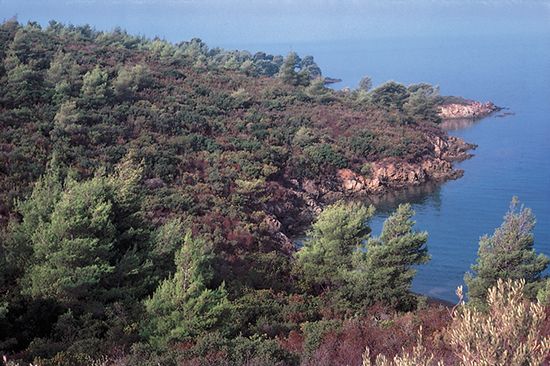
Scrubland biomes are found globally, primarily in regions with Mediterranean climates characterized by mild, wet winters and hot, dry summers. While these regions share similar environmental pressures, they are known by different names depending on their geographic location:68
- Chaparral: Found in southwestern North America, particularly in California and northern Mexico. This biome is highly biodiverse and dominated by broad-leaved evergreen sclerophyll shrubs.9
- Matorral: Located in central Chile, this scrubland features a mix of hardwoods, shrubs, and cacti.610
- Fynbos: Situated along the southern coast of South Africa, this unique scrubland is famous for its extraordinary plant diversity, including many species of Proteaceae.61
- Maquis: A common term for the scrubland vegetation found throughout the Mediterranean region.19
- Mallee: Found in southern Australia, this biome is dominated by multistemmed Eucalyptus shrubs that are well-adapted to fire-prone environments.62
Beyond these Mediterranean-type ecosystems, scrublands also exist in other harsh environments, such as the thorn scrubs of the dry tropics and the Arctic or alpine regions, where cold temperatures limit tree growth.6
Sources
- mallee — Encyclopædia Britannica
- Mallee — Encyclopædia Britannica
- Playing with Wildfire: 5 Amazing Adaptations of Pyrophytic Plants — Encyclopædia Britannica
- ligno-tuber — Merriam-Webster
- Sclerophyll — Encyclopædia Britannica
- Scrubland - Environment — Encyclopædia Britannica
- South Australia - Climate of South Australia — Encyclopædia Britannica
- Scrubland — Encyclopædia Britannica
- Fynbos — Encyclopædia Britannica
- Chaparral — Encyclopædia Britannica
- Chile - Plant and animal life — Encyclopædia Britannica
Published on · 3 min read