Lantian Man
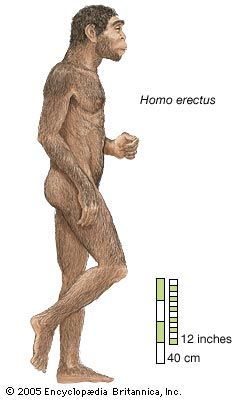
Lantian man refers to hominin fossils discovered in Shaanxi province, China, which are classified as Homo erectus. Like Peking man and Java man, these…
How does Lantian Man compare to other early human fossils found in Asia, such as Peking Man or Java Man?
Lantian man refers to hominin fossils discovered in Shaanxi province, China, which are classified as Homo erectus. Like Peking man and Java man, these remains are considered part of the same species, though they exhibit notable differences in age and morphology.1
- Age: At approximately 1.1 million years old, Lantian man is substantially older than Peking man and is roughly contemporary with the earliest fossils of Java man.1
- Cranial Capacity: The Lantian cranium is small, with a capacity of 780 cubic cm, which closely resembles the smaller-brained specimens found in Java. In contrast, the average cranial capacity of Peking man fossils is significantly larger, at approximately 1,029 cubic cm.12
These variations in brain size may reflect evolutionary changes over time, or they may simply represent expected biological diversity between sexes, populations, or subspecies of H. erectus. While all these groups share the robust features characteristic of the species, the earlier, smaller-brained Lantian and Javanese fossils highlight the regional and temporal diversity of early humans in Asia.23
What is the estimated age of the Lantian Man fossils?
The fossils of Lantian man, which were discovered in the Shaanxi province of China, are estimated to be approximately 1.1 million years old.1
Who discovered the Lantian Man fossils and when were they found?
The Lantian man fossils were discovered by Chinese archaeologists in 1963 and 1964. The remains were unearthed at two distinct sites within the Lantian district of Shaanxi province, China.1
- Gongwangling: A cranium (skullcap) was recovered from this site.1
- Chenjiawo: A mandible (lower jaw) was recovered from this site.1
Both specimens are believed to be female and are currently classified as Homo erectus.1
What is the significance of the Lantian Man in the field of paleoanthropology?
Lantian man is significant in paleoanthropology primarily for its role in mapping the early dispersal and evolution of Homo erectus in East Asia.1
The discovery provides critical evidence regarding the timeline of human ancestors in China. At approximately 1.1 million years old, these fossils are substantially older than the well-known Peking man and are nearly as ancient as the earliest Java man specimens. By comparing the cranial capacity of the Lantian skull—which measures 780 cubic cm—to other regional fossils, researchers have been able to better understand the morphological variations and evolutionary trajectory of early hominins across the continent. Furthermore, the association of these remains with stone implements found at nearby sites offers valuable context regarding the behavioral capabilities and environmental adaptations of these early human ancestors.1
Sources
- Lantian man — Encyclopædia Britannica
- Lantian man — Merriam-Webster
- Homo erectus - Body structure — Encyclopædia Britannica
- history of China - Early humans — Encyclopædia Britannica
- China - Early humans — Encyclopædia Britannica
Published on · 2 min read