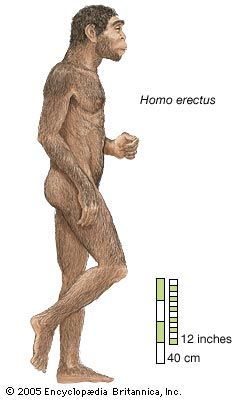
Peking Man
The fossils of Peking man—a member of the species Homo erectus—found at the Zhoukoudian site are estimated to date from approximately 770,000 to 230,000…

How old are the Peking Man fossils estimated to be?
The fossils of Peking man—a member of the species Homo erectus—found at the Zhoukoudian site are estimated to date from approximately 770,000 to 230,000 years ago.12
These remains were discovered in a series of limestone clefts near Beijing, China, where they were used intermittently by H. erectus throughout that period. While earlier research suggested these hominins had mastered the use of fire, subsequent reanalysis of the site indicated that the charred materials found were likely the result of natural, lightning-induced fires rather than human activity.1
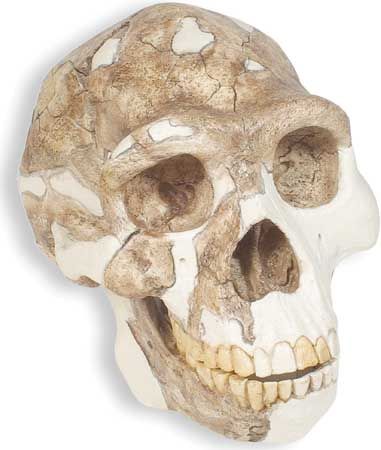
What happened to the original Peking Man fossils during World War II?
In 1941, as the Japanese invasion of China became imminent, the original Peking man fossils were being studied at the Peking Union Medical College. To protect these significant specimens from falling into enemy hands, an attempt was made to transport them to the United States for safekeeping.21
During this transit, the fossils disappeared. Despite extensive efforts to locate them, the original bones have never been recovered, and researchers today must rely on plaster casts for their studies. Following the conclusion of World War II, excavations at the Zhoukoudian site resumed, leading to the discovery of additional Homo erectus fragments, though the original collection remains lost to history.21
How did the discovery of Peking Man impact our understanding of early human migration?
The discovery of Peking man at Zhoukoudian significantly shaped early 20th-century perspectives on human evolution. Initially, the concentration of these findings in Asia, alongside similar discoveries like Java man, led many researchers to believe that Homo erectus was a uniquely Asian expression of early humans.4
This view persisted for decades, framing the narrative of early human migration around an Asian origin or center of development. However, this understanding was fundamentally revised as subsequent fossil evidence emerged from Africa and Europe, confirming that H. erectus had a much broader geographic distribution than initially hypothesized.4
Furthermore, the study of Peking man helped establish the species’ technological capabilities. While early claims suggested these hominins had mastered fire, later reanalyses clarified that the charred materials at the site were likely the result of natural, lightning-induced fires rather than human activity. Ultimately, the Peking man fossils remain a vital, albeit historically complex, component of the fossil record that helped transition the scientific community toward a more global understanding of human dispersal.13
What is Peking Man and when was it discovered?
Peking man is an extinct hominin belonging to the species Homo erectus, known from a significant collection of fossils discovered at Zhoukoudian, near Beijing, China.21
The discovery process unfolded in stages:
- 1921: Swedish geologist J. Gunnar Andersson explored the site after hearing reports of “dragon bones” used for medicine and discovered quartz pieces that suggested the presence of early human activity.1
- 1927: Canadian anthropologist Davidson Black identified the group as a distinct hominin lineage based on the recovery of a single molar.21
- 1929: Large-scale excavations began, eventually yielding fossils of approximately 40 individuals, including skullcaps, mandibles, and limb bones.21
These fossils, which date from roughly 770,000 to 230,000 years ago, provided vital insights into human evolution, showing a cranial capacity approaching that of modern humans despite distinct primitive features like heavy browridges and a chinless jaw.21
Sources
- Zhoukoudian — Encyclopædia Britannica
- Peking man — Encyclopædia Britannica
- Davidson Black — Encyclopædia Britannica
- Homo erectus - Other Asian fossils — Encyclopædia Britannica
Published on · 3 min read