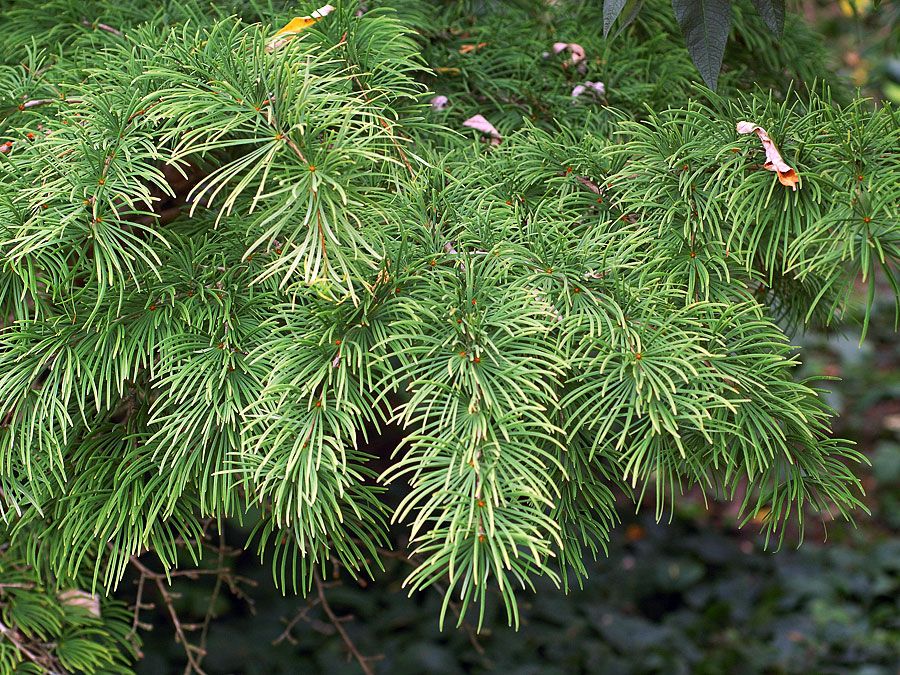
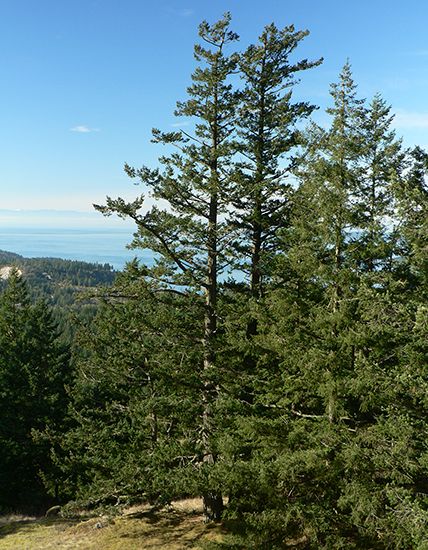
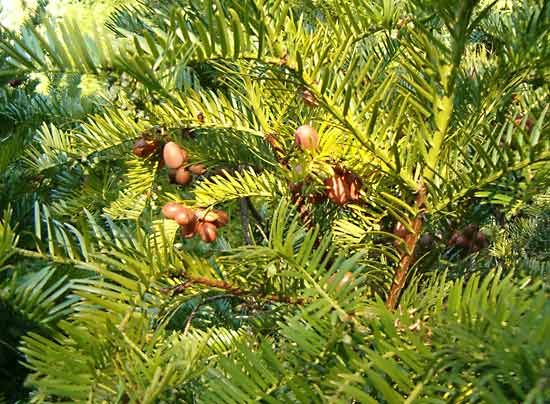
Larch
The height and lifespan of larch trees vary significantly depending on the specific species:
How tall can larch trees grow, and what is their typical lifespan?
The height and lifespan of larch trees vary significantly depending on the specific species:
- Eastern Larch (L. laricina): This species typically grows to heights of 12 to 20 metres (about 40 to 65 feet) and reaches maturity in 100 to 200 years.1
- European Larch (L. decidua): These trees are generally taller, typically reaching 24 to 42 metres (about 80 to 140 feet) in height.1
While specific maximum lifespans for all species are not universally defined, the maturation period for the eastern larch provides a baseline for its life cycle. Other related conifers, such as the golden larch, can grow to heights of 30 to 40 metres (about 100 to 130 feet).12
Where are larch trees commonly found in the world?
Larch trees (genus Larix) are widely distributed throughout the cool temperate and subarctic regions of the Northern Hemisphere. Their natural range includes several key areas:14
- North America: The eastern larch, or tamarack, is the most widely distributed species on the continent, while the western larch is native to the Pacific Northwest.1
- Europe and Asia: The European larch is native to the mountainous regions of northern and central Europe and Siberia.1
- Himalayas: The species Larix griffithii is found exclusively in the Himalayan region.1
Additionally, the related golden larch is native to China. Due to their hard, durable wood, various species are also cultivated globally as ornamentals or for industrial use.21
How do larch trees differ from other coniferous trees?
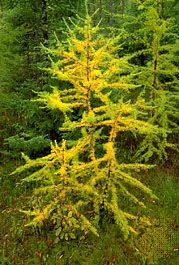
While larch trees share the characteristic pyramidal growth habit of most conifers, they are distinct from many other evergreen species due to their deciduous nature. Unlike most conifers that retain their foliage year-round, larches shed their needlelike leaves every autumn.1
Key differences include:
- Foliage Behavior: While typical conifers are evergreen, larches are deciduous, losing their needles annually.1
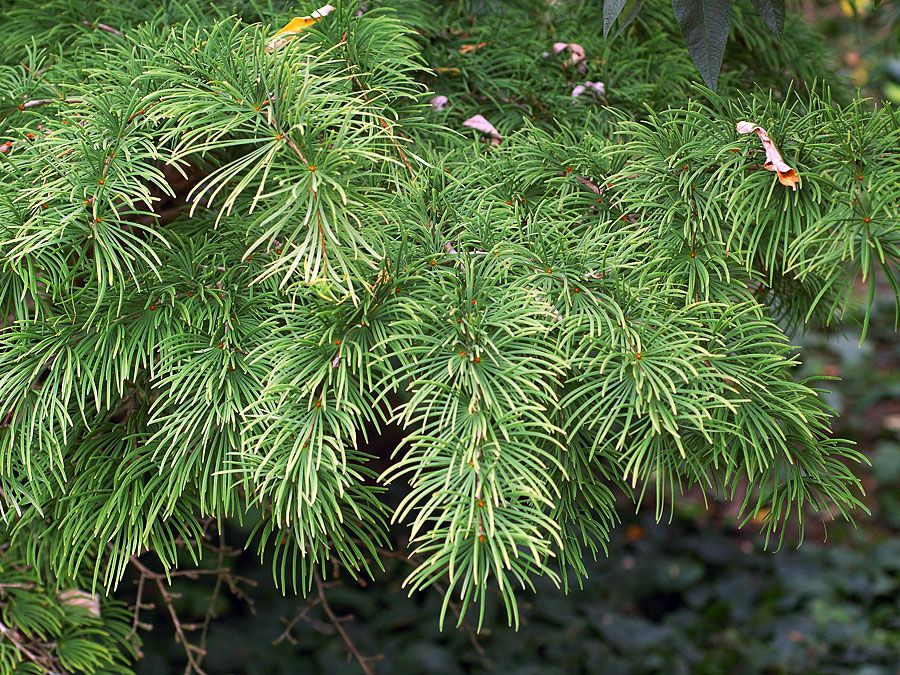
- Leaf Arrangement: Their needles are arranged in a unique pattern: spirally on new growth and in dense whorls (clusters of 10 to 30) at the tips of short spurs on older twigs.1
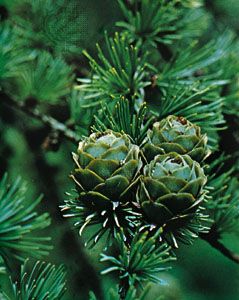
- Cone Characteristics: Unlike the golden larch, whose cones disintegrate upon maturity, the cones of Larix species typically remain on the tree for several years before falling intact.12
- Reproductive Anatomy: In some species, such as the western larch, the bracts of the cones are distinctively long and protrude beyond the cone scales, a feature not found in all other coniferous genera.1
What are the main uses of larch trees in forestry and industry?
Larch trees are highly valued in forestry and industry primarily due to the physical properties of their wood, which is characterized as coarse-grained, strong, hard, and heavy.1
Industrial and Forestry Applications
Because of its durability and strength, larch wood is utilized in several demanding structural and industrial applications, including:
- Ship construction: Used for its resilience in marine environments.1
- Infrastructure: Employed for telephone poles, mine timbers, and railroad ties.1
- Ornamental use: Several species, such as the Japanese larch and specific cultivars of the European larch, are cultivated for landscaping and aesthetic purposes.1
Chemical Byproducts
Beyond its structural utility, the European larch is a source of a clear oleoresin known as Venetian turpentine. Historically, natural resins like these have been used in the preparation of varnishes and lacquers, though many such applications have been largely superseded by synthetic alternatives in modern industry.15
Sources
- larch — Encyclopædia Britannica
- golden larch — Encyclopædia Britannica
- Tree - Tree lines — Encyclopædia Britannica
- larix — Merriam-Webster
- wood - Products of chemical processing — Encyclopædia Britannica
- Resin — Encyclopædia Britannica
Published on · 3 min read