Golden Larch
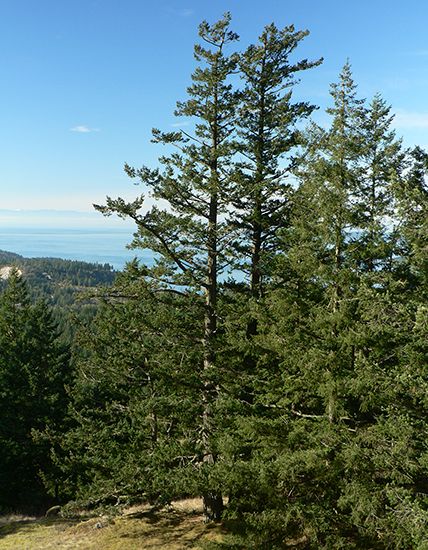
The golden larch (Pseudolarix amabilis) is a coniferous tree belonging to the Pinaceae family, native to China. While it resembles the true larch (Larix), it…
What is Golden larch?
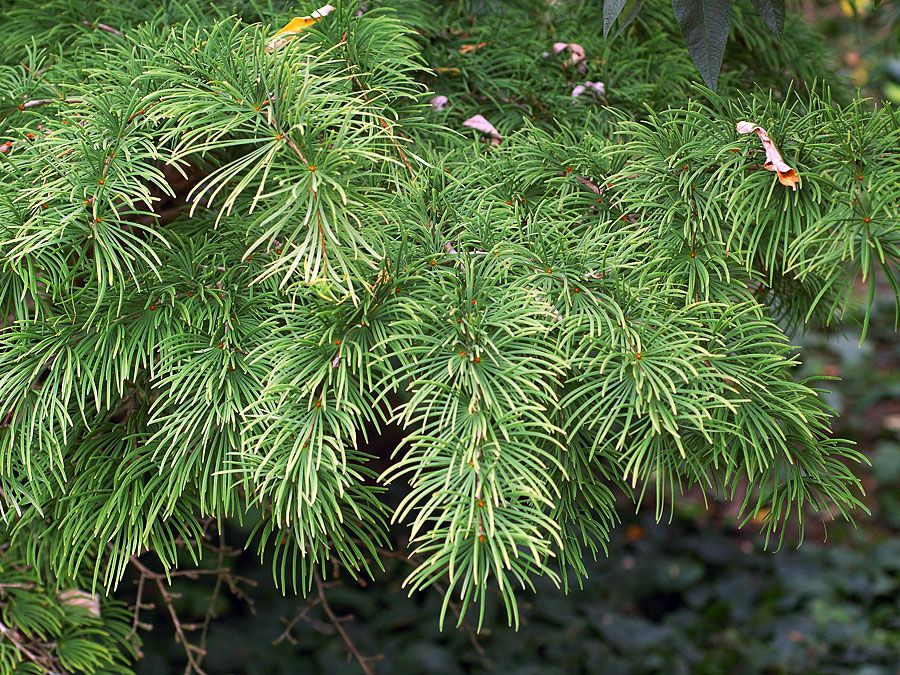
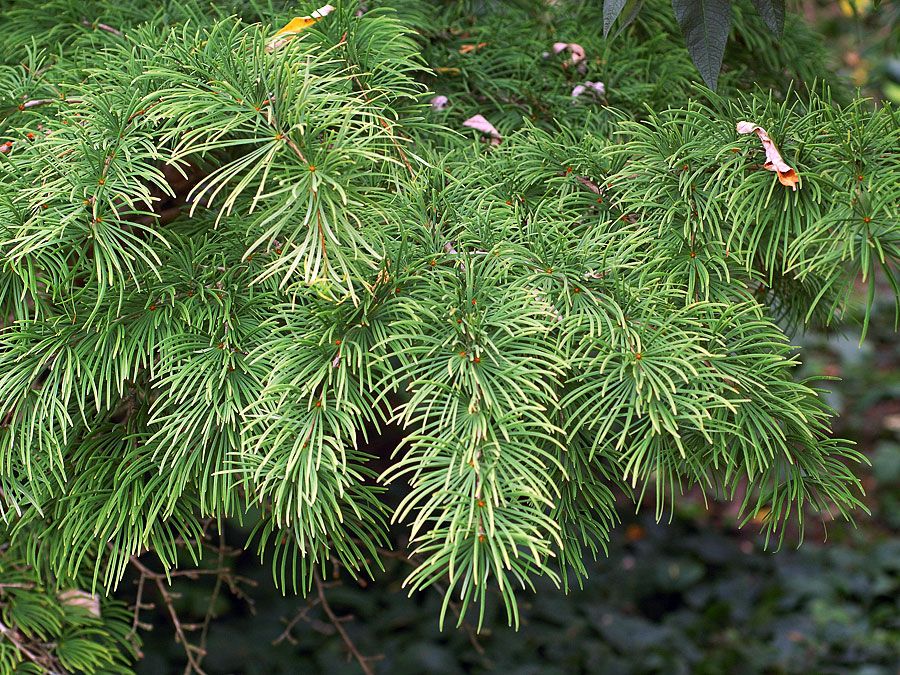
The golden larch (Pseudolarix amabilis) is a coniferous tree belonging to the Pinaceae family, native to China. While it resembles the true larch (Larix), it is distinct in several ways: its small cones disintegrate upon maturity, whereas true larch cones typically fall intact.123
The tree can reach heights of 30 to 40 meters (about 100 to 130 feet) and features reddish-brown, fissured bark. Its needlelike leaves are bright green during the summer but turn a striking golden color in autumn before they are shed. These leaves grow in spirals on long shoots and form star-shaped clusters on shorter, spurlike shoots.12
Unlike many other conifers, the golden larch is deciduous, losing its foliage annually. It is often appreciated for its ornamental value due to its unique growth habit and seasonal color change.231
What are some other examples of deciduous conifers?
While most conifers are evergreen, a few notable species are deciduous, meaning they shed their leaves annually. In addition to the golden larch and the various species of larch (Larix), other examples include:43
- Bald cypress: A large tree (Taxodium distichum) native to swamps in the southern United States. It is known for its flexible, flat needles and is closely related to the sequoias.54
- Dawn redwood: A “living fossil” (Metasequoia glyptostroboides) from central China. It is the only living species of its genus and is characterized by leaves arranged in pairs on deciduous branchlets.64
These trees are unique among their relatives for their seasonal foliage loss, which contrasts with the typical evergreen habit of most other cone-bearing trees.74
How do conifer cones differ in structure and seed dispersal?
Conifer reproductive structures, known as strobili, are divided into male pollen cones and female seed cones. These structures vary significantly in form and function across species.108
Cone Structure
- Pollen Cones (Microstrobili): These are typically small and consist of thin, parchmentlike scales called microsporophylls. Each scale carries two or more microsporangia on its lower surface, which produce pollen.108
- Seed Cones (Megastrobili): These are more complex and serve as the primary basis for conifer classification. Most consist of woody or leathery scales, each subtended by a bract. These scales are interpreted as modified, fused dwarf shoots that bear ovules. In some families, such as the Taxaceae, this strobilar organization is highly modified or absent, with seeds instead developing within a fleshy aril.108
Seed Dispersal
Seed dispersal is critical for species survival, helping to reduce competition and colonize new areas. Mechanisms include:11
- Wind (Anemochory): Many conifers, such as certain pines, have seeds with winglike extensions on their scales to facilitate airborne travel.12
- Animals (Zoochory): Some species, like junipers, produce fleshy, berrylike cones that attract birds and other animals, which then disperse the seeds.10
- Fire: Certain fire-dependent species remain closed for years, protecting seeds until heat from a wildfire triggers the cones to open and release them onto an ash-fertilized seedbed.12
What are the main differences between the Pinaceae family and other conifer families?
The Pinaceae family, commonly known as the pine family, is the largest and most widespread group of modern conifers in the Northern Hemisphere. While all conifers share certain reproductive characteristics, Pinaceae is distinguished by specific structural features of its cones and leaves.1516
Key Differences in Cone Structure
The primary distinction lies in the relationship between the ovuliferous scale and the bract within the seed-bearing cone:
- Scale-Bract Relationship: In Pinaceae, the woody seed scales are fused to the bracts only at their bases. This contrasts with other families, such as Cupressaceae, where the scales are intimately fused to the bracts throughout their structure.15
- Seed Presentation: Pinaceae cones typically carry two winged seeds per scale. In contrast, other families exhibit significant variation: Araucariaceae cones often bear a single large seed per scale, while Podocarpaceae and Taxaceae have highly modified, often fleshy, reproductive structures that may lack traditional woody cones entirely.15
- Bract Visibility: In mature Pinaceae cones, the bracts are usually hidden by the scales, though they may be prominently exserted (protruding) in certain species.15
Foliage and Habit
While leaf morphology varies across all conifers, Pinaceae members predominantly feature needlelike leaves that are spirally arranged, either singly or in clusters. Other families display a much wider range of leaf forms, including the flattened, scale-like leaves of many Cupressaceae or the broad, oblong blades found in some Araucariaceae and Podocarpaceae.158
Sources
- golden larch — Encyclopædia Britannica
- golden larch — Merriam-Webster
- larch — Encyclopædia Britannica
- bald cypress — Merriam-Webster
- dawn redwood — Encyclopædia Britannica
- Evergreen — Encyclopædia Britannica
- larch — Merriam-Webster
- gymnosperm - Pinophyta — Encyclopædia Britannica
- Did you know? — Merriam-Webster
- conifer - Strobili — Encyclopædia Britannica
- Seed dispersal — Encyclopædia Britannica
- conifer - Pollination — Encyclopædia Britannica
- pine - Physical description and natural history — Encyclopædia Britannica
- Seed - Gymnosperm seeds — Encyclopædia Britannica
- Pinaceae — Encyclopædia Britannica
- conifer - Annotated classification — Encyclopædia Britannica
Published on · 3 min read