Leafcutter Ant
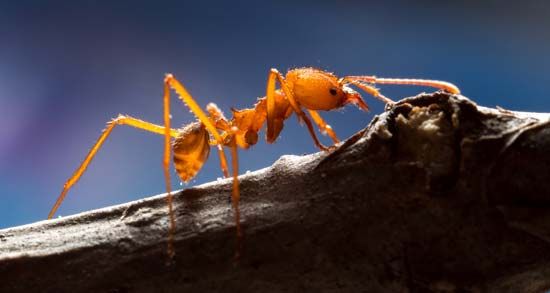
Leafcutter ants, belonging to the genera Atta and Acromyrmex, are highly specialized insects that have evolved complex behaviors to harvest vegetation for…
What adaptations do leafcutter ants have that make them efficient at cutting and transporting leaves?
Leafcutter ants, belonging to the genera Atta and Acromyrmex, are highly specialized insects that have evolved complex behaviors to harvest vegetation for their subterranean fungal gardens.12
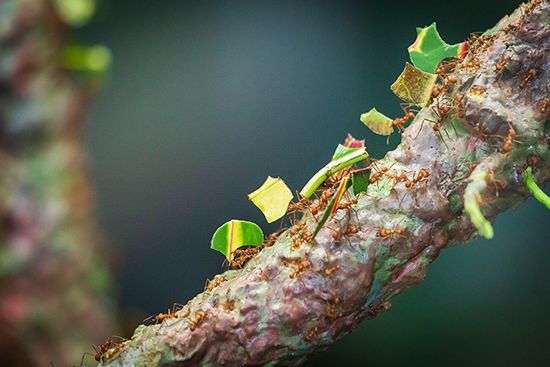
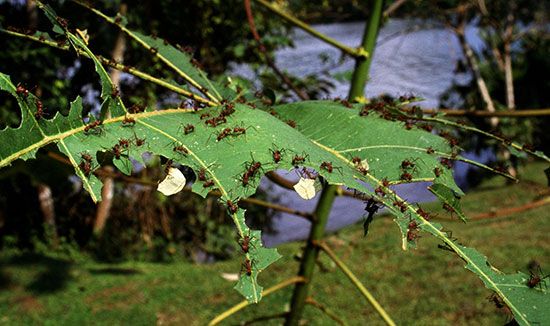
While the provided search results detail their intricate farming systems—such as the use of antimicrobial substances to protect their fungal crops and the division of labor among different castes—they do not explicitly describe the specific anatomical adaptations (such as jaw structure or musculature) that facilitate the cutting and transport of leaves. We know that these ants are remarkably efficient, clearing significant portions of tropical forest vegetation and establishing clear “highways” to transport leaf fragments back to their nests, where the material is chewed into a pulp to serve as a substrate for their fungus.12
What are the different castes within a leafcutter ant colony, and what are their roles?
Leafcutter ant colonies, particularly those of the genus Atta, exhibit a highly organized social structure characterized by a division of labor among different castes. These castes are often distinguished by significant variations in body size and morphology, which allow individuals to perform specialized tasks essential for the colony’s survival and the maintenance of their subterranean fungal gardens.31
The primary castes within a leafcutter ant colony include:
- Queen: The reproductive female responsible for establishing the colony and laying eggs. In many species, she is the central figure around which the colony is organized.431
- Workers: These are sterile females that perform the essential labor of the society. Within the worker caste, there is often a division into subcastes based on size and function.43
- Soldiers: Larger, morphologically distinct individuals primarily responsible for the defense of the colony.431
- Guards: A specialized group often noted in Atta colonies that helps protect the nest and its inhabitants.3
The workers are responsible for the complex, labor-intensive process of fungus farming. This includes foraging for vegetation, transporting leaf fragments, chewing the leaves into a pulp to serve as a substrate for the fungus, and meticulously weeding out contaminants to protect their fungal crop. While the queen focuses on reproduction, the workers ensure the colony’s nutritional needs are met through this intricate mutualistic relationship with the fungus.321
How do leafcutter ants cultivate and maintain their fungus gardens?
Leafcutter ants maintain a sophisticated, mutualistic farming system within their underground nests, where they cultivate specific fungi from the family Lepiotaceae, such as Leucoagaricus gongylophorus. This process is essential for the colony’s survival, as the fungus serves as the primary food source for the ants.12
The cultivation process involves several key steps:
- Substrate Preparation: After foraging for vegetation, workers transport leaf fragments to specialized chambers in the nest. They chew these leaves into a pulp, which provides the necessary substrate for the fungus to grow.12
- Active Gardening: The ants physically and chemically tend to their gardens. They meticulously remove contaminants and weed out competing fungi to ensure their crop thrives.12
- Chemical Protection: To protect the fungal harvest from harmful pathogens, the ants secrete antimicrobial substances.12
- Nutrient Production: The fungus converts the pulped vegetation into food for the colony, producing protein-containing bodies called gongylidia, which are consumed by the ants.12
Because the fungus relies entirely on the ants for its survival and is not found independently in the wild, it is considered a domesticated species.2
What is the geographic distribution of leafcutter ants?
Leafcutter ants, which comprise nearly 50 species within the genera Atta and Acromyrmex, are primarily distributed throughout the American tropics. They are considered the dominant herbivores of the New World tropics, where they thrive in diverse environments ranging from tropical moist forests to pasture lands in countries such as Brazil and Paraguay.1
These ants are highly adapted to their tropical habitats, often creating extensive underground nest systems that can house millions of individuals. Their presence is a defining feature of many New World tropical rainforests, where their large nests and cleared foraging “highways” significantly alter the local landscape and stimulate plant growth.1
Sources
- leafcutter ant — Encyclopædia Britannica
- ant - Notable ant behaviors — Encyclopædia Britannica
- Caste — Encyclopædia Britannica
- Hymenoptera - Social forms — Encyclopædia Britannica
- leaf-cutter — Merriam-Webster
Published on · 4 min read