List of Ants, Bees, and Wasps
Ants, bees, and wasps belong to the order Hymenoptera, one of the most ecologically significant groups of insects. Below is a list of various types within…
What is list of ants, bees, and wasps?
Ants, bees, and wasps belong to the order Hymenoptera, one of the most ecologically significant groups of insects. Below is a list of various types within these groups:12
Ants (Family Formicidae)
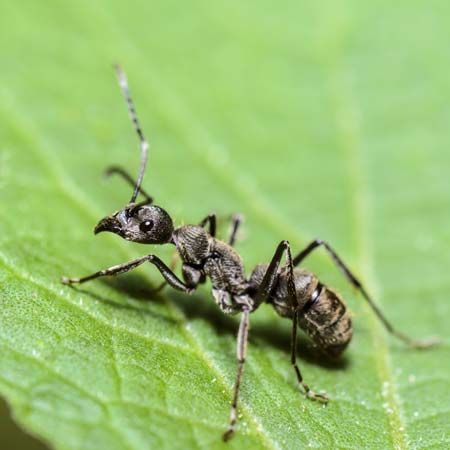
All ants are social insects living in organized colonies. Notable examples include:3
- Bullet ants
- Carpenter ants
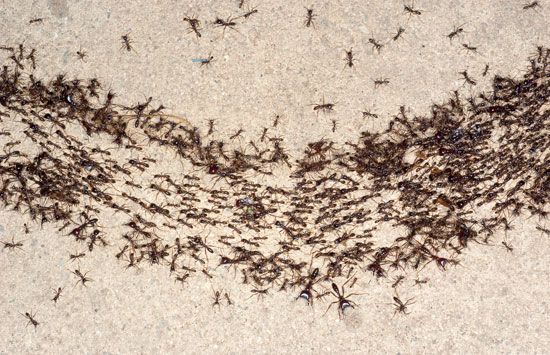
- Driver ants
- Eciton army ants
- Fire ants
- Harvester ants
- Honey ants
- Leafcutter ants
- Sahara desert ants
- Weaver ants
Bees (Superfamily Apoidea)
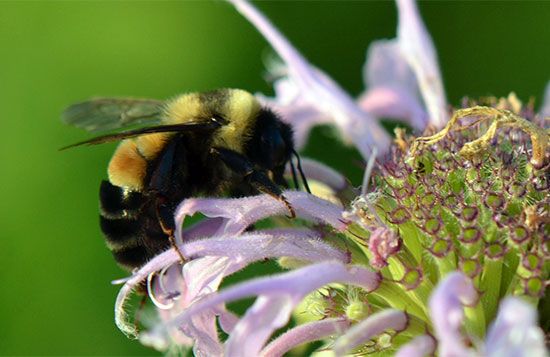
Bees are essential pollinators that rely on flowers for food. Examples include:4
- Bumblebees
- Carpenter bees
- Cuckoo bees
- Euglossine bees
- Honeybees (including Africanized and western varieties)
- Leaf-cutter bees
- Mason bees
- Mining bees
- Plasterer bees
- Stingless bees
- Sweat bees
Wasps
Wasps are a diverse group, with most species being solitary and many acting as parasitoids many acting as parasitoids. Examples include:32
- Braconid wasps
- Chalcid wasps
- Cuckoo wasps
- Ensign wasps
- Fig wasps
- Gall wasps
- Hornets (e.g., Northern giant hornet)
- Ichneumon wasps
- Paper wasps
- Sand wasps
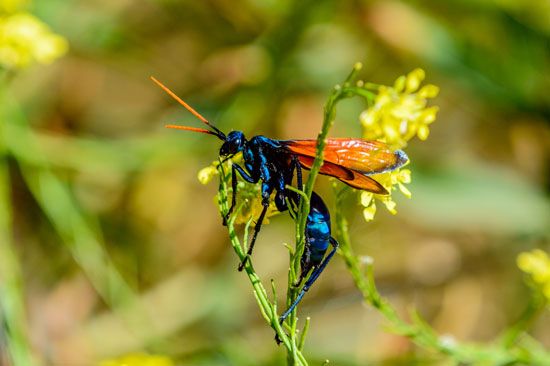
- Spider wasps (e.g., tarantula hawks)
- Thread-waisted wasps (e.g., cicada-killer wasps)
- Velvet ants
- Yellow jackets5
What are the main differences between social and solitary insects?
The primary distinction between social and solitary insects lies in their level of cooperation, colony structure, and reproductive behavior. While solitary insects live and reproduce independently, social insects form complex, multigenerational societies characterized by specific organizational traits.
Social Insects
Social insects, such as all termites, all ants, and certain bees and wasps, exhibit three defining characteristics:
- Group Integration: Individuals live together in colonies, often functioning as a single unit.8
- Division of Labour: Tasks are distributed among different castes, such as queens (reproductives) and workers or soldiers (steriles), who maintain the nest, forage, and defend the colony.89
- Overlap of Generations: Offspring remain with their parents to assist in raising subsequent generations.8
These societies often rely on pheromones to communicate needs and regulate colony development. In many cases, workers forgo their own reproduction to aid the queen, a behavior driven by ecological constraints like limited food or nesting sites.109
Solitary Insects
The vast majority of insect species, including most wasps, are solitary. Key features include:11
- Independence: Each female typically builds her own nest and provisions it for her offspring without assistance from others.11
- Self-Sufficiency: Solitary insects perform all necessary tasks—such as hunting, nest construction, and egg-laying—on their own.11
- Lack of Castes: There is no division of labour or complex social hierarchy; every individual is capable of reproduction.11
While solitary insects lack the social structure of colonies, they are often the equals of social insects in terms of behavioral complexity and learning capacity. Some solitary species are parasitic, such as cuckoo wasps, which lay eggs in the nests of other insects rather than building their own.1011
How do Hymenoptera contribute to the environment as pollinators?
The order Hymenoptera, which includes bees, wasps, and ants, serves as the primary group of insect pollinators for flowering plants. Their role is fundamental to the reproduction of many plant species, the formation of seeds and fruits, and the maintenance of global biodiversity.121314
Mechanisms of Pollination
Hymenopterans facilitate cross-pollination as they forage for nectar and pollen. As they move between flowers, pollen grains adhere to their bodies and are deposited on subsequent blooms.15
- Physical Adaptations: Many bees possess specialized features such as hairy bodies and pollen baskets that enhance their efficiency as pollinators.15
- Behavioral Specialization: Some species have coevolved with specific plants. For example, certain bees perform buzz pollination (sonication), vibrating their flight muscles at specific frequencies to release pollen from specialized anthers.16
- Deceptive Strategies: Some orchids utilize sexual deception, mimicking the scent, appearance, or texture of female bees or wasps to lure males into pseudocopulation, during which the insect inadvertently collects or deposits pollen.162
Ecological and Agricultural Impact
Beyond wild ecosystems, Hymenoptera are vital to human agriculture, pollinating numerous fruit and vegetable crops, including almonds, apples, and blueberries. Their presence increases crop yields and quality, directly impacting food availability and economic stability. Furthermore, while some wasps and ants act as predators or parasites that control pest populations, they also contribute to plant health by defending flowers from nectar-robbing insects.141217
What is the role of a queen in an insect colony?
In social insect colonies, the queen serves as the primary reproductive individual, and her role is essential for the colony’s population, stability, and continuity. While her specific responsibilities can vary by species, her primary function is egg-laying.1819
Key Roles and Functions
- Reproduction: The queen is typically the only fertile female in the colony. In many species, such as the western honeybee, she is capable of laying thousands of eggs per day. She often mates with multiple males—a practice known as polyandry—to ensure genetic diversity within the colony.201821
- Colony Regulation: Queens often secrete pheromones, such as “queen substance,” which act as chemical signals to the rest of the colony. These substances can inhibit the development of ovaries in worker bees and prevent them from rearing new queens, thereby maintaining the social hierarchy and preventing reproductive competition within the hive.2223
- Colony Establishment: In many species, the queen is responsible for founding a new colony. After mating, she may seek a suitable location, shed her wings, and begin laying eggs to produce the first generation of workers.19
Because the queen’s anatomy is often specialized for reproduction, she frequently lacks the physical structures—such as wax glands or pollen-collecting apparatus—needed for tasks like nest building or foraging, making her entirely dependent on the worker caste for survival.19
Sources
- List of insects - ants , bees , and wasps (order Hymenoptera ) — Encyclopædia Britannica
- Hymenoptera — Encyclopædia Britannica
- wasp — Encyclopædia Britannica
- bee — Encyclopædia Britannica
- How Are Ants, Wasps, and Bees Related? — Encyclopædia Britannica
- ant — Encyclopædia Britannica
- What do ants eat? — Encyclopædia Britannica
- social insect — Encyclopædia Britannica
- Eusocial species — Encyclopædia Britannica
- insect - Insect societies — Encyclopædia Britannica
- Animal - Social levels of organization — Encyclopædia Britannica
- major types of pollinators - Bees — Encyclopædia Britannica
- Why are bees important? — Encyclopædia Britannica
- Hymenoptera - Ecology — Encyclopædia Britannica
- orchid - Pollination — Encyclopædia Britannica
- Botanical Sex: 9 Alluring Adaptations — Encyclopædia Britannica
- orchid - Sexual deception — Encyclopædia Britannica
- Beekeeping - Queen bee — Encyclopædia Britannica
- Hymenoptera - Social forms — Encyclopædia Britannica
- western honeybee - Colony and life cycle — Encyclopædia Britannica
- How long do queen bees live? — Encyclopædia Britannica
- Chemoreception - Primer pheromones — Encyclopædia Britannica
- Hormone - Pheromones — Encyclopædia Britannica
- insect - Reproduction — Encyclopædia Britannica
- Reproductive behaviour - Insects — Encyclopædia Britannica
Published on · 4 min read