Harvester Ant
A harvester ant is a member of any of several ant genera—most notably Messor, Pogonomyrmex, Atta, and Pheidole—that are characterized by their habit of…
What is harvester ant?
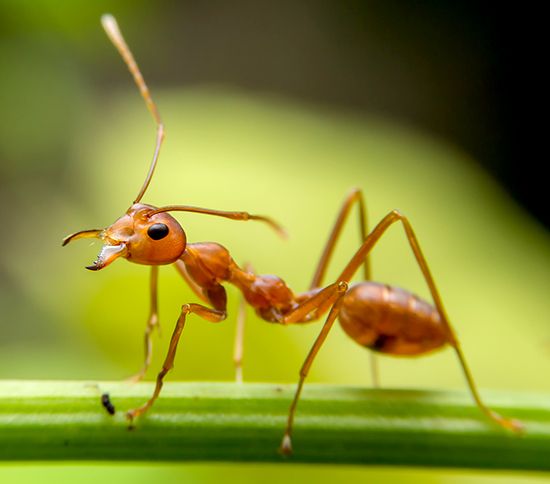
A harvester ant is a member of any of several ant genera—most notably Messor, Pogonomyrmex, Atta, and Pheidole—that are characterized by their habit of gathering and storing plant materials for food. As eusocial insects, these ants work collectively to support their colony, which functions as a single, integrated unit.12
The specific behaviors of harvester ants vary by genus:
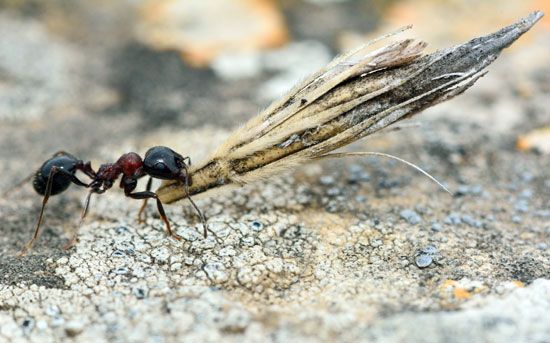
- Seed Harvesters: Species such as Messor and Pogonomyrmex collect, husk, and store seeds, grass, or berries in their nests. Some Pheidole members possess large, powerful jaws specifically adapted for crushing these seeds.23
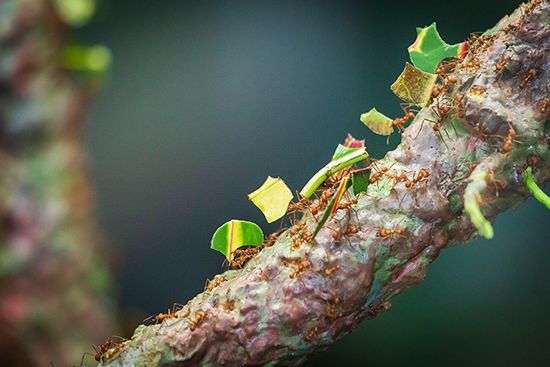
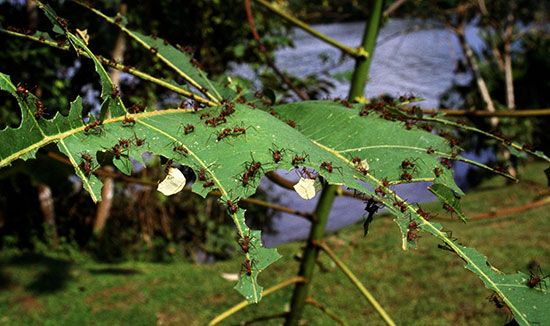
- Leafcutters: Members of the genus Atta harvest leaves, which they use to cultivate fungi that serve as their primary food source.24
While these ants are primarily herbivorous, they are highly specialized in their foraging strategies. It is worth noting that some species, such as the Pogonomyrmex harvester ant, are capable of inflicting a painful sting if threatened.42
How do leafcutter ants cultivate their own food?
Leafcutter ants, belonging to the genera Atta and Acromyrmex, cultivate their food through a sophisticated, symbiotic relationship with specific fungi. After foraging for foliage, the ants transport leaf fragments to their underground nests, which can contain over 1,000 chambers.5
Within these chambers, the ants maintain subterranean “gardens” using the chewed leaves as a substrate for fungal growth. Their cultivation process involves several critical tasks:
- Maintenance: The ants physically and chemically clean the gardens to remove contaminants.5
- Growth Support: They produce enzymes and amino acids to promote the development of the fungi, while simultaneously secreting substances that suppress the growth of unwanted, competing fungi.5
- Harvesting: The ants feed on the fungal strands and protein-rich structures known as gongylidia, which are produced by the fungi specifically for the colony’s consumption.5
This complex agricultural system ensures a steady food supply for the colony, with larvae being particularly dependent on the fungus for nutrition.5
What makes harvester ants eusocial insects?
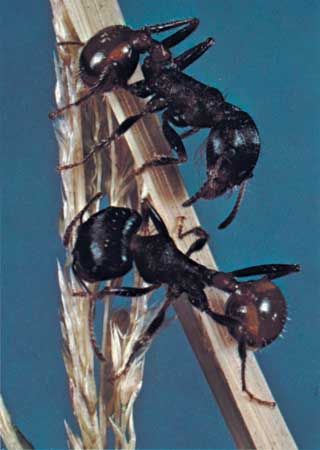
Harvester ants are classified as eusocial insects because they live in multigenerational family groups characterized by cooperative care of offspring and a distinct division of labor. Their colonies function as a single, integrated unit where the majority of individuals work to support a relatively small reproductive group.26
The eusocial nature of these colonies is defined by several key factors:
- Division of Labor: Harvester ants exhibit extreme task specialization, with individuals often divided into castes such as queens, workers, and soldiers. These roles are often supported by morphological differences; for example, some Pheidole ants have specialized subcastes where majors focus on defense while minors handle foraging.67
- Cooperative Care: Workers, who are typically sterile, forgo their own reproduction to care for the queen’s eggs and larvae. By aiding the queen—who is usually their mother—workers gain fitness benefits by ensuring the survival of their siblings.68
- Colony Efficiency: This social structure allows the colony to efficiently gather resources, such as seeds or leaves, and maintain the nest. In the case of leafcutter ants, this cooperation extends to the complex agricultural task of cultivating fungi for food.692
How do ants use scent trails to communicate?
Ants communicate using pheromones, which are chemical signals produced to influence the behavior of other members of their species. To create scent trails, worker ants deposit these chemicals on the ground as they return to the nest after discovering a food source.11
These trails function as a navigational guide for other colony members, allowing them to locate the food source efficiently. The persistence of a trail depends on two factors:12
- Availability: The trail remains active as long as the food source is available.11
- Reinforcement: The trail is maintained through continuous reinforcement by returning workers who add more pheromones to the path.11
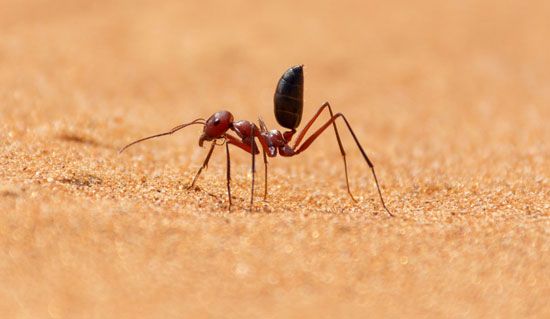
Unlike alarm pheromones, which must be highly volatile to warn others quickly and then dissipate, marking pheromones are designed for longer-term use. While many ants rely on these chemical pathways, some species, such as the Sahara desert ant, must use alternative methods like proprioception and polarized light because the extreme heat of their environment causes pheromones to evaporate too rapidly for reliable navigation.1113
Sources
- harvester ant — Merriam-Webster
- harvester ant — Encyclopædia Britannica
- ant - Food — Encyclopædia Britannica
- What do ants eat? — Encyclopædia Britannica
- leafcutter ant — Encyclopædia Britannica
- Eusocial species — Encyclopædia Britannica
- Caste — Encyclopædia Britannica
- Hymenoptera - Division of labor — Encyclopædia Britannica
- Hymenoptera - Social forms — Encyclopædia Britannica
- Reproductive behaviour - Group care — Encyclopædia Britannica
- Chemoreception - Pheromones — Encyclopædia Britannica
- Sahara desert ant — Encyclopædia Britannica
- Hymenoptera - Chemical — Encyclopædia Britannica
- Chemoreception - Movement toward an odor source — Encyclopædia Britannica
Published on · 3 min read