Cyclades
The Cyclades islands, a group of about 30 islands in the Aegean Sea, are renowned for their distinct cultural and architectural heritage.
What are some unique cultural and architectural features of the Cyclades islands?
The Cyclades islands, a group of about 30 islands in the Aegean Sea, are renowned for their distinct cultural and architectural heritage.
Architectural Features
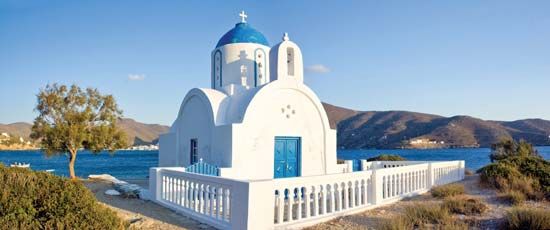
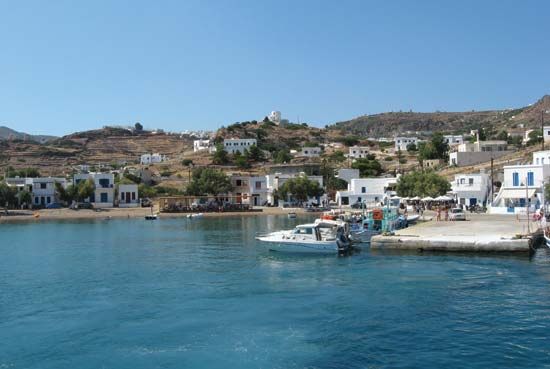
The modern landscape is defined by iconic cube-shaped, whitewashed houses and traditional windmills. Beyond these modern markers, the islands bear significant historical architectural traces, particularly from the period of Venetian rule during the Middle Ages. Archaeological sites, such as those at Akrotiri on Thera, provide invaluable insights into ancient Aegean architecture, showcasing well-preserved structures that survived a massive volcanic eruption.12
Cultural and Artistic Legacy
The islands are famous for their rich Bronze Age material culture, most notably the characteristic white marble figurines. Artistic expression in the region was highly developed; ancient pottery featured lively, colorful motifs including dolphins, swallows, and floral patterns. Furthermore, the islands are home to remarkable frescoes—such as those found at Phylakopi and Akrotiri—which depict daily life, elaborate ships, and sophisticated costumes, serving as vital historical documents for Aegean civilization.12
How do the Cyclades islands differ from other Greek island groups?
The Cyclades are distinguished from other Aegean Islands by several unique geographical, historical, and cultural characteristics:
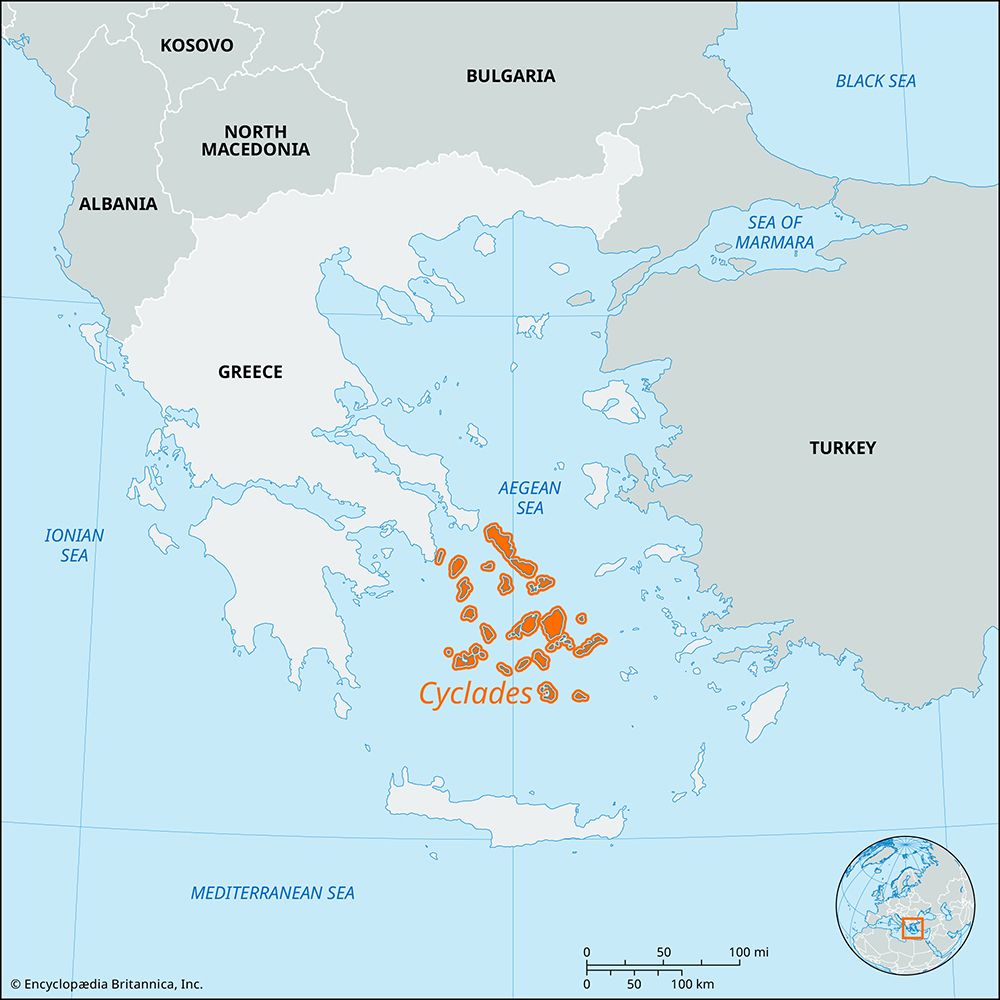
- Etymology and Geography: The name “Cyclades” means “encircling islands,” referring to their formation in a rough circle around the sacred island of Delos, which served as a legendary religious center. Geographically, they are the peaks of submerged mountain ranges located off the coast of Attica.14
- Historical Significance: In antiquity, the islands were the heart of the Bronze Age Cycladic culture, famous for their distinctive white marble idols. Unlike other groups, the Cyclades have a long history of being a central hub for early civilizations, later housing the treasury of the Athenian-led Delian League.14
- Architectural Identity: The modern landscape is iconic for its cube-shaped, whitewashed houses and traditional windmills. Many islands also feature architectural remnants from the Middle Ages, specifically from the period of Venetian rule.14
- Geological Diversity: The group includes Thera, which is the site of a massive volcanic explosion that occurred around 1600 BCE, a feature that distinguishes its geological history from many other Greek island groups.14
What is the geographical location of the Cyclades islands in Greece?
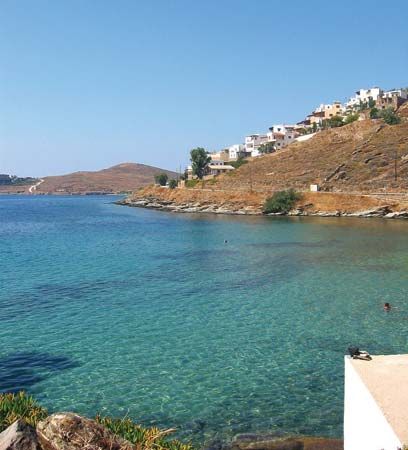
The Cyclades are a group of approximately 30 islands located in the South Aegean region of southeastern Greece. Situated in the Aegean Sea, they lie off the coast of Attica and are geologically characterized as the peaks of submerged mountain ranges.16
The islands are named for their arrangement in a rough circle around the sacred island of Delos. They are positioned to the east of the Saronic Islands and represent one of the seven principal island groups within the Aegean archipelago.16
How many islands make up the Cyclades, and which are the most well-known?
The Cyclades consist of approximately 30 islands located in the Aegean Sea. While the group is defined by this collection of islands, several are particularly notable for their size, history, or tourism significance:15
- Náxos: The largest, highest, and most fertile island in the group, known for its agricultural production.1
- Thera: Renowned for being the site of a massive volcanic eruption around 1600 BCE.1
- Delos: Historically significant as the sacred center of the island group and the legendary birthplace of Apollo and Artemis.1
- Other major islands: The group also includes Ándros, Kéa, Melos (Mílos), Mýkonos, Páros, Tínos, Ídos, Kímolos, and Kíthnos.1
These islands are celebrated for their archaeological heritage, traditional whitewashed architecture, and status as major tourist centers.1
Sources
- Cyclades — Encyclopædia Britannica
- Aegean civilizations - The Cyclades — Encyclopædia Britannica
- list of World Heritage sites - Greece — Encyclopædia Britannica
- list of islands - Greece — Encyclopædia Britannica
- Aegean Islands — Encyclopædia Britannica
- Aegean Sea — Encyclopædia Britannica
Published on · 3 min read