Leucosolenia
Leucosolenia sponges are typically found in shallow marine environments, particularly in tide pools and on wharves. As members of the class Calcarea, they…
In which marine environments are Leucosolenia sponges typically found?
Leucosolenia sponges are typically found in shallow marine environments, particularly in tide pools and on wharves1. As members of the class Calcarea, they generally inhabit shallow waters across all seas, ranging from intertidal regions to depths of approximately 200 meters. These sponges commonly grow in colonies attached to rocks or other surfaces near the seashore.123
What is the body structure of Leucosolenia sponges, and how does it differ from other sponge genera?
Leucosolenia sponges possess a simple, tubular, and branched body structure, typically growing as colonies of slender individuals connected by a rootlike stolon. Their body wall is thin and composed of two primary cell layers: an outer layer of flat pinacocytes and an inner layer of flagellated choanocytes that line the central cavity, or spongocoel. Between these layers lies a jellylike matrix called the mesoglea, which contains amoebocytes and skeletal spicules.1
The primary structural distinction of Leucosolenia lies in its ascon water-current system, which is the simplest type found in sponges. Unlike more complex genera, Leucosolenia lacks internal canals; water enters directly through tiny pores in the body wall into the central spongocoel and is expelled through a single large opening, the osculum.61
In contrast, other sponge genera exhibit more complex systems:
- Sycon type: Found in genera like Scypha, this structure features fingerlike projections of the body wall, creating radial canals that increase the surface area for choanocytes.6
- Leucon type: Found in advanced members of the Calcarea and other classes, this system replaces the central cavity with numerous small, flagellated chambers and a complex network of incurrent and excurrent canals.6
What is the evolutionary history of the Leucosolenia genus?
The evolutionary history of the Leucosolenia genus is rooted in the broader development of the phylum Porifera, which represents one of the most primitive animal body plans. Sponges are believed to have originated from flagellated protozoans, as evidenced by the similarity between sponge choanocytes and choanoflagellate protozoans.1
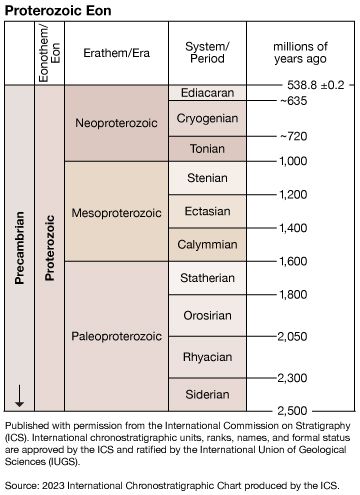
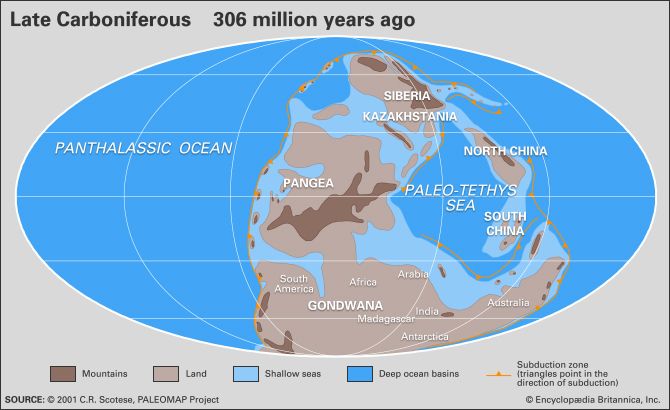
While sponges as a group have a fossil record extending back to the Cryogenian Period (approximately 635 million years ago), the class Calcarea—to which Leucosolenia belongs—first appears in the Carboniferous Period (about 359 to 299 million years ago). Because calcareous spicules dissolve easily during fossilization, the evolutionary history of Leucosolenia is difficult to trace through the fossil record compared to sponges with more robust, compact skeletons.1
Genetically, Leucosolenia and other sponges are significant for possessing a single Hox gene, which represents the ancestral state from which the complex clusters found in more advanced animals evolved. Structurally, Leucosolenia retains the primitive ascon water-current system, a design that has remained largely unchanged since the early evolution of sponges.751
How do scientists study and identify different species within the Leucosolenia genus?
Scientists identify and distinguish species within the Leucosolenia genus primarily through a combination of morphological, cytological, and ecological analysis. Because these sponges lack complex internal structures, taxonomists rely heavily on the following diagnostic features:
- Skeletal Characteristics: The specific combination of spicular types defines the genus, while the form and dimensions of individual spicules are critical for differentiating between species. In Leucosolenia, these spicules are typically shaped like slender three- or four-pointed stars and are produced by specialized cells called amoebocytes.19
- Morphological Traits: Researchers examine the overall shape, color, consistency, and surface texture of the sponge colony. The distribution and character of the osculum—the opening through which water is expelled—also provide important diagnostic data, as these features often show significant variation between species.1
- Cytological and Embryological Features: Scientists use cellular and developmental characteristics as diagnostic tools to support classification. This includes observing reproductive processes, such as the development of free-swimming flagellated larvae or specific budding patterns.19
- Ecological and Distributional Data: In cases where skeletal or embryological traits are too uniform to provide clear distinctions, ecological factors and geographic distribution become essential for identifying specific species.1
While modern phylogenetic studies increasingly utilize molecular genetics—such as comparing DNA sequences—to measure evolutionary divergence, traditional morphological examination remains a cornerstone of sponge taxonomy.71
Sources
- Leucosolenia — Encyclopædia Britannica
- sponge - Annotated classification — Encyclopædia Britannica
- sponge - Distribution and abundance — Encyclopædia Britannica
- sponge - Habitats — Encyclopædia Britannica
- Leucosolenia — Merriam-Webster
- sponge - Water-current system — Encyclopædia Britannica
- sponge - Evolution and paleontology — Encyclopædia Britannica
- evolution - Evolution and development — Encyclopædia Britannica
- calcareous sponge — Encyclopædia Britannica
- phylogeny - Evidence for specific phylogenies — Encyclopædia Britannica
- sponge - Distinguishing taxonomic features — Encyclopædia Britannica
Published on · 3 min read