Cryogenian Period
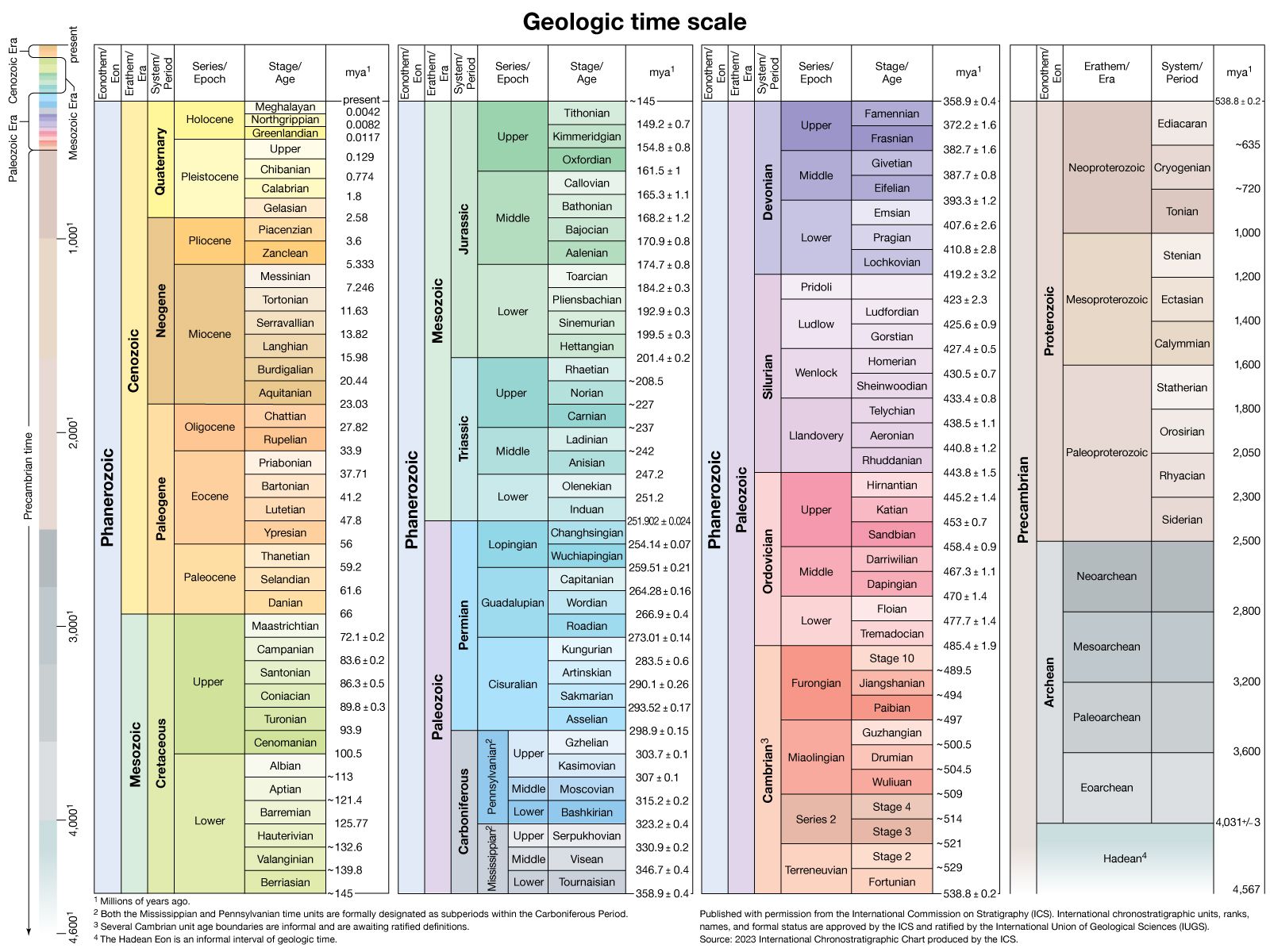
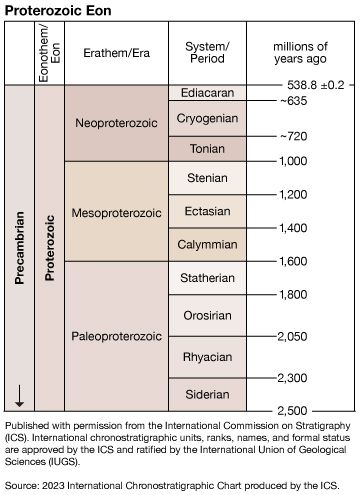
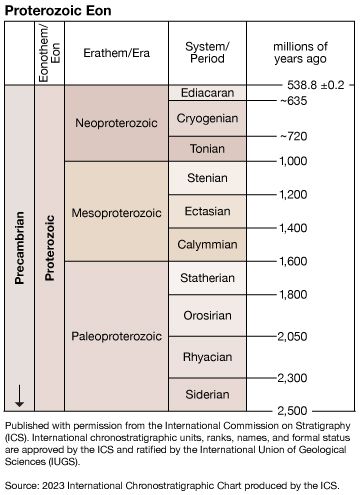
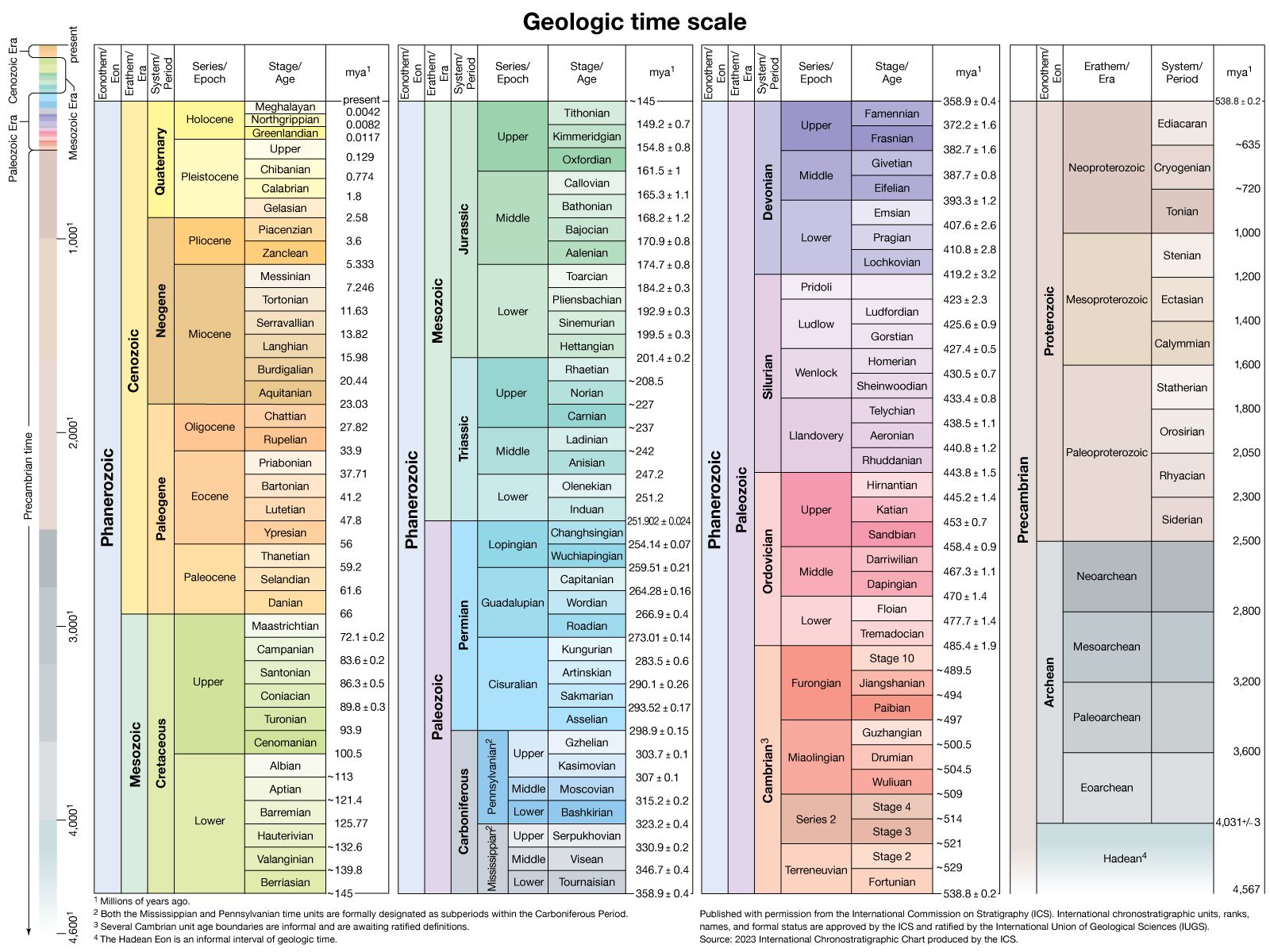
The Cryogenian Period was the second of three periods in the Neoproterozoic Era, spanning from approximately 720 million to 635 million years ago. It…
What is Cryogenian Period?
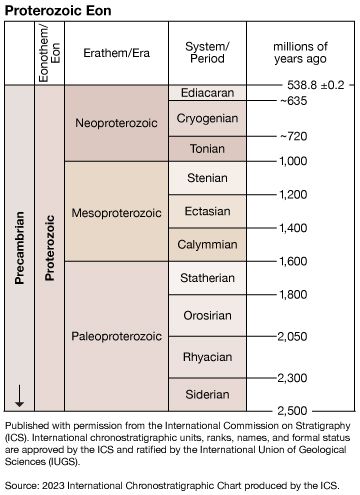
The Cryogenian Period was the second of three periods in the Neoproterozoic Era, spanning from approximately 720 million to 635 million years ago. It followed the Tonian Period and preceded the Ediacaran Period.12
The period is defined by two major, long-lasting glaciations: the Sturtian and the Marinoan. These events were likely triggered by the breakup of the Rodinia supercontinent, which caused massive volcanic activity. The resulting basalt rocks increased weathering, removing carbon dioxide from the atmosphere and weakening the greenhouse effect.12
Scientists debate whether the Earth was entirely frozen, known as the Snowball Earth hypothesis, or partially covered by thin ice, the Slushball Earth hypothesis. Despite these harsh conditions, the period saw significant increases in atmospheric oxygen and the potential emergence of early animals.2
What is the difference between the Snowball Earth and Slushball Earth hypotheses?
The Snowball Earth and Slushball Earth hypotheses are competing geological and climatological models used to explain the extreme glaciation events of the Precambrian era.34
- Snowball Earth Hypothesis: This model suggests that Earth’s land surfaces and oceans were entirely encased in ice from the poles to the Equator. Under this scenario, life would have been restricted to isolated refugia, such as hydrothermal vents, meltwater ponds near volcanoes, or areas beneath thin ice where limited light could penetrate for photosynthesis. where limited light could penetrate for photosynthesis.42
- Slushball Earth Hypothesis: This counter-premise contends that the planet was not completely frozen. It proposes that while massive ice sheets covered the continents, equatorial ocean regions remained partially open or were covered only by a thin, transparent layer of slushy ice. This would have allowed photosynthetic organisms to continue capturing sunlight more effectively than in a fully frozen state.32
Both theories attempt to resolve how life survived and evolved during the harsh conditions of the Cryogenian Period.2
How did the breakup of the supercontinent Rodinia affect Earth’s climate?
The breakup of the supercontinent Rodinia had a profound cooling effect on Earth’s climate, primarily by altering the global carbon cycle through increased volcanic activity and subsequent rock weathering.1
The process unfolded as follows:
- Volcanic Outpourings: The rifting of Rodinia triggered massive volcanic events, resulting in the creation of extensive flood basalts, such as the Laurentian basaltic province.1
- Increased Weathering: These newly exposed basaltic rocks were highly susceptible to chemical weathering. During this process, carbon dioxide from the atmosphere reacted with water to form carbonic acid, which then dissolved the silicate minerals in the rock.156
- Carbon Drawdown: This chemical reaction effectively acted as a carbon sink, stripping significant amounts of carbon dioxide from the atmosphere and transporting it into the oceans as bicarbonate ions, where it was eventually sequestered in sedimentary deposits.16
- Climate Cooling: With atmospheric carbon dioxide levels reduced, the greenhouse effect weakened, leading to a global drop in temperatures that contributed to the severe glaciations of the Cryogenian Period.1
What role did phosphorus play in the evolution of early life during this period?
During the Cryogenian Period, the tectonic activity associated with the breakup of the supercontinent Rodinia played a critical role in the evolution of early life by facilitating the release of large amounts of phosphorus into the oceans.102
Phosphorus is an essential nutrient for life, as it is vital for energy transfer and the storage of genetic information in DNA. Its role during this period was transformative:11
- Boosting Primary Productivity: The influx of phosphorus into the oceans fueled a substantial increase in primary productivity among photosynthetic organisms. This growth occurred in both open-water areas and regions covered by thin, slushy ice.102
- Oxygenation: As these photosynthetic organisms thrived, they released oxygen as a metabolic byproduct. This process contributed to a significant rise in global atmospheric oxygen concentrations over time, which was a necessary precursor for the development of more complex life-forms, including the first animals.12210
By acting as a limiting nutrient, the availability of phosphorus directly influenced the biological capacity of the oceans to support the expansion of life during and after the intense glacial episodes of the Neoproterozoic Era.10112
Sources
- Cryogenian Period: Top Questions — Encyclopædia Britannica
- Cryogenian Period — Encyclopædia Britannica
- Slushball Earth hypothesis — Encyclopædia Britannica
- Snowball Earth hypothesis — Encyclopædia Britannica
- Ordovician Period - Plate tectonics — Encyclopædia Britannica
- plate tectonics - Climate — Encyclopædia Britannica
- Ordovician Period - Paleoclimate — Encyclopædia Britannica
- Climate change - Tectonic activity — Encyclopædia Britannica
- evolution of the atmosphere - Geologic carbon cycle — Encyclopædia Britannica
- Precambrian - Oxygenation of the atmosphere — Encyclopædia Britannica
- Biosphere - The cycling of phosphorus and other essential nutrients — Encyclopædia Britannica
- Phosphorus cycle — Encyclopædia Britannica
- life - Geologic record — Encyclopædia Britannica
- Precambrian - Paleogeography — Encyclopædia Britannica
- plate tectonics - Life — Encyclopædia Britannica
Published on · 3 min read