Lewis and Harris
Lewis and Harris is the largest and most northerly island of the Outer Hebrides in Scotland. Located approximately 24 miles (39 km) off the west coast of the…
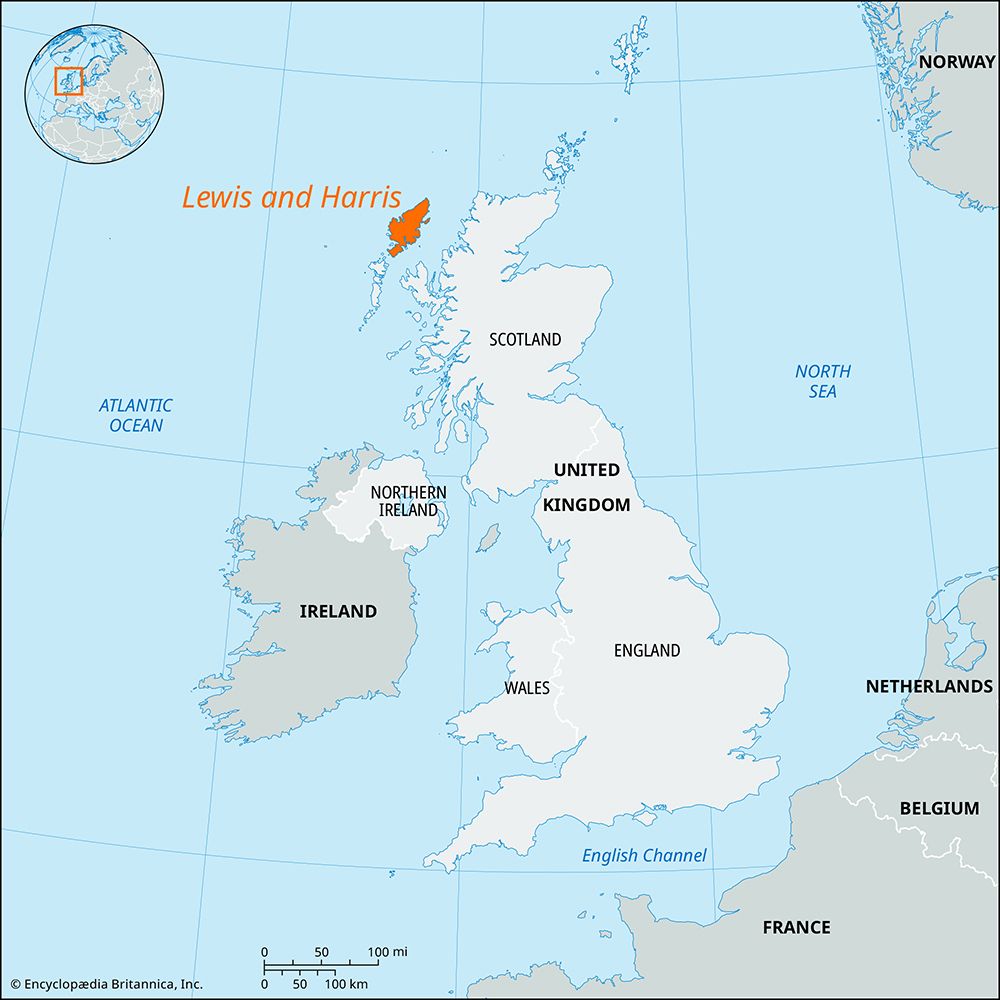
What is the geographical location of Lewis and Harris, and how does it fit into the Outer Hebrides?
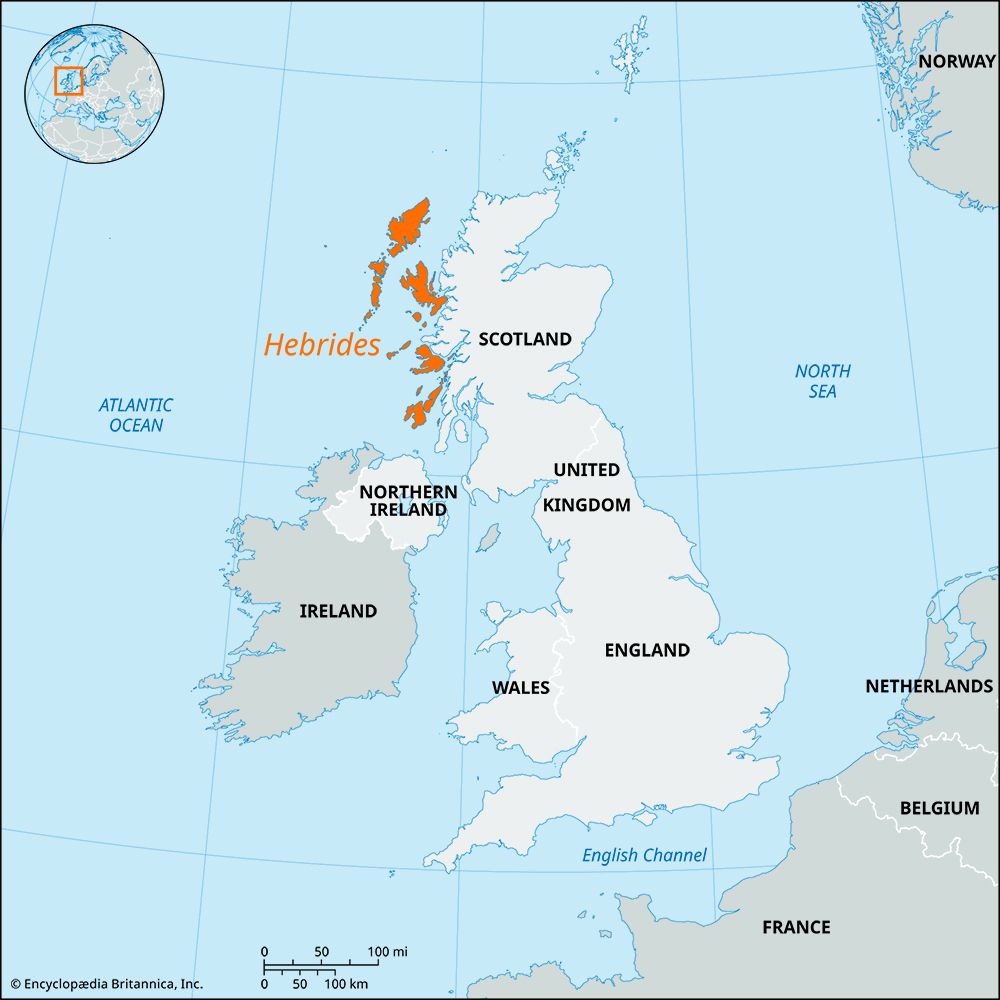
Lewis and Harris is the largest and most northerly island of the Outer Hebrides in Scotland. Located approximately 24 miles (39 km) off the west coast of the Scottish mainland, it is separated from the mainland by the Minch channel.123
Although the island forms one continuous landmass, it is geographically and culturally distinguished as two parts:
- Lewis: The larger, northern portion, which is part of the historic county of Ross-shire. It features a landscape of peat moorland and is home to Stornoway, the administrative and commercial center of the islands.13
- Harris: The southern portion, which belongs to the historic county of Inverness-shire. Its terrain is notably more mountainous than that of Lewis.13
Together, these areas constitute the most populous part of the Outer Hebrides, a crescent-shaped chain of islands stretching 130 miles (210 km) that falls within the Western Isles council area.13
What are some of the most significant natural landmarks and attractions on Lewis and Harris?
Lewis and Harris is renowned for its distinct, rugged landscapes and significant historical sites. While the island is a single landmass, its natural geography varies significantly between the two regions, offering a variety of landmarks for visitors.
Natural Landmarks and Landscapes
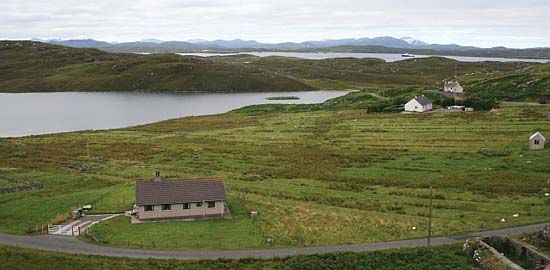
- Contrasting Terrain: The island is defined by a sharp contrast between the northern and southern landscapes. Lewis is characterized by vast, open peat moorlands and numerous small inland lakes, while Harris is notably mountainous, featuring more than 30 summits exceeding 1,000 feet (300 meters).1
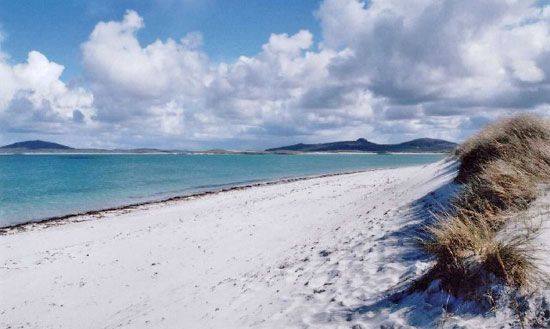
- Coastal Scenery: The coastline is deeply indented, featuring a dramatic divide between the rocky, infertile eastern shores and the beautiful white sand beaches on the west. These western beaches are often backed by machair—fertile, grassy plains that are a unique feature of the Hebridean landscape.14
- Wildlife: The island’s natural environment supports a rich variety of wildlife. The coastal areas are home to the Atlantic gray seal, while the interior moors and hills provide habitats for red deer and various wild fowl.14
Significant Attractions
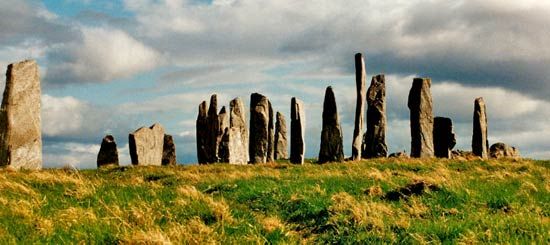
- Callanish Stones: One of the most important prehistoric sites in Scotland, the Callanish megalithic stone circle is located on Lewis. Often compared to Stonehenge, these stones are arranged in a cross-like formation and represent over 4,000 years of human history.4
- Stornoway: As the only sizable town in the Outer Hebrides, Stornoway serves as the primary commercial and administrative hub. It features a high-quality natural harbor and is the center for local culture and the famous Harris tweed industry.14
How has the traditional Harris Tweed industry impacted the economy and culture of the island?
The traditional Harris tweed industry has played a vital role in the economic and cultural life of Lewis and Harris, serving as a crucial pillar of the island’s identity and livelihood.64
Economic Impact
Historically, the manufacture of Harris tweed provided a essential part-time occupation for crofters, allowing them to supplement their income from small-scale farming. As local fishing industries—once a primary source of revenue—diminished due to the rise of modern trawlers, the tweed industry helped stabilize the local economy and offset population loss. Today, it remains a significant industry, with Stornoway serving as a central hub for its manufacture and distribution.641
Cultural Significance
The industry is deeply rooted in the island’s heritage. While modern factory processes now handle the initial stages of production—such as washing, dyeing, blending, and spinning—the weaving remains a traditional cottage industry performed in the homes of local residents. This preservation of hand-weaving techniques ensures that the craft remains a living connection to the island’s past, reinforcing the unique Gaelic culture and traditions that continue to thrive on Lewis and Harris today.64
What are the main economic activities and industries on Lewis and Harris?
The economy of Lewis and Harris is built upon a foundation of traditional practices, specialized manufacturing, and modern service sectors.
Primary Economic Activities
- Crofting: This remains the traditional mainstay of the island’s economy. Most land is held by crofters—tenants of small farms—who typically raise sheep and cattle to supplement their diet and income.124
- Harris Tweed Industry: The manufacture of Harris tweed is a globally recognized textile enterprise. While the initial processing (washing, dyeing, and spinning) occurs in factories, the weaving remains a traditional cottage industry performed by crofters in their own homes.124
- Fishing: Historically a vital industry, fishing has declined significantly since the peak of the herring trade in the early 20th century due to the rise of modern trawlers. However, it remains a component of the local economy, with Stornoway serving as a key port with ship-repair facilities.124
- Tourism: As the island’s natural beauty and historical sites—such as the Callanish stone circle—attract visitors, tourism has become an essential economic engine for the region.124
Stornoway functions as the primary commercial and administrative center, supporting these industries and accommodating more than half of the island’s population.12
Sources
- Lewis and Harris — Encyclopædia Britannica
- Outer Hebrides — Encyclopædia Britannica
- Lewis with Harris — Merriam-Webster
- Hebrides — Encyclopædia Britannica
- Lewisian Complex — Encyclopædia Britannica
- Harris Tweed — Merriam-Webster
- Stornoway — Encyclopædia Britannica
- Newfoundland and Labrador - Agriculture, forestry, and fishing — Encyclopædia Britannica
Published on · 4 min read