The Minch
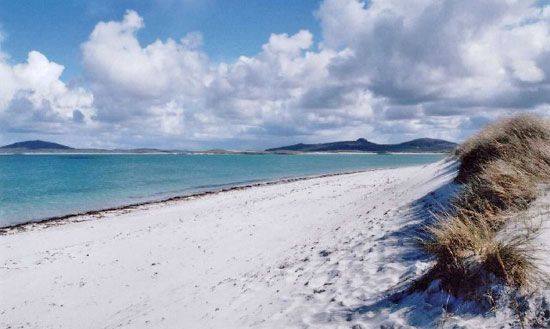
The Minch is an Atlantic sea channel located in northwestern Scotland. It serves as a waterway between the Outer Hebrides island group to the west and the…
What is The Minch?
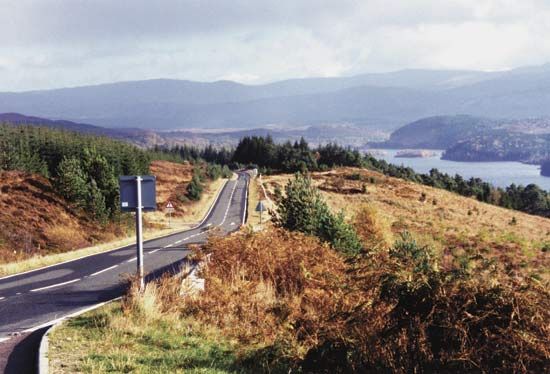
The Minch is an Atlantic sea channel located in northwestern Scotland. It serves as a waterway between the Outer Hebrides island group to the west and the Scottish mainland to the east.12
The channel is characterized by its significant depth and rapid currents, with a width ranging from 25 to 45 miles (40 to 70 km). It is geographically divided into two parts:1
- The Minch (North Minch): The main northern section of the channel.2
- The Little Minch: The southern extension that separates the islands of Harris and North Uist in the west from the island of Skye and the Inner Hebrides in the east.12
What are the Outer Hebrides?
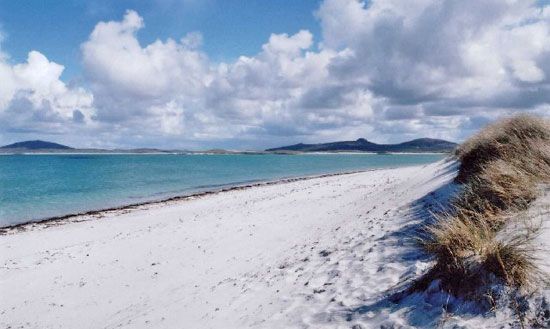
The Outer Hebrides, also known as the Western Isles, are a chain of islands off the northwestern coast of Scotland. Stretching 130 miles, they are separated from the Inner Hebrides by the Minch and Little Minch channels.3
Key features include:
- Geography: The largest island is Lewis and Harris, with other major islands including North Uist, Benbecula, South Uist, and Barra.3
- Culture: The islands are a stronghold for the Scottish Gaelic language and feature significant prehistoric sites, such as the Callanish megaliths.3
- Economy: Traditional crofting remains a mainstay, alongside the production of Harris tweed and tourism. Stornoway serves as the administrative center.3
- Environment: The landscape is characterized by austere, open scenery, peat bogs, and distinct western coastal plains known as machair.3
How do ocean currents affect the Scottish coast?
Ocean currents play a vital role in shaping the environment and climate of the Scottish coast. The primary influence comes from the North Atlantic Current, which is the northeastward extension of the Gulf Stream.
The effects of these currents include:
- Climate Moderation: The North Atlantic Current carries warm water from the tropics toward northwestern Europe. Prevailing westerly winds pick up this warmth and moisture, helping to maintain a significantly milder climate in Scotland than would otherwise be expected at such high latitudes.456
- Marine Productivity: The current often mixes with colder polar waters, creating turbulence that brings nutrient salts to the surface. This process historically supported some of the most productive commercial fishing grounds in the world.47
- Ecosystem Support: Ocean currents act as transport mechanisms for marine life, moving larvae and nutrients across vast distances. This circulation is essential for the health and distribution of various species within the regional marine ecosystem.85
What is the history of the Inner Hebrides?
The history of the Inner Hebrides is defined by a blend of Gaelic culture, Norse influence, and eventual integration into the kingdom of Scotland. By the first centuries CE, the islands’ inhabitants were Gaelic speakers, and the region became a center for Christianity following the arrival of St. Columba on Iona in 563 CE.1011
Beginning in the 8th century, the islands faced frequent Viking raids, leading to Norwegian dominance from the 9th to the 12th century. This period of Norse control ended when the native leader Somerled rebelled, founding the lordship of the Isles. The Lords of the Isles maintained effective rule over the region throughout the late Middle Ages.1012
It was not until 1493 that the kingdom of Scotland established formal control over the islands, at which point their history largely merged with that of the historic Scottish counties. Over subsequent centuries, the islands experienced significant political shifts, including the displacement of the Macdonalds by the Campbells in 1616.1011
Sources
- The Minch — Encyclopædia Britannica
- Minch — Merriam-Webster
- Outer Hebrides — Encyclopædia Britannica
- North Atlantic Current — Encyclopædia Britannica
- Gulf Stream — Encyclopædia Britannica
- Marine ecosystem - Ocean currents — Encyclopædia Britannica
- How Do Ocean Currents Affect the Biosphere? — Encyclopædia Britannica
- Atlantic Meridional Overturning Circulation: Top Questions — Encyclopædia Britannica
- subtropical gyre — Encyclopædia Britannica
- Inner Hebrides — Encyclopædia Britannica
- Iona — Encyclopædia Britannica
- Inverness-shire — Encyclopædia Britannica
- Scotland - The Norse influence — Encyclopædia Britannica
Published on · 3 min read