Hebrides
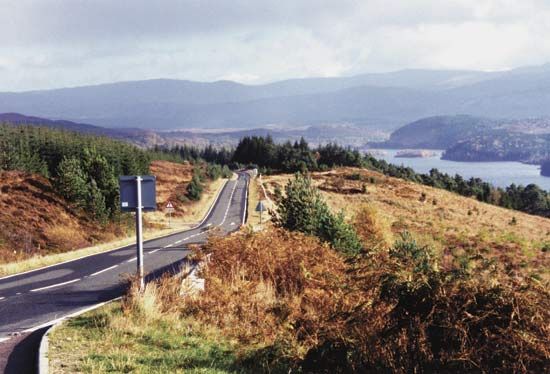
The Hebrides are a group of islands extending in an arc off the Atlantic (western) coast of Scotland. They are divided into two primary groups, separated by…
What are the Hebrides and where are they located?
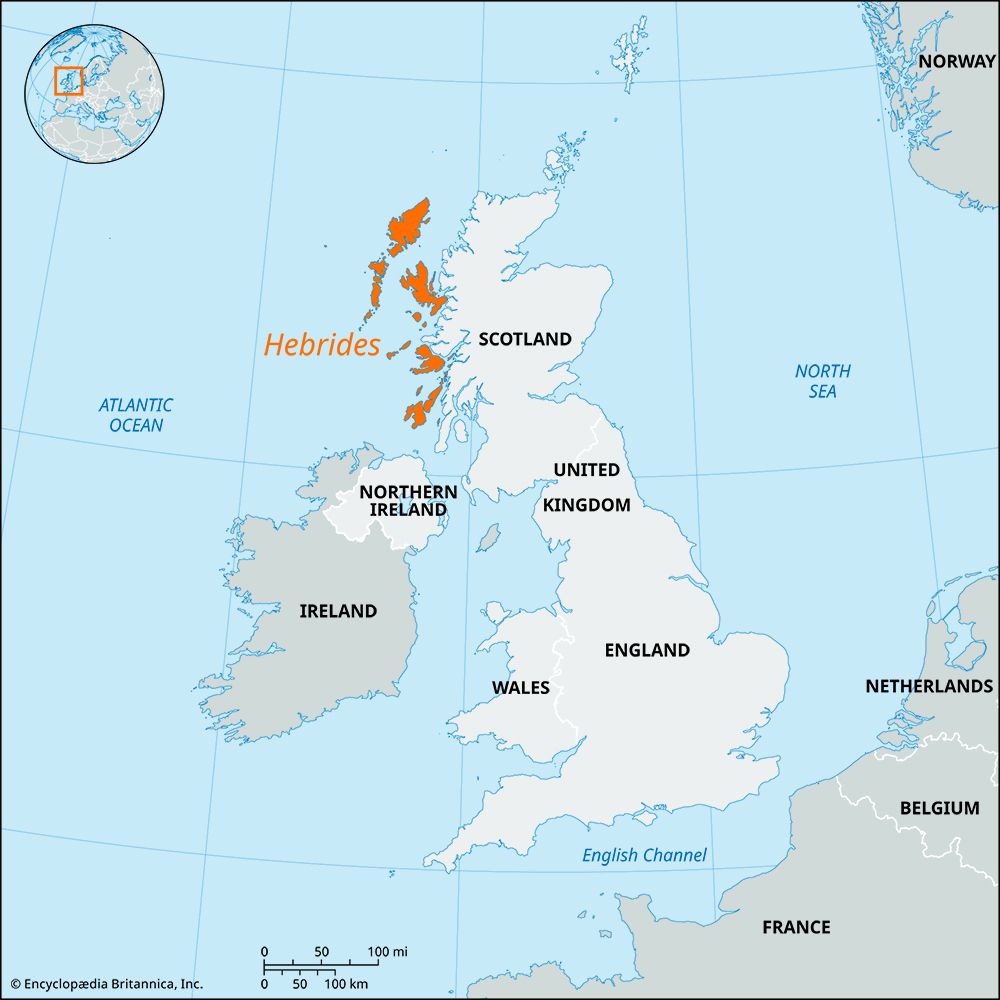
The Hebrides are a group of islands extending in an arc off the Atlantic (western) coast of Scotland. They are divided into two primary groups, separated by the Minch and Little Minch channels:1
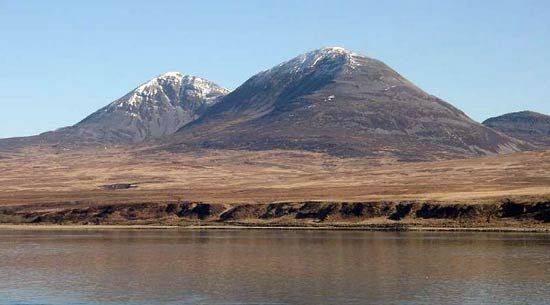
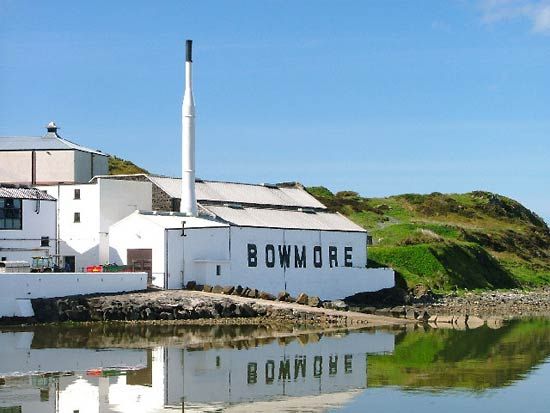
- Inner Hebrides: Located closer to the Scottish mainland, these islands include Skye, Mull, Jura, and Islay.21
- Outer Hebrides: Situated further northwest, this crescent-shaped chain—also known as the Western Isles—includes Lewis and Harris, North Uist, South Uist, and Barra.13
The islands are known for their rich wildlife, traditional crofting practices, and the production of Harris tweed. Historically, the region was shaped by Celtic culture, Viking influence, and the rule of the Lords of the Isles before coming under the control of the kingdom of Scotland in 1493.132
What is the geological history of the Hebrides, and how were they formed?
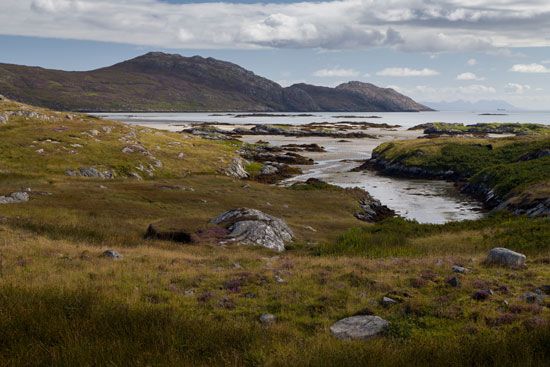
The geological foundation of the Hebrides is rooted in the Lewisian Complex, a major division of Precambrian rocks that form the basement of the Outer Hebrides as well as the islands of Coll and Tiree.1
These ancient rocks are among the oldest in the region, with radiometric dating placing them between 1.6 billion and 2.6 billion years old. Originally composed of igneous and sedimentary materials, these rocks were profoundly altered over time by intense heat, pressure, and chemical solutions, resulting in the dominant grayish gneiss seen today.1
The formation of these islands involved two major periods of deformation: the Scourian and the Laxfordian, which significantly shaped the structure of the complex. While the Lewisian Complex provides the base, some areas—particularly near Loch Maree and South Harris—still retain traces of original sedimentary features like shales and sandstones. These basement rocks are subsequently overlain by the Torridonian Series, further contributing to the complex geological history of the Scottish islands.1
How has the economy of the Hebrides changed over time, from traditional industries to modern sectors?
The economy of the Hebrides has evolved significantly over time, transitioning from a subsistence-based model to one that integrates traditional practices with modern industries.
Traditional Foundations
Historically, the islands relied on a subsistence economy centered on crofting—a system of small-scale tenant farming. Crofters traditionally raised cattle and sheep, cultivated hardy crops like potatoes, and utilized peat for fuel. This lifestyle was often supplemented by fishing, which became a vital industry, particularly during the peak of herring fishing in the early 20th century.34
Industrial Evolution
- Textiles: The manufacture of Harris tweed is a historic enterprise. While it originated as a home-based, hand-woven craft, the process has modernized. Today, preparatory stages like dyeing, carding, and spinning occur in factories, while the final weaving remains a specialized skill.34
- Modern Sectors: As traditional industries faced challenges—leading to significant 20th-century depopulation due to a lack of opportunity—the economy diversified. Tourism has become a major economic engine, drawing visitors to the islands’ unique natural landscapes and wildlife. Additionally, the oil industry has emerged as a significant contributor to the regional economy.34
What wildlife and ecosystems are unique to the Hebrides?
The Hebrides are home to a diverse array of wildlife and unique ecosystems shaped by the islands’ isolated and rugged environment.
Unique Ecosystems
- Machair: Found along the western coasts, these fertile, grassy plains are a distinctive feature of the islands. They are often cultivated by local crofters and are traditionally enriched using seaweed as fertilizer.43
- Peat Bogs: The poorly drained lowlands of the interior are characterized by extensive peat bogs, which have historically served as a vital fuel source for the islanders.4
- Coastal Environments: The islands feature a sharp contrast between the barren, rock-strewn eastern coasts and the white sand beaches of the west.4
Wildlife
The islands support a rich variety of fauna, including:
- Seabirds: Isolated islands, such as the St. Kilda group, host large populations of gannets, fulmars, and puffins.4
- Mammals: The region is inhabited by red deer and the Atlantic gray seal. Additionally, the island of Soay is home to a unique, primitive breed of wild sheep.43
- Other Fauna: The islands also support populations of wild goats, as well as traditional livestock like Highland cattle and ponies.3
Sources
- Inner Hebrides — Encyclopædia Britannica
- Hebrides — Merriam-Webster
- Hebrides — Encyclopædia Britannica
- Outer Hebrides — Encyclopædia Britannica
- Lewisian Complex — Encyclopædia Britannica
- Cabo Verde - Services — Encyclopædia Britannica
Published on · 3 min read