Life Expectancy
Life expectancy is an estimate of the average number of additional years a person of a specific age can expect to live, based on current age-specific death…
What is life expectancy and how is it calculated?
Life expectancy is an estimate of the average number of additional years a person of a specific age can expect to live, based on current age-specific death rates1. It is a hypothetical projection that assumes mortality patterns observed in a given year will persist throughout an individual’s lifetime.1
How It Is Calculated
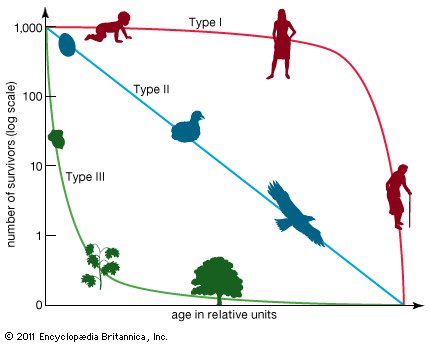
Life expectancy is determined by constructing a life table. This process involves:1
- Data Collection: Researchers gather enumeration data regarding population size and the number of deaths at each age, typically sourced from census records and vital statistics1.
- Table Construction: Using these figures, statisticians calculate the average life expectancy for various age groups.1
- Variations: Tables may be “complete,” showing expectancy for every year of age, or “abridged,” grouping data into 5- or 10-year intervals.1
Additionally, researchers calculate “healthy life expectancy,” which estimates years lived without disability by incorporating health statistics alongside standard mortality data.1
How does life expectancy vary between different countries and regions?
Life expectancy varies significantly across the globe, primarily reflecting local conditions such as access to healthcare, sanitation, and the prevalence of infectious disease, and the prevalence of infectious disease.1
In more-developed nations, life expectancy at birth is generally higher. For instance, in the United States, recent data indicates a life expectancy of 76.5 years for males and 81.4 years for females. In contrast, less-developed countries often experience lower life expectancy at birth. As an example, Guatemala reports a life expectancy of 70.8 years for males and 77.3 years for females.123
These disparities are often driven by high infant mortality rates in less-developed regions, which can result in a situation where life expectancy at birth is lower than life expectancy at age one. Furthermore, life expectancy is not a uniform statistic; it differs considerably based on factors such as sex, race, and geographic location. Because of these variations, demographic data is typically categorized rather than generalized for an entire population.2
What role does genetics play in determining an individual’s life expectancy?
Genetics plays a significant role in determining an individual’s life expectancy, though it functions in complex interaction with environmental factors. Research indicates that longevity is partially heritable, with studies of genealogical records, family histories, and life insurance data consistently showing that children of long-lived parents are more likely to live longer themselves.456
Genetic Mechanisms of Longevity
- Disease Susceptibility: Much of the genetic influence on life span is linked to inherited susceptibility to major age-related conditions, such as cancer and heart disease.5
- Telomeres: At the cellular level, telomeres—DNA segments at the ends of chromosomes—regulate cell division and aging. Genetic variations in genes like TERC can lead to shorter telomeres, accelerating biological aging and increasing vulnerability to disease.7
- Longevity Genes: Scientific research using model organisms like Caenorhabditis elegans has identified specific genes that influence life span. Many of these have human analogs, including those associated with the mTOR protein, which regulates growth and aging processes.8
While genetics provides the biological framework for an individual’s potential life span, environmental factors—such as lifestyle, diet, and exposure to disease—significantly modify how these genetic traits are expressed.54
What does life expectancy mean?
Life expectancy is a hypothetical estimate of the average number of additional years a person of a given age can expect to live, based on current age-specific death rates projected over a lifetime. The most common measure is life expectancy at birth, which serves as a statistical summary of mortality levels for a population.19
Because this measure is influenced by factors such as sex, race, and geographic location, it is typically calculated for specific demographic categories rather than as a single population average. These estimates are derived using a life table, which incorporates census data and vital statistics to track death rates across different age groups.19
Additionally, researchers may calculate “healthy life expectancy,” which estimates the number of years an individual is expected to live without disability or significant health issues.1
We could dive deeper into how specific historical improvements in sanitation and healthcare have shifted global life expectancy trends over the last century.
Sources
- life expectancy — Encyclopædia Britannica
- United States: Country Facts — Encyclopædia Britannica
- Guatemala: Country Facts — Encyclopædia Britannica
- aging - The inheritance of longevity — Encyclopædia Britannica
- life span - Studies on longevity — Encyclopædia Britannica
- telomere — Encyclopædia Britannica
- life span - Environmental influences — Encyclopædia Britannica
- aging - Genetics and life span — Encyclopædia Britannica
- population - Mortality — Encyclopædia Britannica
Published on · 3 min read