Lilac
Lilacs, which belong to the genus Syringa within the olive family, are native to regions across eastern Europe and temperate Asia. Specifically, the common…
Where are lilacs native to, and how have they spread globally?
Lilacs, which belong to the genus Syringa within the olive family, are native to regions across eastern Europe and temperate Asia. Specifically, the common lilac (Syringa vulgaris) originates from southeastern Europe, while other species, such as the Persian lilac, have native ranges extending from Iran to China.1
The global spread of these plants was largely driven by the development of the nurseryman trade in Europe. By the late 17th century, nurserymen played a crucial role in the exchange and cultivation of botanical species, catering to a growing interest in gardening among the nobility and gentry. As breeding skills advanced, these professionals contributed significantly to the acclimatization of foreign imports, allowing species like the common lilac to become widely cultivated in temperate regions throughout the world.21

What are some of the most popular lilac species and cultivars?
The genus Syringa includes approximately 25 species of fragrant, spring-flowering shrubs and small trees. Among these, several are particularly notable for their ornamental value:
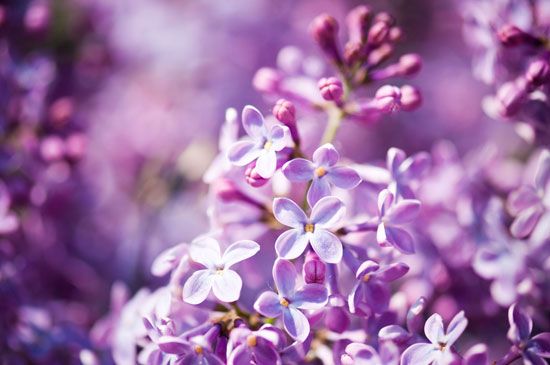
- Common Lilac (Syringa vulgaris): The most widely grown species, it features hundreds of named varieties with single or double flowers in colors ranging from deep purple and lavender to pink, white, and pale creamy yellow.1
- Persian Lilac (S. persica): A smaller, weaker-stemmed plant reaching about 2 meters in height, typically bearing pale lavender flowers, though white and darker varieties exist.1
- Dwarf Korean (Daphne) Lilac (S. pubescens): A compact shrub growing 1.5 to 3 meters tall, characterized by its lavender-pink blossoms.1
- Nodding Lilac (S. komarowii): A Chinese species reaching 4 meters in height that produces pinkish flowers.1
- Hungarian Lilac (S. josikaèa): Grows to about 3 meters and is noted for its scentless, bluish-purple flowers.1
- Chinese (Rouen) Lilac (S. chinensis): A robust, thickly branched hybrid resulting from a cross between the Persian and common lilacs.1
What are the main differences between common lilac (Syringa vulgaris) and other lilac species?
The common lilac (Syringa vulgaris) is distinguished from other species primarily by its size, growth habit, and floral diversity. Reaching heights of approximately 6 meters (20 feet), it is significantly taller than many other species, such as the Persian lilac, which grows to about 2 meters, or the dwarf Korean lilac, which typically stays under 3 meters.1
A key characteristic of the common lilac is its tendency to produce numerous suckers, allowing it to be trained as a shrub, a hedge, or a small tree if the suckers are cleared. In contrast, other species exhibit different structural traits: the Persian lilac is noted for its weaker, drooping stems, while the Chinese (Rouen) lilac is a robust, thickly branched hybrid.1
Furthermore, the common lilac offers a broader spectrum of floral variety, with hundreds of named cultivars featuring single or double flowers in colors including deep purple, blue, red, pink, white, and creamy yellow. Other species are more limited in their color range or scent; for example, the Hungarian lilac is specifically noted for its scentless flowers.1
What are the main differences between the common lilac and the Persian lilac?
The common lilac (Syringa vulgaris) and the Persian lilac (S. persica) differ significantly in their physical stature and growth habits.
Feature
Common Lilac (
S. vulgaris
)
Persian Lilac (
S. persica
)
Height
Reaches approximately 6 meters (20 feet)
Reaches about 2 meters (6.5 feet)
Growth Habit
Produces many suckers; can be grown as a shrub, hedge, or small tree
Features weaker, drooping stems
Flower Color
Wide variety including deep purple, lavender, blue, red, pink, white, and creamy yellow
Typically pale lavender, though white and darker varieties exist
While the common lilac is native to southeastern Europe, the Persian lilac has a broader range extending from Iran to China. Additionally, the common lilac is known for its versatility in garden design due to its ability to be trained into different forms by managing its suckers, whereas the Persian lilac is characterized by its smaller, more delicate structure.1
Sources
- Lilac — Encyclopædia Britannica
- gardening - The plant trade — Encyclopædia Britannica
Published on · 3 min read