Limnoscelis
Limnoscelis was a primitive tetrapod that lived during the Early Permian Period in North America. While Limnoscelis is classified as a limnoscelid within the…
What other early tetrapod genera were contemporaries of Limnoscelis?
Limnoscelis was a primitive tetrapod that lived during the Early Permian Period in North America. While Limnoscelis is classified as a limnoscelid within the anthracosaurs, many other tetrapod groups that emerged during the preceding Carboniferous Period persisted into the early Permian.1234
Contemporary tetrapod groups and genera from this era include:
- Amphibians: Various groups were present, including the eryopoids, such as the large, strong-limbed Eryops, as well as edopoids, colosteids, and trimerorhachoids.34
- Anthracosaurs: Beyond the limnoscelids, this group included embolomers and baphetids.3
- Other groups: Microsaurs, nectrideans, and aistopods were also present during this time, though their exact classification as amphibians or anthracosaurs is sometimes debated.3
- Early Reptiles: The transition toward amniotes was underway, with early reptiles like the captorhinid Hylonomus appearing in the fossil record by the Pennsylvanian subperiod.34
What is the significance of Limnoscelis in the study of early tetrapod evolution?
Limnoscelis is significant in the study of early tetrapod evolution because it represents a critical transitional form located near the origin of amniotes—the group that includes mammals, birds, and reptiles.1
Found in North American Permian rock formations, this genus is considered a potential stem form from which more advanced reptiles may have descended. Its evolutionary importance lies in its position near the point of divergence between amphibians and reptiles.13
Physically, Limnoscelis exhibits a mix of primitive and specialized traits that illustrate this evolutionary bridge:
- Skeletal Structure: It possessed a robust skeleton with massive limb girdles and a sprawling, primitive limb posture.1
- Cranial Features: It featured a solid skull with a pineal organ opening—a “third eye”—and forward-placed nostrils.1
- Dentition: Its jaws contained numerous sharp, labyrinthine teeth, including enlarged anterior teeth, which were also present on the palate.1
When and where did Limnoscelis live, and what was its habitat like?
Limnoscelis lived during the Early Permian Period, a timeframe spanning approximately 251 million to 299 million years ago. Its fossils have been discovered in North America, specifically within the southwestern United States.16
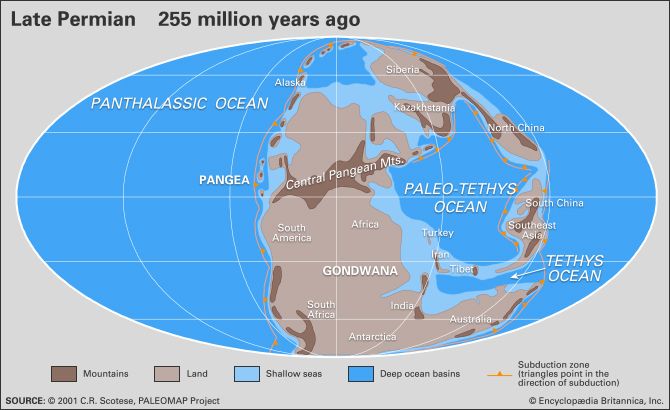
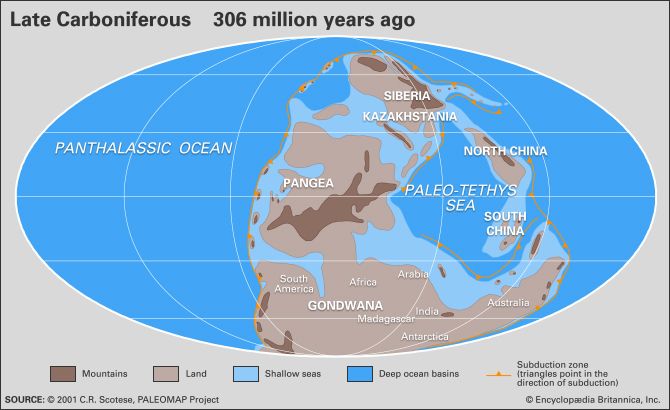
Regarding its habitat, the Early Permian was a period of significant environmental transition. As the supercontinent Pangea assembled, the Earth experienced a shift toward warmer and increasingly arid climates. While the very beginning of the Permian still featured widespread glaciation in certain regions, the climate generally warmed throughout the period, leading to the development of diverse terrestrial habitats. Limnoscelis, with its robust skeleton and sprawling, primitive limb posture, was adapted to these terrestrial environments as it occupied a position near the evolutionary divergence between amphibians and reptiles.7316
How has our understanding of Limnoscelis changed over time with new fossil discoveries and research methods?
Our understanding of Limnoscelis has evolved significantly, shifting from its initial classification as a member of the order Cotylosauria—a group once viewed as a broad, primitive category of “stem reptiles”—to its current recognition as a critical transitional form.13
Historically, Limnoscelis was described as a clumsily built, lizard-like creature. Early research focused on its primitive, sprawling limb posture and robust skeletal structure, which led scientists to categorize it within the now-largely-abandoned concept of Cotylosauria.13
Modern paleontological perspectives have refined this view, placing Limnoscelis more precisely near the evolutionary divergence point between amphibians and amniotes. Rather than simply being a “primitive reptile,” it is now studied as a stem form that provides essential insights into the transition toward more advanced reptilian lineages. This shift reflects a broader trend in evolutionary biology, where detailed anatomical analysis of fossils like Limnoscelis helps clarify the complex branching patterns at the base of the amniote family tree.13
Sources
- Limnoscelis — Encyclopædia Britannica
- amphibian - Evolution and classification — Encyclopædia Britannica
- Limnoscelis — Merriam-Webster
- Carboniferous Period - Amphibians and early reptiles — Encyclopædia Britannica
- agnathan - Annotated classification — Encyclopædia Britannica
- Permian Period - Paleoclimate — Encyclopædia Britannica
- A Journey Through Time Since the Precambrian - Permian Period: 298.9 million to 252.2 million years ago — Encyclopædia Britannica
Published on · 3 min read