Limpet
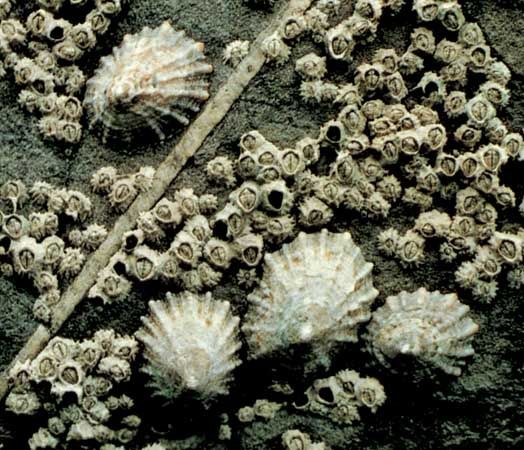
A limpet is any of various gastropods (snails) characterized by a flattened, often conical shell. While most species are marine and cling to rocks in tidal…
What is limpet?
A limpet is any of various gastropods (snails) characterized by a flattened, often conical shell. While most species are marine and cling to rocks in tidal zones, some belong to the subclass Pulmonata and inhabit fresh or brackish water.1
Key characteristics and behaviors include:
- Habitat and Diet: Marine limpets are highly influential in rocky shore ecosystems, where they graze on algae and sessile animals. Some species also act as scavengers, consuming surface debris.2
- Homing Behavior: Many limpets exhibit a “homing” instinct, where they return to a specific spot on a rock to rest or seek protection during stressful conditions, often following regular pathways to feed.2
- Physical Variations: Keyhole limpets are distinguished by a hole or slit at the apex of their shell, which allows for the exit of water currents and waste. Additionally, minute conical gastropods of the family Ancylidae are often referred to as freshwater or river limpets.13
How do limpets use their ‘homing’ behavior to survive on rocky shores?
Limpets utilize homing behavior as a vital survival strategy on rocky shores, where they face the harsh, fluctuating conditions of the tidal zone. By establishing a specific “home base” on a rock, a limpet can securely anchor itself using its broadly expanded, muscular foot, which functions as an adhesive disk to protect the animal during periods of stress or environmental exposure.13
From this home base, limpets graze on algae and sessile animals along regular, radiating pathways. This organized movement allows them to efficiently forage for food while ensuring they can reliably return to their protected spot to rest. This behavior is essential for their survival, as it balances the need for active feeding with the necessity of finding shelter against desiccation or other environmental threats common to their rocky habitats.1
What is the difference between a standard limpet and a keyhole limpet?
The primary difference between a standard limpet and a keyhole limpet lies in the physical structure of their shells.
While standard limpets are gastropods characterized by a simple, flattened, and often conical shell, keyhole limpets—which belong to the family Fissurellidae—are distinguished by a specific anatomical feature: a slit or hole located at the apex of the shell. This perforation serves a functional purpose, allowing water currents and waste to exit the animal’s body.6
In contrast, common marine limpets, such as the Atlantic plate limpet (Acmaea testudinalis) or the European Patella vulgata, do not possess this apical opening. While both types are generally found clinging to rocks in tidal zones, the keyhole limpet’s unique shell structure is the defining characteristic that separates it from other members of the group.61
How do limpets protect themselves from predators while attached to rocks?
Limpets protect themselves from predators primarily by using their foot as a powerful suction pad, which allows them to adhere firmly to the substrate, such as rocks. By maintaining this tight grip, they make it extremely difficult for predators to dislodge them from their position.1
Beyond this physical attachment, limpets rely on their flattened, conical shells for protection, which provide a sturdy external cover. While some other mollusks utilize additional defenses—such as secreting noxious chemicals, producing slippery mucus to deter predators like sea stars, or using camouflage—the limpet’s primary strategy remains its ability to remain securely anchored to the rock surface.71
Sources
- limpet — Encyclopædia Britannica
- mollusk - Annotated classification — Encyclopædia Britannica
- gastropod - Ecology and habitats — Encyclopædia Britannica
- freshwater limpet — Merriam-Webster
- gastropod - The foot — Encyclopædia Britannica
- keyhole limpet — Merriam-Webster
- bivalve - Features of defense and aggression — Encyclopædia Britannica
- mollusk - Features of defense — Encyclopædia Britannica
- bivalve - Locomotion — Encyclopædia Britannica
Published on · 3 min read