Lingonberry
The lingonberry (Vaccinium vitis-idaea) is a low-growing, evergreen shrub belonging to the heath family (Ericaceae). It is closely related to the blueberry…
What is lingonberry?
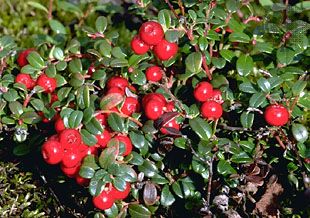
The lingonberry (Vaccinium vitis-idaea) is a low-growing, evergreen shrub belonging to the heath family (Ericaceae). It is closely related to the blueberry and cranberry, sharing a similar tart flavor profile.12
These plants are native to the cooler, northern regions of the Northern Hemisphere, thriving in boreal forests and tundra environments1. The shrub is characterized by leathery, oval leaves and small, bell-shaped flowers that are white or light pink.2
The plant produces small red berries that are highly valued for culinary use. While they can be eaten raw, they are frequently processed into jellies, jams, juices, syrups, and wine, or used in baked goods and pickling. Because the plants grow in dense clusters, they are often harvested by raking, a method similar to that used for cranberries.12
How do lingonberries differ from cranberries?
While lingonberries and cranberries are closely related members of the heath family and share a similar tart flavor profile and small, red appearance, they are distinct species.12
The primary differences include:
- Species and Growth: The lingonberry (Vaccinium vitis-idaea) is a low-growing, evergreen shrub with leathery, oval leaves and bell-shaped flowers. While both plants grow in dense clusters and can be harvested by raking, lingonberries are specifically adapted to the cooler, northern boreal forests and tundra regions of the Northern Hemisphere.21
- Culinary Versatility: Although both are used in jams and juices, lingonberries are frequently incorporated into a wider variety of preparations, including ice cream, wine, and pickling, and are sometimes eaten raw.2
- Terminology: Lingonberries are occasionally referred to as “mountain cranberries,” reflecting their resemblance to the common cranberry in size and taste, despite their botanical differences.2
What types of climates do lingonberries require to grow?
Lingonberries (Vaccinium vitis-idaea) are specifically adapted to the cooler, northern regions of the Northern Hemisphere. They are characteristic flora of the boreal forest (or taiga) and tundra environments.132
These plants thrive in the understory of these northern ecosystems, where they are widespread across the circumpolar north. Their ability to grow in these climates allows them to persist in regions characterized by cold temperatures and specific forest or open-tundra conditions.13
What are some traditional dishes that use lingonberries?
Lingonberries are a staple in northern European and Scandinavian cuisines, valued for their tart flavor and ability to keep well without preservatives. Because of their versatility, they are used in a wide range of traditional dishes:12
- Preserves and Condiments: Lingonberries are most commonly prepared as jelly or fruit preserves, which are frequently served alongside savory dishes like Swedish meatballs.142
- Baked Goods and Desserts: They are a popular topping for Swedish pancakes and are often incorporated into various baked goods, syrups, and even ice cream.54
- Beverages: The fruit is commonly used to make juices and can also be fermented into wine.15
- Savory Preparations: Beyond sweet applications, lingonberries are sometimes pickled to accompany savory meals.5
These culinary uses reflect a long-standing tradition of preserving food to sustain populations through the harsh northern winters.2
Sources
- lingonberry — Encyclopædia Britannica
- lingonberry — Merriam-Webster
- Taiga - Other plants — Encyclopædia Britannica
- gastronomy - Scandinavian — Encyclopædia Britannica
- Sweden - Daily life and social customs — Encyclopædia Britannica
Published on · 2 min read