Linsang
A linsang is any of three species of small, nocturnal, and arboreal mammals that resemble elongated cats. They are characterized by their slender bodies…
What is a linsang and which family of mammals does it belong to?
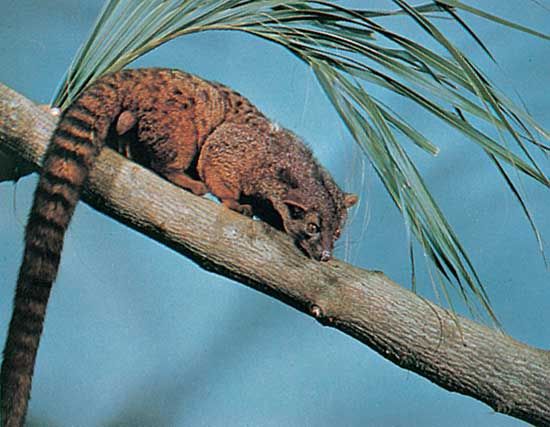
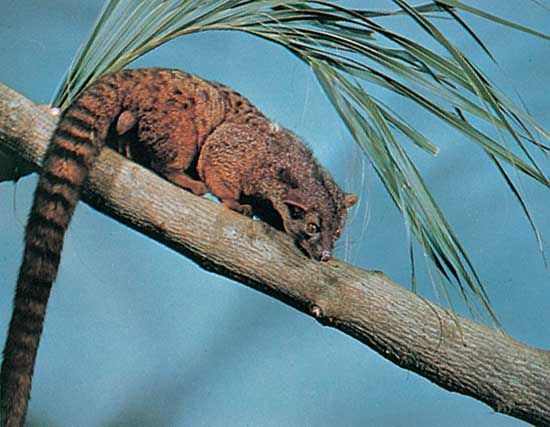
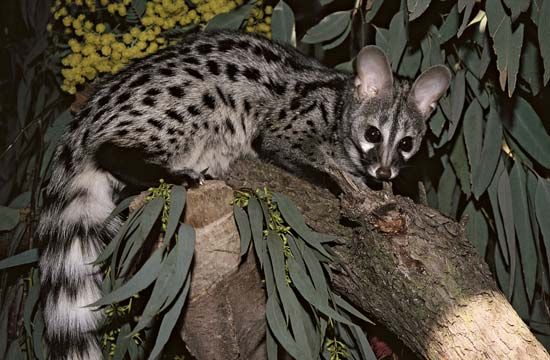
A linsang is any of three species of small, nocturnal, and arboreal mammals that resemble elongated cats. They are characterized by their slender bodies, relatively narrow heads, elongated muzzles, retractile claws, and long, banded tails.12
Linsangs belong to the civet family, known as Viverridae. There are three recognized species:13
- African linsang (Poiana richardsoni): Found in western and central Africa, this species consumes both plant and animal matter.1
- Banded linsang (Prionodon linsang): Native to Malaysia and the Indonesian archipelago, this species is strictly carnivorous.1
- Spotted linsang (Prionodon pardicolor): Found in tropical uplands across parts of India, Myanmar, China, and Nepal, this is the smallest member of the viverrid family and is also strictly carnivorous.13
These secretive animals inhabit dense forests and jungles, typically producing two litters of two to three young each year.13
Where are linsangs typically found in the wild?
Linsangs are elusive, nocturnal, and arboreal mammals that inhabit dense forests and jungles across Africa and Asia. Their specific geographic distributions are as follows:
- African linsang (Poiana richardsoni): This species is found in the forests of western and central Africa.1
- Banded linsang (Prionodon linsang): This species is native to Malaysia and the Indonesian archipelago.1
- Spotted linsang (Prionodon pardicolor): This species inhabits tropical uplands in northern India, Myanmar, southern China, and Nepal.1
Because these animals are strictly nocturnal and prefer the cover of dense vegetation, they are rarely seen in the wild.1
What are the physical characteristics that distinguish linsangs from other similar mammals?
Linsangs are distinguished from other members of the viverrid family by their specific combination of physical traits, which give them an appearance often described as that of an elongated cat.1
Key physical characteristics include:
- Body Shape: They possess notably slender, elongated bodies and relatively narrow heads compared to other viverrids.1
- Muzzle: They are characterized by an elongated muzzle.13
- Size: They are small mammals, typically growing to a length of 33–43 cm (13–17 inches), excluding the tail. The spotted linsang is recognized as the smallest member of the entire Viverridae family, weighing approximately 0.6 kg (1.3 pounds).14
- Tail: They feature a long, banded tail that is almost as long as their body.1
- Claws: Unlike some other viverrids, linsangs possess retractile claws, which assist in their arboreal lifestyle.1
- Coat: They have dense, close fur that varies in color across the three species.1
While they share the general viverrid traits of a slender body and long tail, their specific proportions and the presence of retractile claws help set them apart from their relatives, such as civets and genets.14
How many species of linsangs are there, and what are their conservation statuses?
There are three recognized species of linsangs, all of which belong to the civet family (Viverridae):1
- African linsang (Poiana richardsoni), also known as the oyan.
- Banded linsang (Prionodon linsang).
- Spotted linsang (Prionodon pardicolor).
Regarding their conservation statuses, the provided information does not contain data on the current population trends or protection levels for these species.
Sources
- linsang — Encyclopædia Britannica
- linsang — Merriam-Webster
- viverrid — Encyclopædia Britannica
- list of viverrids — Encyclopædia Britannica
Published on · 2 min read