Lipizzaner
The Lipizzaner is characterized as a spirited breed of horse. While the provided information highlights their historical development from Spanish, Italian…
How does the Lipizzaner horse’s temperament differ from other horse breeds?
The Lipizzaner is characterized as a spirited breed of horse. While the provided information highlights their historical development from Spanish, Italian, Danish, and Arab stock and their physical conformation, it does not offer a comparative analysis of their temperament against other specific horse breeds.12
Because the available data focuses primarily on the breed’s origins, physical characteristics, and association with the Spanish Riding School in Vienna, I cannot provide a detailed contrast regarding their temperament relative to other breeds.21
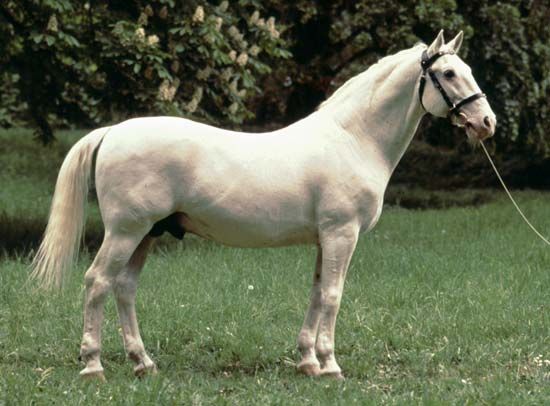
What are the unique genetic traits of Lipizzaner horses?
The Lipizzaner breed is defined by a specific historical lineage rather than a unique set of isolated genetic traits. The breed was developed starting in 1580 from a foundation of Spanish, Arabian, Berber, Italian, and Danish stock.12
The breed’s genetic structure is organized into six distinct sire lines, each named after its foundation sire:
- Pluto
- Conversano
- Neapolitano
- Favory
- Maestoso
- Siglavy1
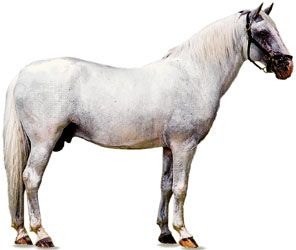
A notable phenotypic trait associated with their development is their coat color progression. Lipizzaners are typically born with a dark coat that gradually lightens to white as they mature with age. While they possess a powerful conformation, they are generally of smaller stature, standing between 15 and 16.1 hands high.21
How are Lipizzaner horses traditionally trained and used?
Lipizzaner horses are traditionally trained in haute école (“high school”), the most elaborate and specialized form of dressage. While dressage was originally intended for military use, the Spanish Riding School of Vienna remains the only institution where these 18th-century methods are exclusively practiced today.34
Training begins with campagne, an elementary phase that includes work on a longeing rein to develop the horse’s suppleness and balance. The ultimate goal is to achieve a harmonious partnership where the horse appears to perform movements of its own accord, demonstrating lightness, engagement of the hindquarters, and perfect attentiveness to the rider.4
Advanced training involves spectacular airs, or movements, based on natural equine behaviors:
- Pirouettes: Turns on the haunches at the walk or canter.4
- Piaffe: A trot performed in place with upward impulse.4
- Passage: A high-stepping, animated trot.4
- Levade, Courbette, and Capriole: Dramatic movements where the horse balances on its hindlegs or leaps into the air.4
What is the significance of the Spanish Riding School in Vienna for Lipizzaner horses?
The Spanish Riding School of Vienna is significant as the world’s premier institution for the preservation of classical horsemanship. Founded in the late 16th century, it serves as the only remaining venue where haute école (“high school”) training methods are practiced exclusively, maintaining the rigorous standards established in the 18th century.3
The school is inextricably linked to the Lipizzaner breed, which was specifically developed for the school’s demanding performance requirements. By perfecting the combined performance of horse and rider, the institution has exerted a profound influence on the evolution of modern dressage throughout Europe and the United States. Today, the school remains the most prominent global showcase for these horses, ensuring that the historical techniques and the unique capabilities of the Lipizzaner continue to be demonstrated to the public.315
Sources
- Lipizzaner — Encyclopædia Britannica
- Lipizzan — Merriam-Webster
- Spanish Riding School of Vienna — Encyclopædia Britannica
- horsemanship - Dressage — Encyclopædia Britannica
- horsemanship - Military horsemanship — Encyclopædia Britannica
Published on · 2 min read