Lismore
The name Lismore refers to two distinct locations:
What is Lismore?
The name Lismore refers to two distinct locations:
- Lismore, Australia: A city in northeastern New South Wales, situated on the Richmond River. Settled in 1843 and named after a Scottish island, it serves as a regional farm processing center for products like butter and bacon. It is also home to Southern Cross University and is recognized for its arts and musical festivals.1
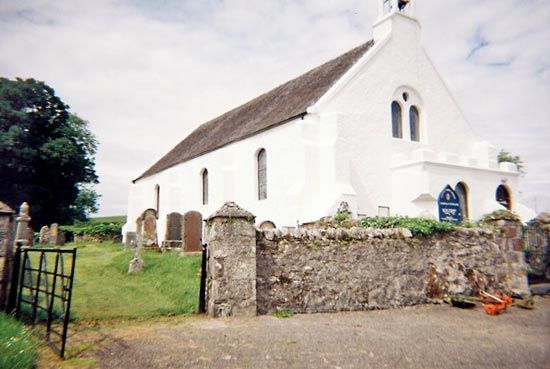
- Lismore, Ireland: A market town in County Waterford. Historically significant for its monastery founded around 633, the town features a 12th-century castle that was once owned by Sir Walter Raleigh. It is the birthplace of the chemist Robert Boyle and remains a center for salmon fishing.2
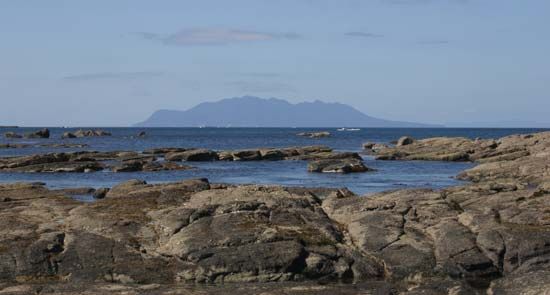
Additionally, there is an island in Scotland that shares the name, which served as the namesake for the Australian city.1
Who was Robert Boyle and why is he famous?
Robert Boyle (1627–1691) was an Anglo-Irish natural philosopher and a foundational figure in 17th-century science. Often called the “father of chemistry,” he is celebrated for his commitment to experimental observation and his rejection of speculative theories in favor of empirical evidence.3
He is most famous for the following contributions:
- Boyle’s Law: Published in 1662, this fundamental principle of physics states that the volume of a gas at a constant temperature varies inversely with the pressure exerted on it.34
- Pneumatics: Working with Robert Hooke, he developed an improved air pump to study the properties of air, including its role in combustion, respiration, and sound transmission.3
- Mechanical Philosophy: He advocated for a “corpuscularian” view of matter, suggesting that all natural phenomena could be explained by the motion and shape of minute particles.3
- Scientific Institutions: He was a founding member of the Royal Society of London in 1660.3
Beyond science, Boyle was a devout Anglican who wrote extensively on the harmony between science and religion, viewing the study of nature as a way to honor God’s creation.3
What is the history of Lismore Castle in Ireland?
The history of Lismore Castle in County Waterford, Ireland, spans several centuries and reflects the shifting political landscape of the region:
- Founding: The site’s significance began with a monastery established by St. Cartagh around 633, which was later plundered by Norsemen during the 9th and 10th centuries.2
- Construction: The baronial castle was erected in 1185 by Prince John, who later became King John of England. For nearly two centuries, it served as the residence for the bishops of Lismore.2
- Transition of Ownership: In 1581, the manor was granted to Sir Walter Raleigh. It subsequently passed to Richard Boyle in 1602. During the Boyle family’s tenure, the famous chemist Robert Boyle was born at the manor in 1627.2
- Modern Era: In 1753, the castle passed to the 4th Duke of Devonshire. The property remains in the possession of the Duke’s successors today.2
How do Australian cities differ from Irish market towns?
Australian cities and Irish market towns differ significantly in their origins, density, and layout.
Australian Urban Centers
Australian cities are largely products of growth since the 19th century, characterized by low-density living and a heavy reliance on the automobile. They more closely resemble North American urban models than European ones, featuring extensive suburban sprawl contrasted with compact central business districts6. While some cities like Canberra were designed with specific urban planning goals, the general Australian pattern prioritizes suburban lifestyles over the traditional, pedestrian-oriented centers found in older European settlements.67
Irish Market Towns
In contrast, Irish market towns are typically historic, compact settlements that evolved over centuries. Unlike the sprawling, automobile-dependent Australian suburbs, these towns are generally centered around a traditional marketplace or main street, designed to facilitate local trade and social interaction within a walkable distance. They reflect a European heritage of dense, historic development rather than the 19th-century expansionist planning seen in Australia.7
Sources
- Lismore — Encyclopædia Britannica
- Lismore — Encyclopædia Britannica
- Robert Boyle — Encyclopædia Britannica
- Boyle — Merriam-Webster
- Boyle's law — Merriam-Webster
- Australia - Urban settlement — Encyclopædia Britannica
- Sydney: Top Questions — Encyclopædia Britannica
Published on · 3 min read